My lock down project appears to have become filming and learning to edit video footage from my smartphone. It is certainly a challenge as it turns out I can’t find a local adult education class for the editing suite I want to learn – Da Vinci Resolve- however with the help of YouTube I am muddling through. I am trying to locate a good online class instead.
Filming a video with my jury-rigged studio set up.
In the meantime I am having fun exploring the video options on my phone and then seeing what I can do with it.
I tried to load a video here but apparently my pay level doesn’t allow for videos on WordPress 😪. I may never make it to Hollywood but I am having a lot of fun.
Oops I should be better at marketing. I forgot to say that you can find me on YouTube by searching for ‘leonieandrewsart’ or following this link.
I have been doing a lot of gelli printing lately – that’s using acrylic paints on a gel plate – a type of monoprinting. During our most recent lockdown it’s kept me happily away from the street. I have been working on printing onto fabric which is a bit different to printing on paper.
Some of the various paints I use for printing.
I trained in screen printing at art school which is similar, but not quite the same as gelli printing. While I find gelli printing has some limitations, it also has many pluses. I like that it’s so simple to set up and print and I certainly don’t mind not having to transfer images to my screen (a multi-step process which was my least favourite part of printing).
I am also using up a whole stack of acrylic paints, some better than others. By also using a textile base (a clear paste) with the acrylic paints, these paints are easier to use on fabric and give the fabric a better “hand” that is make it more flexible and feel better after printing.
The ‘studio’ at the end of my kitchen. Inking up my plate with my rag for excess paint on the side.
I am focused on using the simplest of marks and materials for my prints. Most of my fabric is upcycled from clothes or old bed sheets.
I am really happy about the colour combinations I am achieving in my prints, particularly when I make simple two colour prints.
Some of my recent two colour prints.
In addition to all this printing I also decided to revive my, somewhat moribund YouTube channel by uploading some introductory videos on printing on fabric with a gelli plate. You can find my channel here.
WARNING this post contains a nude portrait. (It’s OK, it’s not me).
It seems there is a trend amongst my artist friends to be doing self portraits. So I am jumping in, along with Carol Haywood and Rose Davies to share my recent versions.
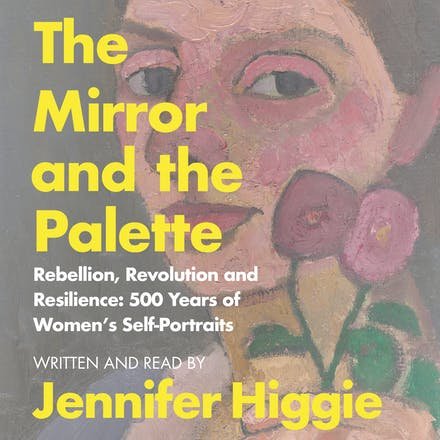
I started drawing myself in March and then quickly fell by the wayside. I recently got re-inspired by Jennifer Higgie’s book the Mirror and the Palette, looking at the herstory of the self-portrait.
Highly recommended, fascinating and a darn good read.
The portraits of older women artists are often the most experimental. Perhaps the most visceral portrait I know is by Maria Lassnig, (1919- 2014), painted in her 80’s, it really sorts the women from the boys. I saw it in Amsterdam in 2019 and it certainly hit me in the gut.
Oder du ich (You or Me) Maria Lassnig, 2005, oil on canvas , private collection.
Alice Neel has also painted an unapologetic nude self-portrait in her 80’s, which is on display in a current retrospective of her work at the Metropolitan Museum of Art. See here for a online veiwing of the exhibition.
You will probably be relieved to know that I don’t have the guts of Lassnig or Neel to do nude self-portraits. Maybe later. Maybe when I turn 80.
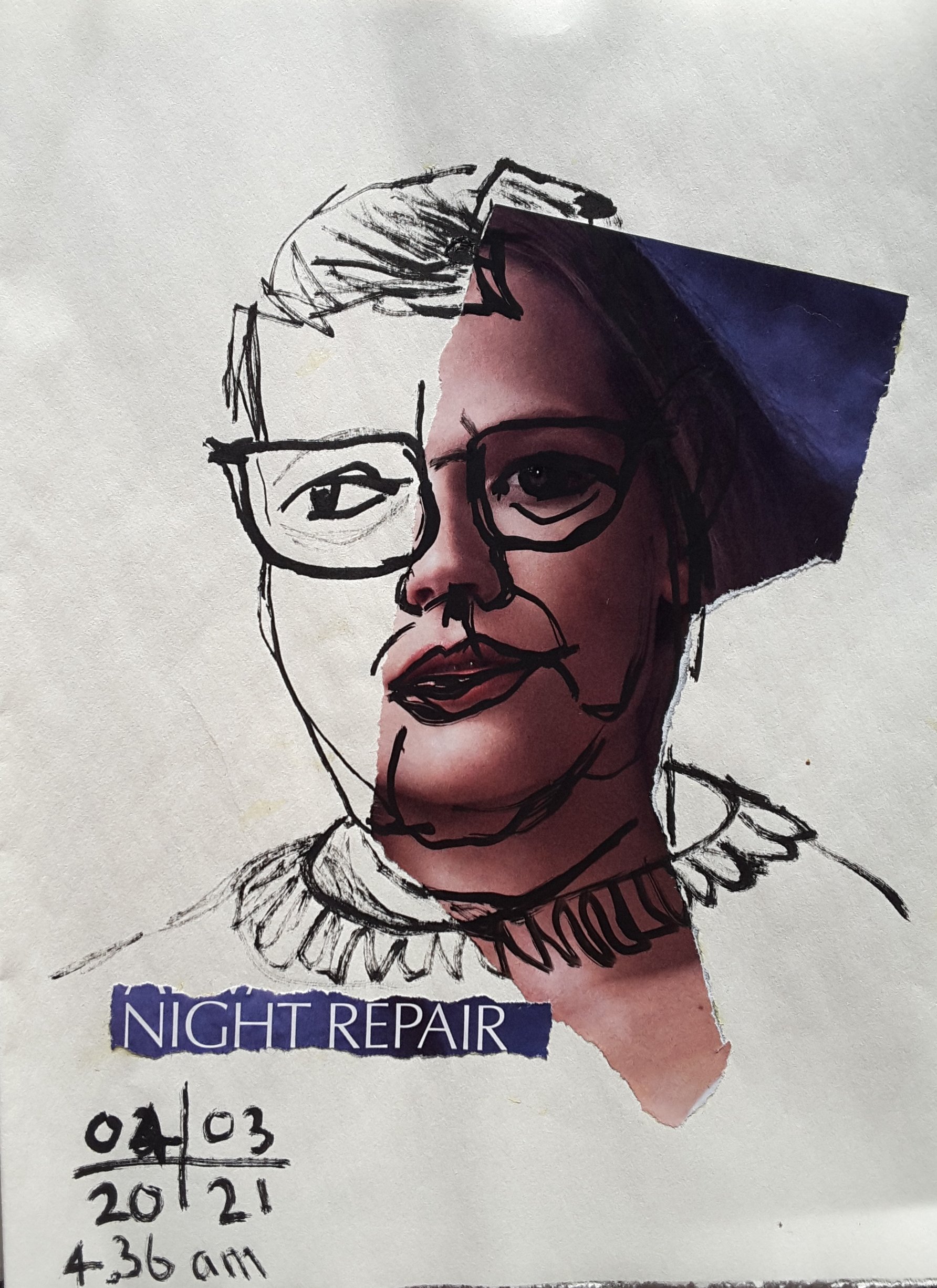
So here are the portraits I have made so far. Most, with the exception of the watercolour, have been sketched on paper roll from Ikea.
Self-portrait. Acrylic marker and brush pen.Self-portrait with watching painting. Pencil.Self-portrait Night repair. Collage and brush pen.Double self-portrait. Gel pen.Self-portrait with blue lips. Pen and ink, acrylic marker.
The first big ‘block-buster’ exhibition, since the pandemic started, has made it to the National Gallery of Australia earlier this month. Called Boticelli to Van Gogh, it is a rare sharing of paintings from the National Gallery, London, of some of their most precious works.
Sunflowers at night, the National Gallery of Australia sent it’s members sunflower seeds to plant in advance of the latest blockbuster show.
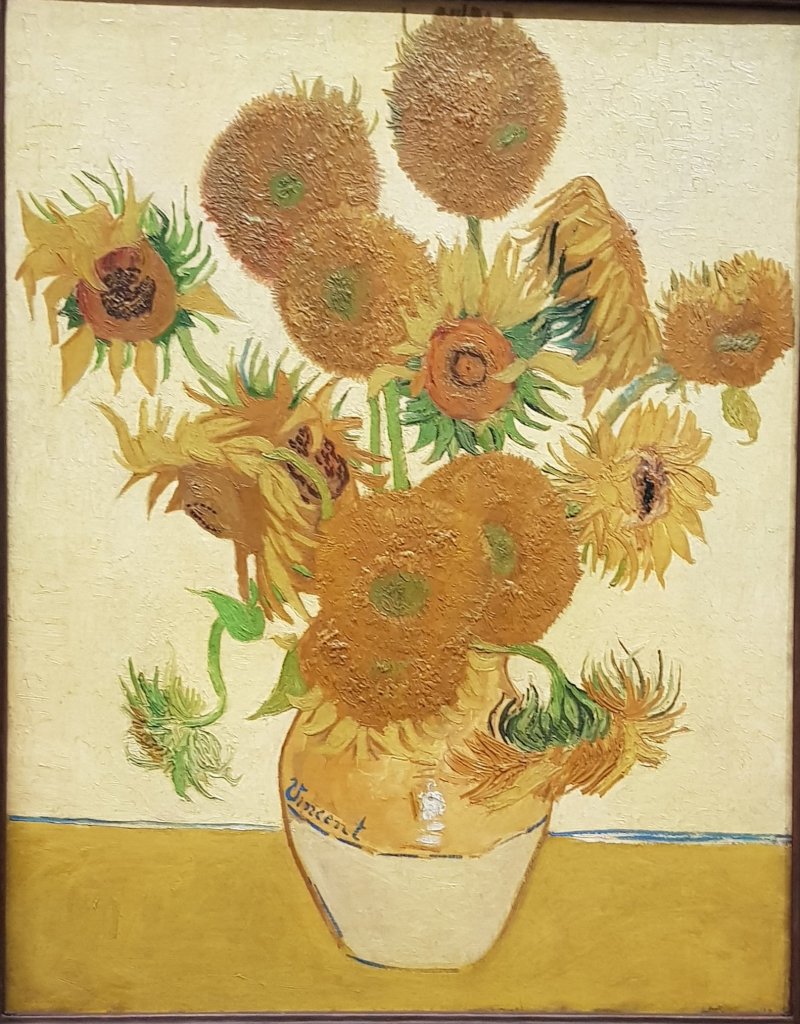
Not surprisingly the gallery marketing team are really banging on about the Van Gogh Sunflower painting. It is a star. But there are so many others as well.
Sunflowers, Vincent Van Gogh, 1888.
So here are some shots so you can get up close and personal, even if you can’t make the show itself.
Detail, of the SunflowersDetail of the Sunflowers.
For a few months now I have been joining a group of people via Zoom for Sunday Art Time. They live on the other side of the world to me and I didn’t know any of them when this started. That hasn’t stopped us getting together for an hour each week just to chat and make art.
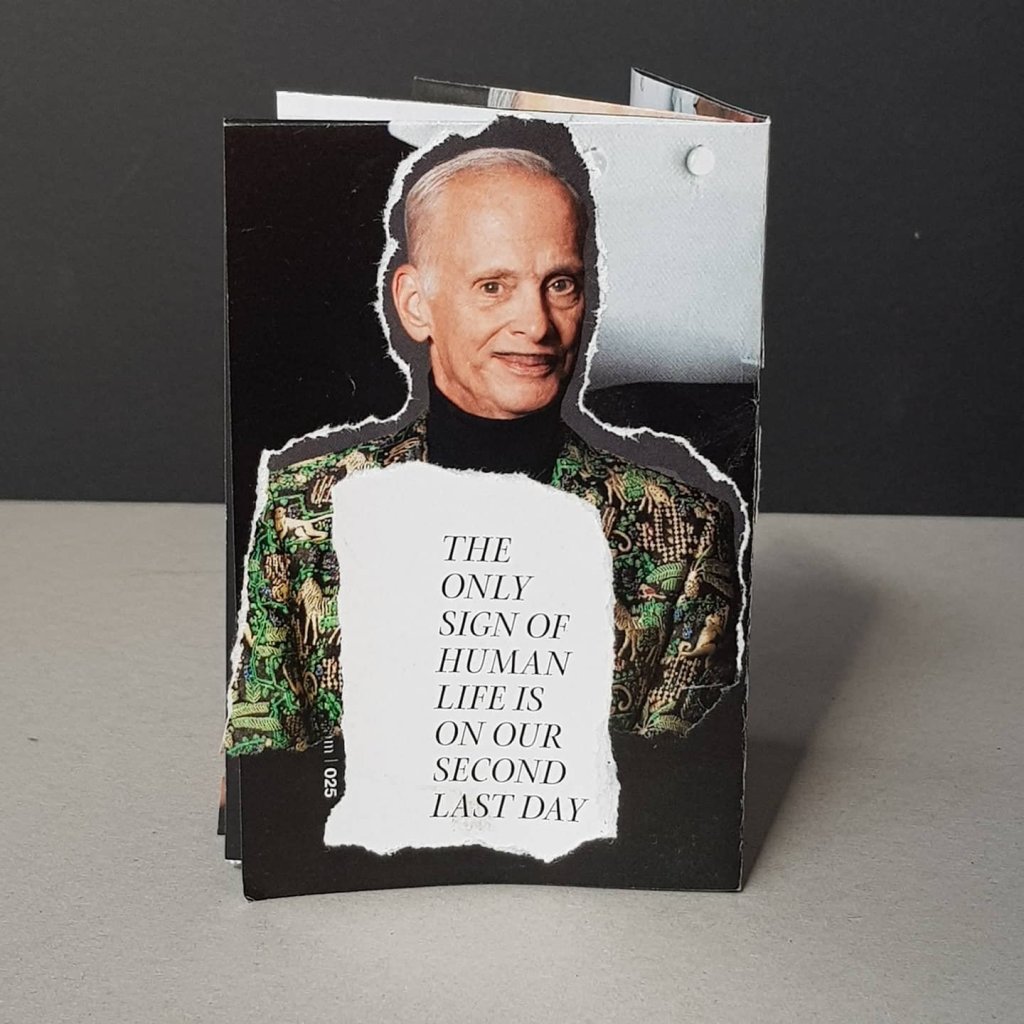
One of my earlier mini-zines made from various pages from Mindfood magazine.
Working with collage and simple book forms let’s me make work that can be finished in one or two sessions. I like the ability to make a work quickly, given most of my serious textile work takes ages to complete.
Featuring adventure penguins.More adventurous penguins on luxury yachts!And concluding with the one and only Mr John Waters
I have also found some good ideas from the broader reaches of the “junk journaling ” movement, such as cutting up large print books for useful phrases.
“A wild ass from North Africa “, a work in progress.
These mini-zines and collages give rein to the less formal (aka sillier) side of my art and has given me a lot of enjoyment in these grim times.
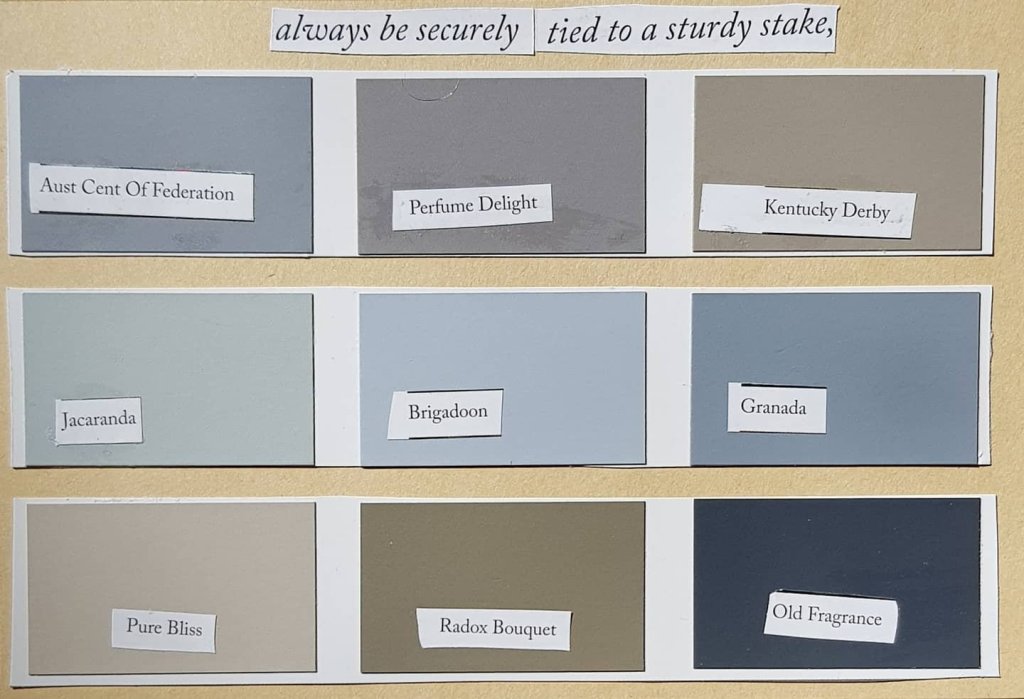
Sound advice for the masses. A mash-up of paint sample chips with rose names.









 leonieandrews