WARNING this post contains a nude portrait. (It’s OK, it’s not me).
It seems there is a trend amongst my artist friends to be doing self portraits. So I am jumping in, along with Carol Haywood and Rose Davies to share my recent versions.
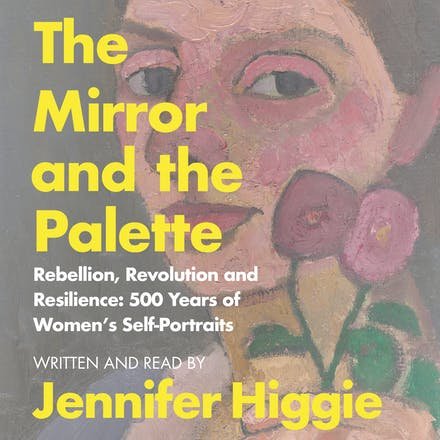
I started drawing myself in March and then quickly fell by the wayside. I recently got re-inspired by Jennifer Higgie’s book the Mirror and the Palette, looking at the herstory of the self-portrait.
Highly recommended, fascinating and a darn good read.
The portraits of older women artists are often the most experimental. Perhaps the most visceral portrait I know is by Maria Lassnig, (1919- 2014), painted in her 80’s, it really sorts the women from the boys. I saw it in Amsterdam in 2019 and it certainly hit me in the gut.
Oder du ich (You or Me) Maria Lassnig, 2005, oil on canvas , private collection.
Alice Neel has also painted an unapologetic nude self-portrait in her 80’s, which is on display in a current retrospective of her work at the Metropolitan Museum of Art. See here for a online veiwing of the exhibition.
You will probably be relieved to know that I don’t have the guts of Lassnig or Neel to do nude self-portraits. Maybe later. Maybe when I turn 80.
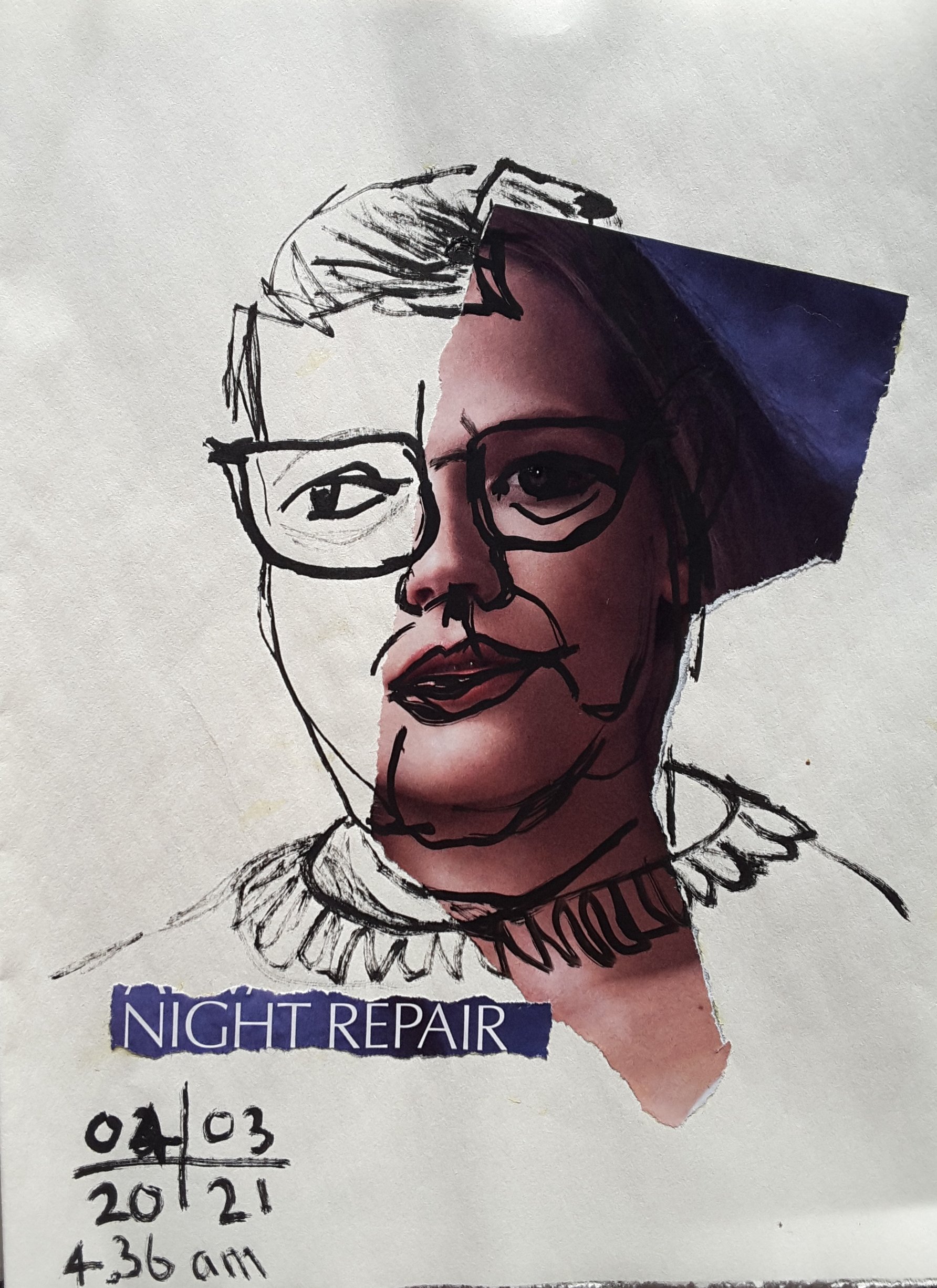
So here are the portraits I have made so far. Most, with the exception of the watercolour, have been sketched on paper roll from Ikea.
Self-portrait. Acrylic marker and brush pen.Self-portrait with watching painting. Pencil.Self-portrait Night repair. Collage and brush pen.Double self-portrait. Gel pen.Self-portrait with blue lips. Pen and ink, acrylic marker.
“roll up your catalogue and view each picture through it. … You will be rewarded with a wonderful suggestion of light and air and sufficient detail, and finish.” So said critic Percy Leason and fellow student of Clarice Beckett (1887- 1935), of her 1931 solo exhibition *.
Tea Gardens, c.1933, oil on canvas on pulpboard, 51.0 cm x 43.7 cm
Clarice Beckett’s work, rather like the artist herself, can be difficult to pin down. Her life story of is the stuff to make movies of and has inspired at least one novel (Night Street, by Kristel Thornell, joint winner of the 2009 Vogel Award). Her work only entered public collections in Australia some 35 years after her death. The vast majority of her output has been lost to both accidental and deliberate destruction. (I have included a very brief bio of her at the end of this post).
This major retrospective at the Art Gallery of South Australia features 130 works by Beckett. I believe that this is the largest exhibition of her work ever shown.
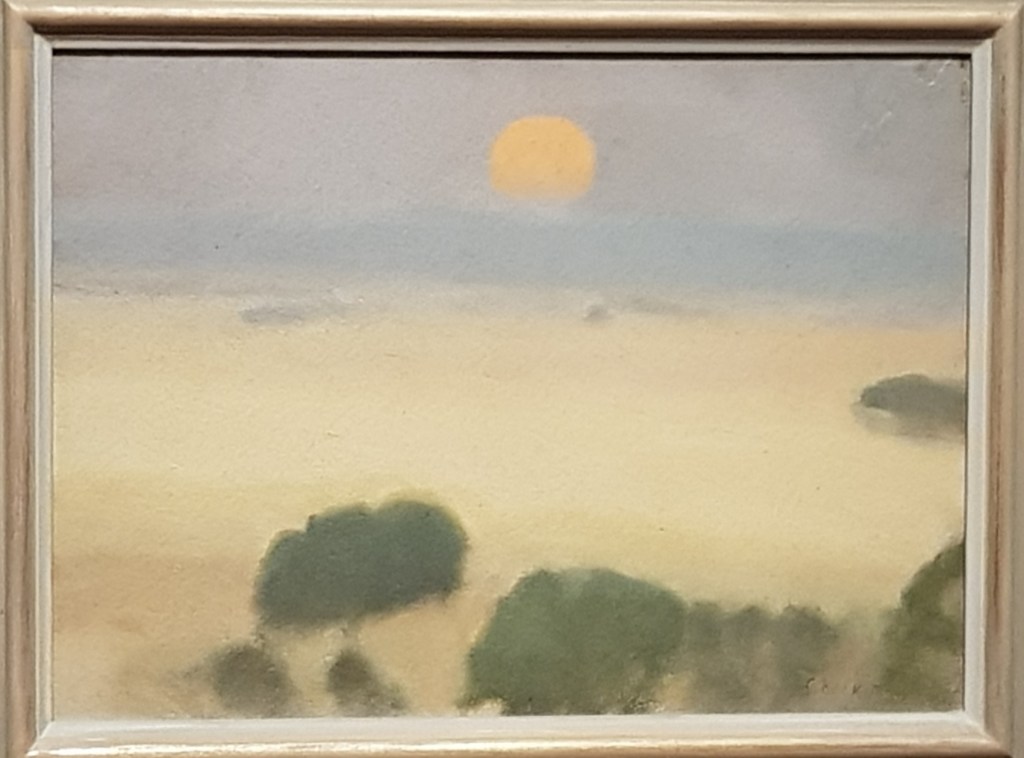
Summer Fields, Naringal, 1926, oil on board, 24.5 cm x 34.5 cm
Clarice Beckett falls under the broad rubric of an Australian Modernist artist. Her control of light and atmospheric effects is equal to that of Turner. She references Whistler in her own painting titles, is frequently compared to Corot and her colour studies (such as still remain) are a precursor of Rothko’s. That pretty much ticks the boxes for me.
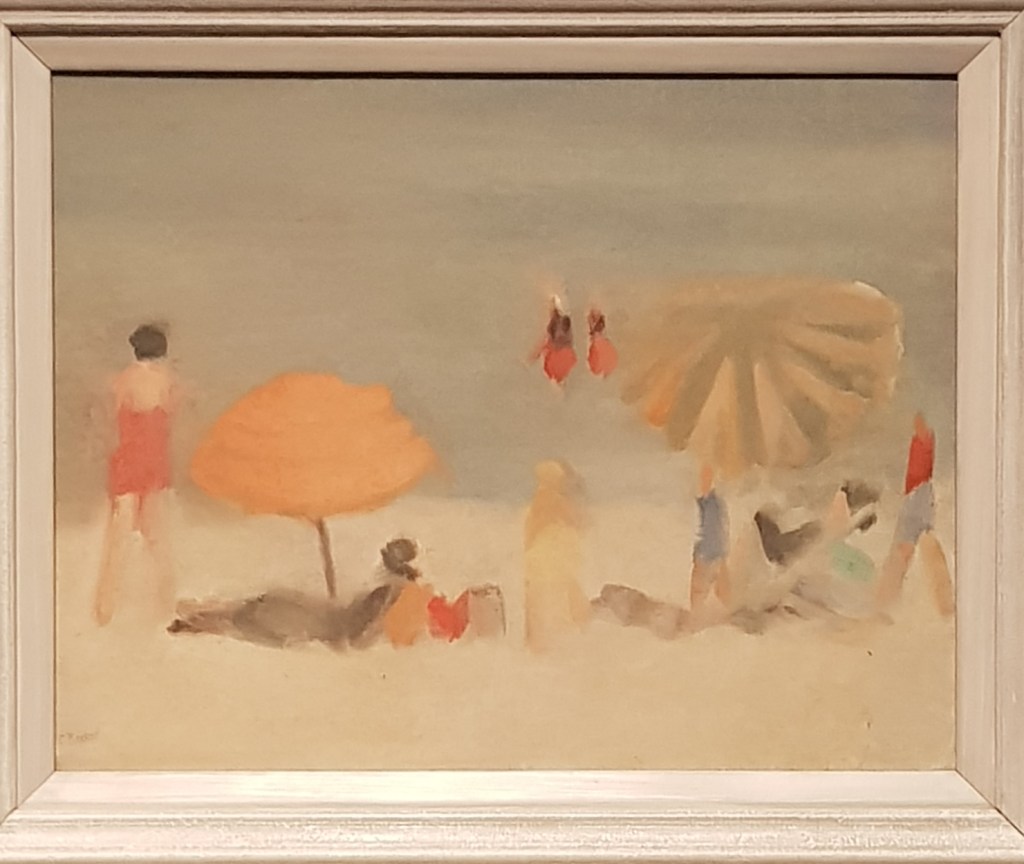
Beach Scene, c. 1932-3, oil on canvas, 52.1 cm x 62.0 cm
The subject matter of the majority of Beckett’s extant work is of Beaumaris, a bayside suburb of the city of Melbourne and the city of Melbourne itself.
The Bus Stop, c. 1930, oil on board, 41.0 cm x 34.0 cm
It strikes me that you could easily be misled by the deliberate simplicity of the composition of the paintings. Beckett’s approach was a “technique of applying broad areas of finely graded tones produces an image that is slow to come to life”.* While there is weight in the subject matter, this approach allows the focus of her painting to be on the light effects she observes.
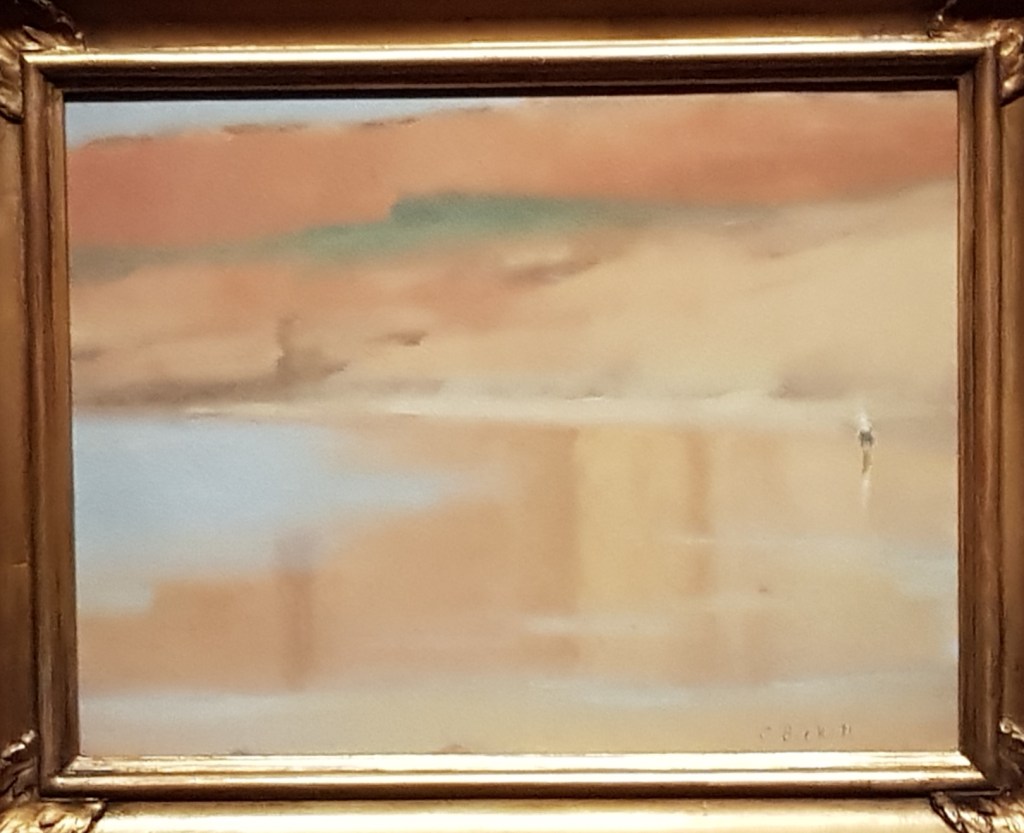
Wet Sand, Anglesea, 1929, oil on board, 29.3 cm x 39.0 cm
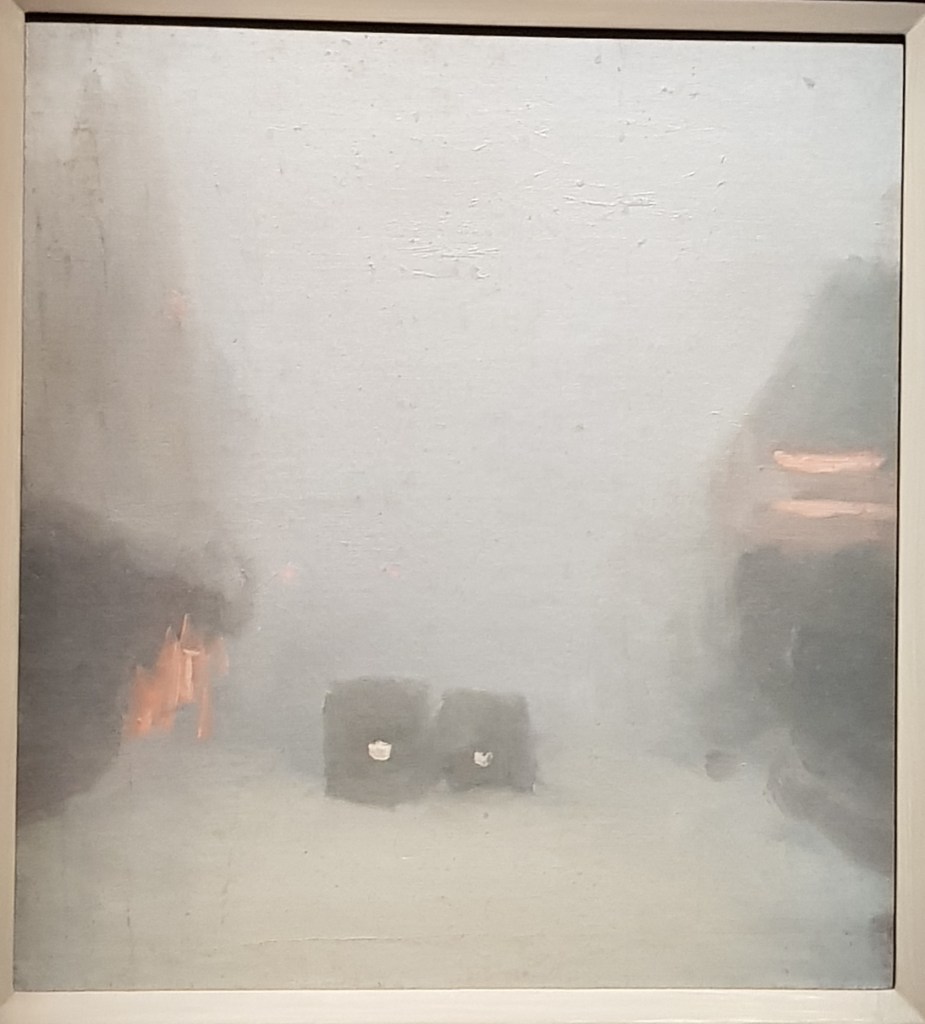
In many works the subject matter is almost an abstracted form, such as Passing Trams, c 1931 and in others, such as Wet Night, Brighton, 1930, an exercise in geometry, and yet there is such intensity in her focus that the results transcend such easy charaterisations.
Passing Trams, c. 1931, oil on board, 48.6 cm x 44.2 cmWet Night, Brighton, 1930, oil on board, 26.6 cm x 38.0cm
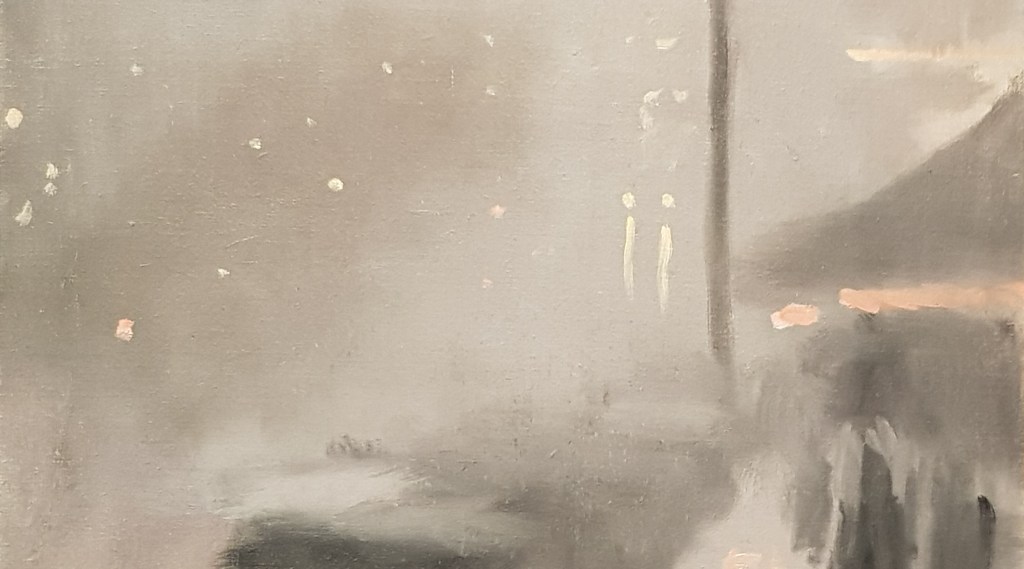
Beckett made most of her paintings on location. She wheeled her hand cart with her supplies, walking around a 5 km radius of her house, or travelling into the city. Her paintings are quite small by today’s art extravaganzas, often no more than A3 size, so the intensity of her work is all the more focussed into these small works. I am apologetic as these photographs barely do justice to the intensity of the paint surface. I will share with you some detail shots so hopefully this may become a bit more apparent.
Dusk, c. 1928, oil on canvas on board, detail, 37.5 x 45.5 cmTaxi Rank, c. 1931, oil on canvas on cardboard, detail, 58.5 x 51.0 cm
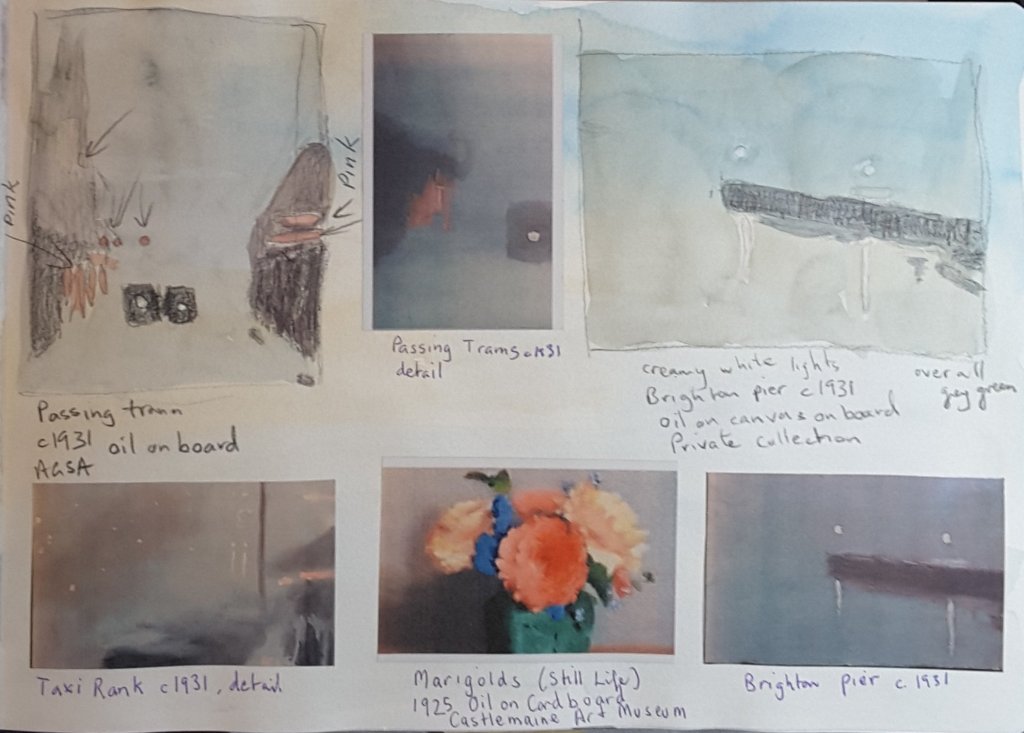
Per usual I took as many painting notes inside the exhibition as time permitted, alas never as much time as I would like. I also did some further studies of her work from the exhibition catalogue.
A page from my gallery sketchbook, focussed on Beckett’s use of high toned pink highlights.A page from my gallery sketchbook. Looking at Beckett’s compositions.
Clarice Beckett: The Present Moment is currently on show in Adelaide at the Art Gallery of South Australia. The exhibition runs until 16 May 2021. The exhibition is ticketed, but there are no timed entry requirements.
All quotes in this post come from the exhibition catalogue The Present Moment: The Art of Clarice Beckett, Tracey Lock, Art Gallery of South Australia, 2020 ; p 104 quoting P. Leason, ‘Current art shows’, Table Talk, 5 December 1931, p14; p 104 Tracey Lock
Biography
Beckett, the eldest daughter of a rural bank manager, studied art at the National Gallery School in Melbourne with Fredrick McCubbin (1914-16) and also for a brief period under the tutelage of Tonalist painter Max Meldrum. Clarice regularly exhibited and her work gathered notice, among a small group of people and was recognised briefly, even as far afield as New York. She exhibited with several groups and held solo exhibitions every year from1923 to 1933. But when she died from pneumonia at age 48 her work was largely forgotten.
After her death some of her work was deliberately burnt by her father. Other major pieces from her time staying with friends in rural Victoria were lost in a house fire. The vast majority of her canvases were put in a shed in rural Victoria where they disintegrated under an onslaught of weather and vermin. The canvases were tracked down in 1970 by Dr Rosalind Hollingrake who had been searching for years to find out more about the work of one C. Beckett. Of those canvases some 369 were saved and 1600 were beyond retrieval.
Beckett’s work was never acquired by a public gallery in her lifetime. Her works first entered the National Gallery of Australia in 1971, after Hollingrake showed the work at her gallery in Melbourne.
Last week I went to my first life drawing class of the year. We had a stand-in model, one of the class, as the booked model cancelled just before the class started.
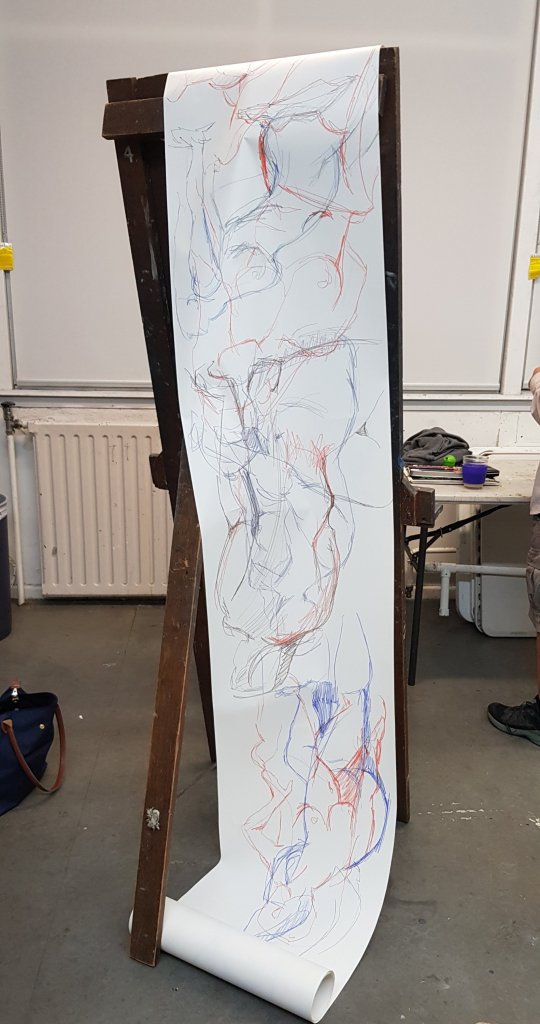
I took the big tip from last year’s classes and bought myself a roll of paper from the kids section of IKEA for the short poses. As you can see you just keep rolling it up and over the easel.
Short sketches in coloured pencils.
For my quick poses I used coloured pencils, part of my drive to start using all those stray art materials I have hanging around.
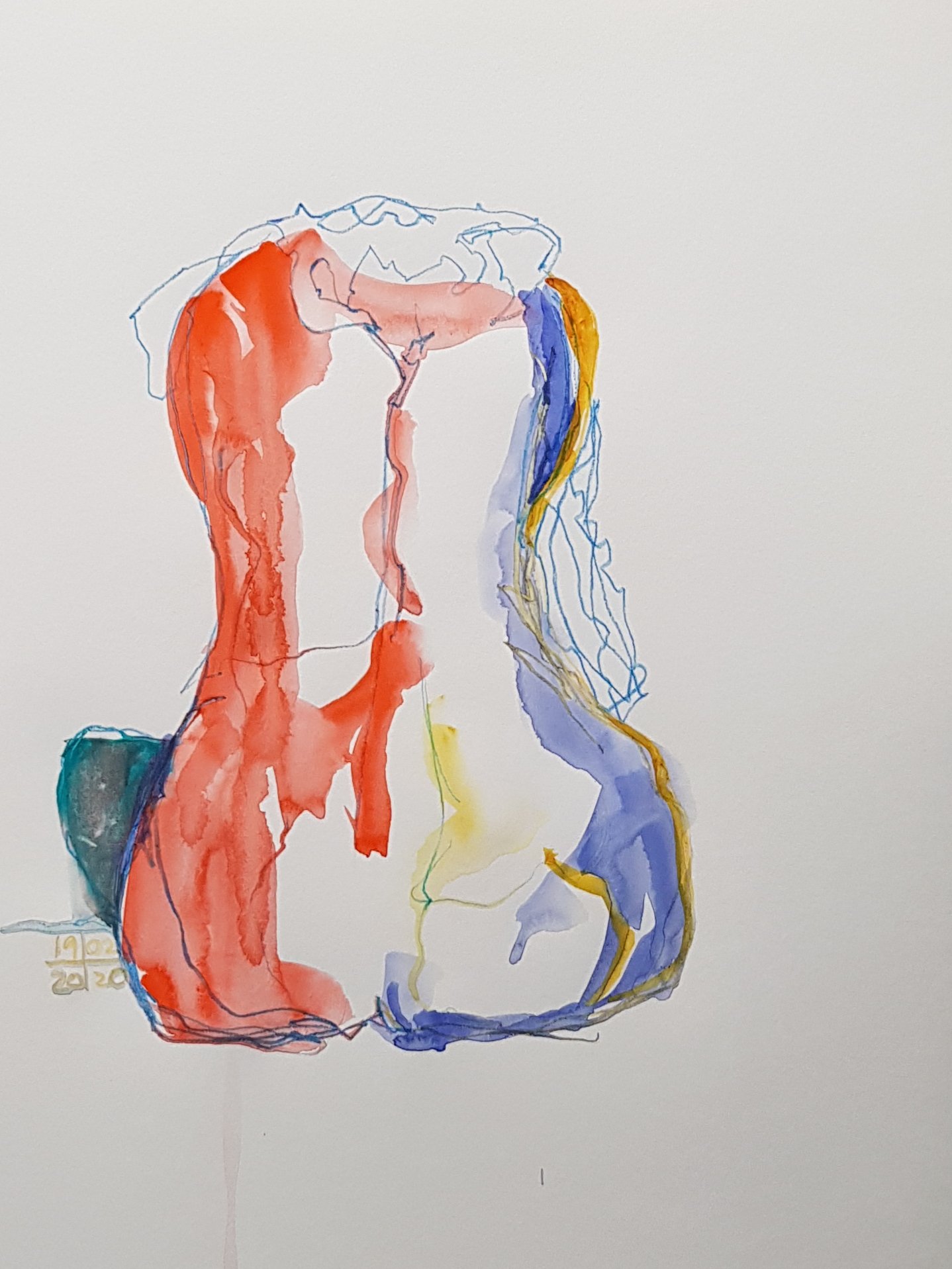
For the longer poses I swapped over to watercolour. Our group is quite eclectic in terms of media. We ranged from pencil to digital, acrylic and watercolour.
15 minute pose, watercolour and pencil, two versions.15 minute pose, watercolour and pencil. 15 minute pose, watercolour and pencil.
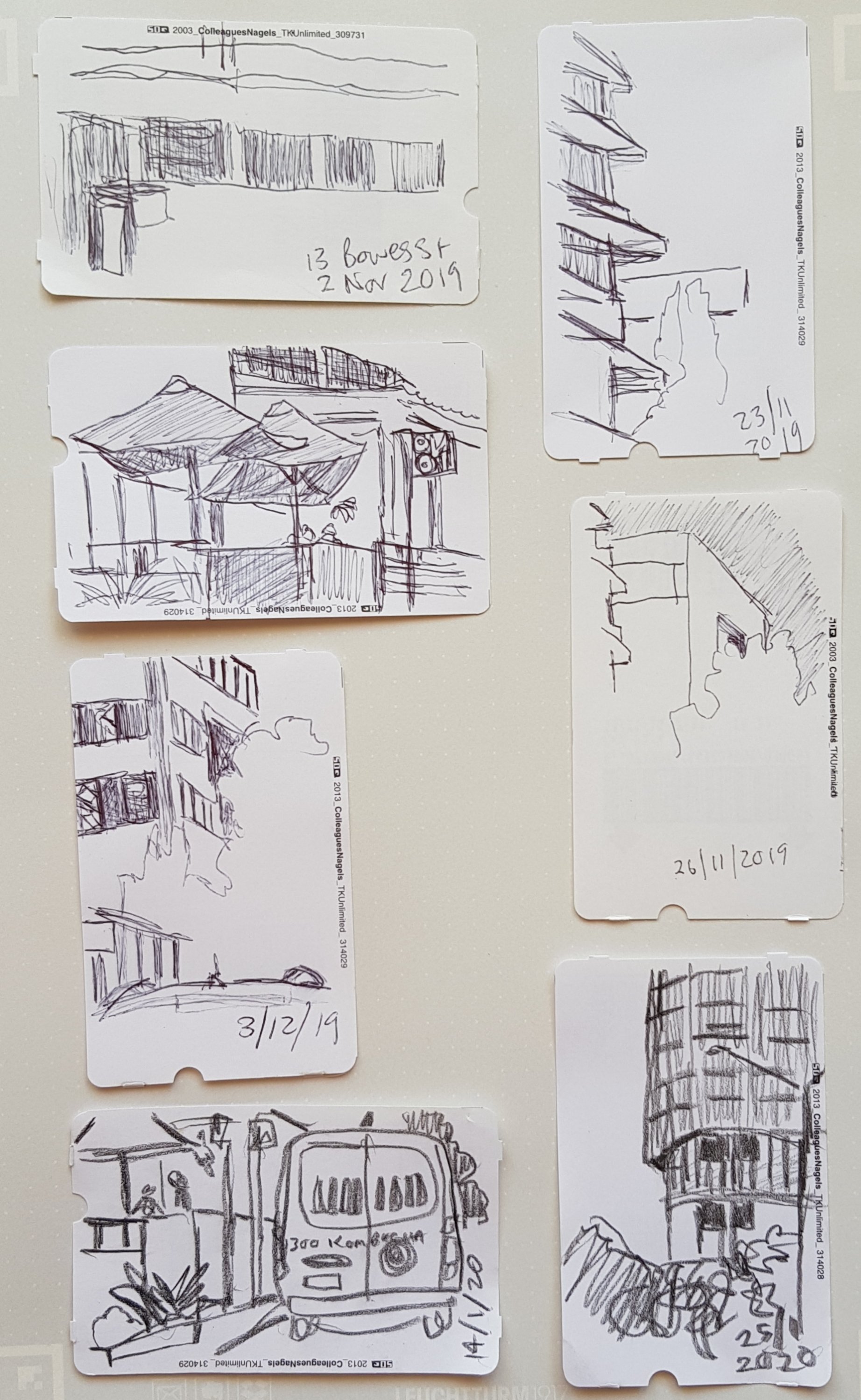
I decided to clear out my car sketches a bit more frequently. They are mainly in ballpoint pen, but recently I found a wonderful 9B pencil lurking in the glove box. It’s now my favourite.
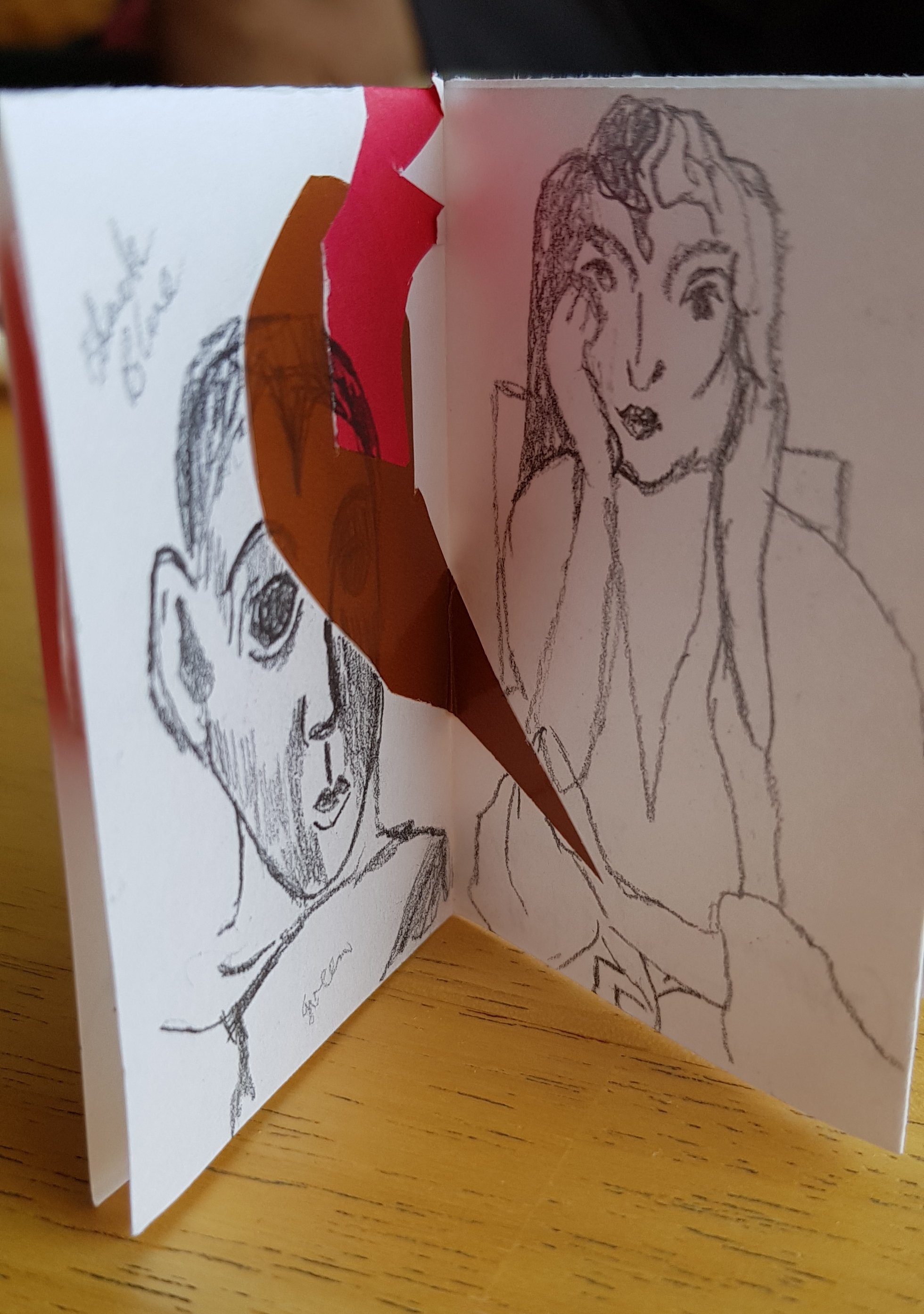
In the ‘excitement’ of the terrible hail storm yesterday while we were at the National Gallery of Australia I forgot completely about my mini Matisse-Picasso zine.
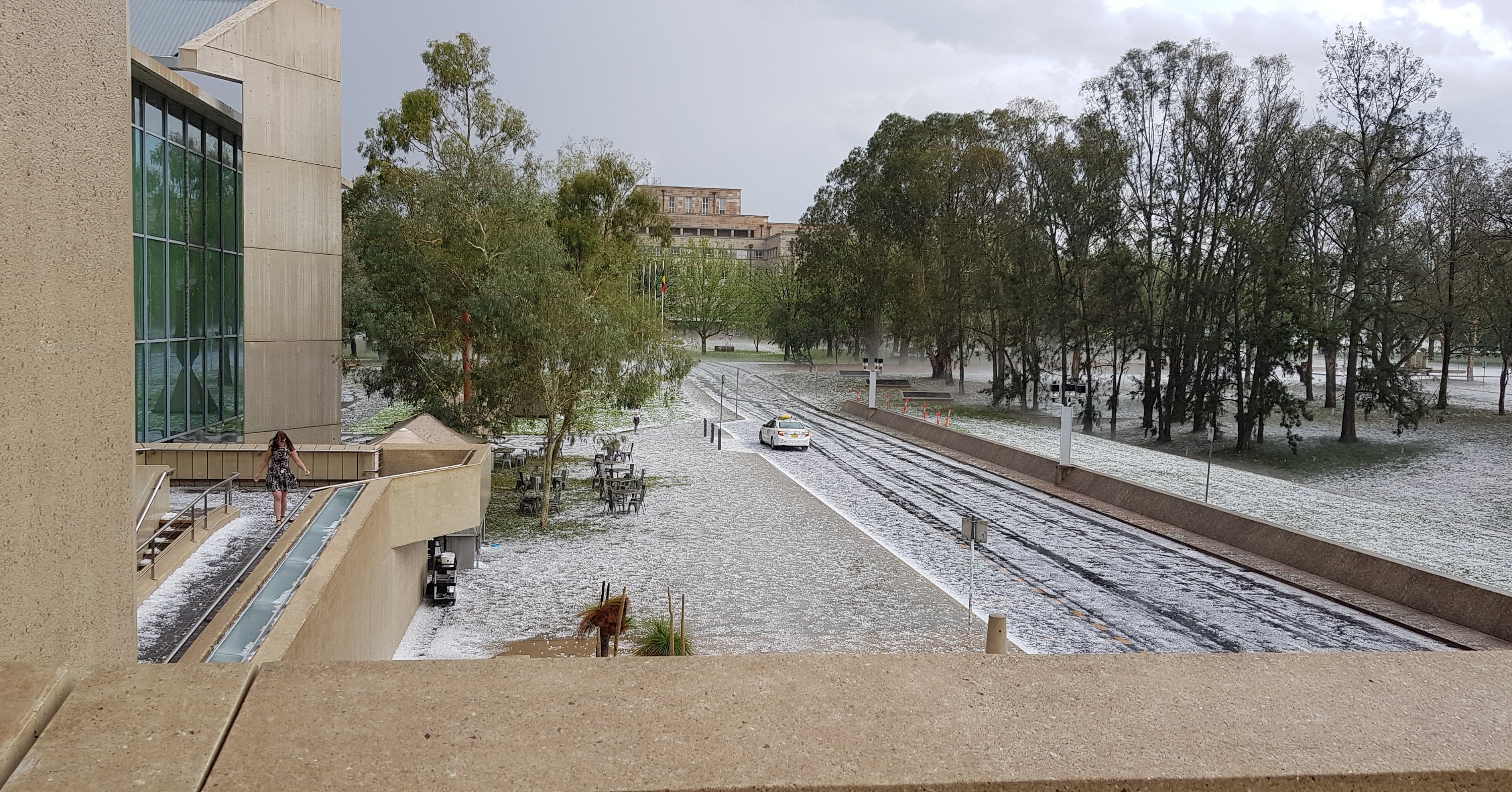
For non-locals, our weeks of smoke filled skies were cleared by a tremendously damaging hail storm yesterday. Here is a video of what the rain sounded like as we walked around inside the National Gallery of Australia. I was too stunned to get my video happening to record the sound of the hail striking the roof, suffice to say it sounded like the sky was throwing boulders.
The paintings are by Hugh Ramsay an extremely talented, Scottish born Australian artist who died in 1906 from tuberculosis at age 28.
The road and forecourt of the National Gallery of Australia covered in hail the size of golf balls.
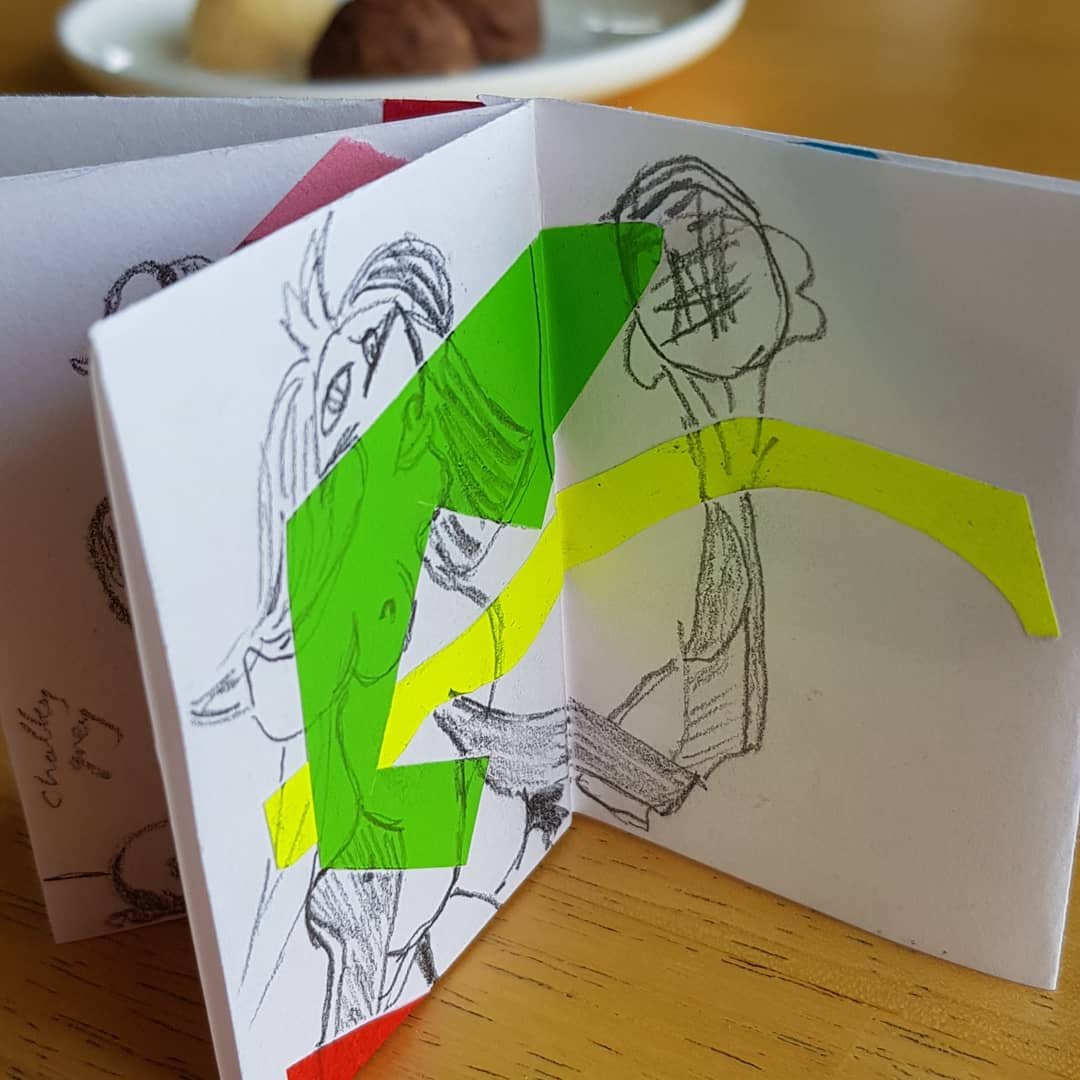
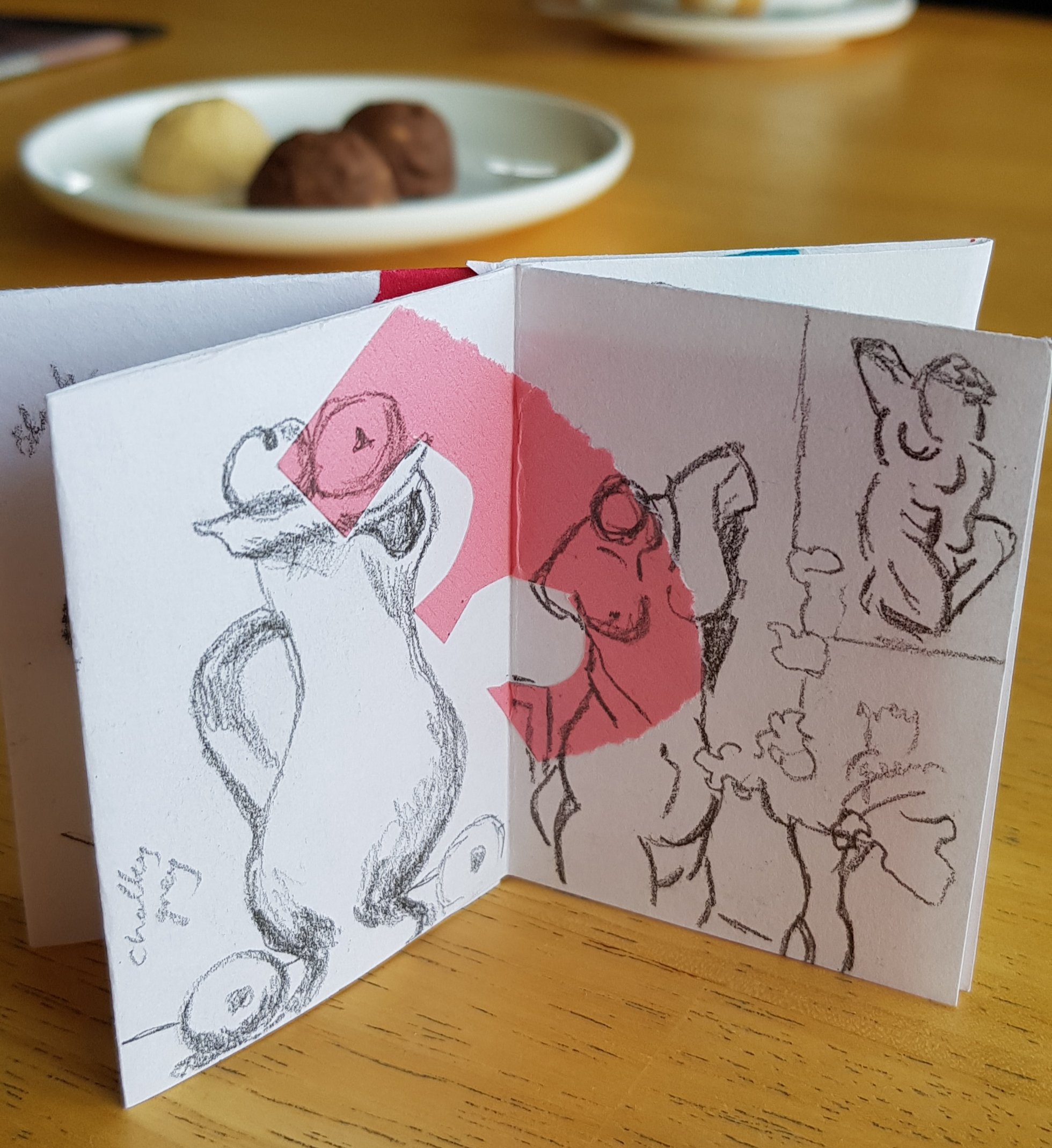
Anyway, we originally went to the gallery to make our second visit to the Matisse-Picasso exhibition. While waiting to go in I sat down at the art workshop space just outside the entrance to the exhibition and started making a little collage with the idea of using it to draw on. It then occurred to me that I could make a book out of it. I did this with the help of a short video on how to fold a piece of paper into a book (ah the benefits of the gallery free wi-fi).
This is the closest photo I have of the way the paper looked before turning it into the mini book. This is the reverse side where the painting names and dates are listed.
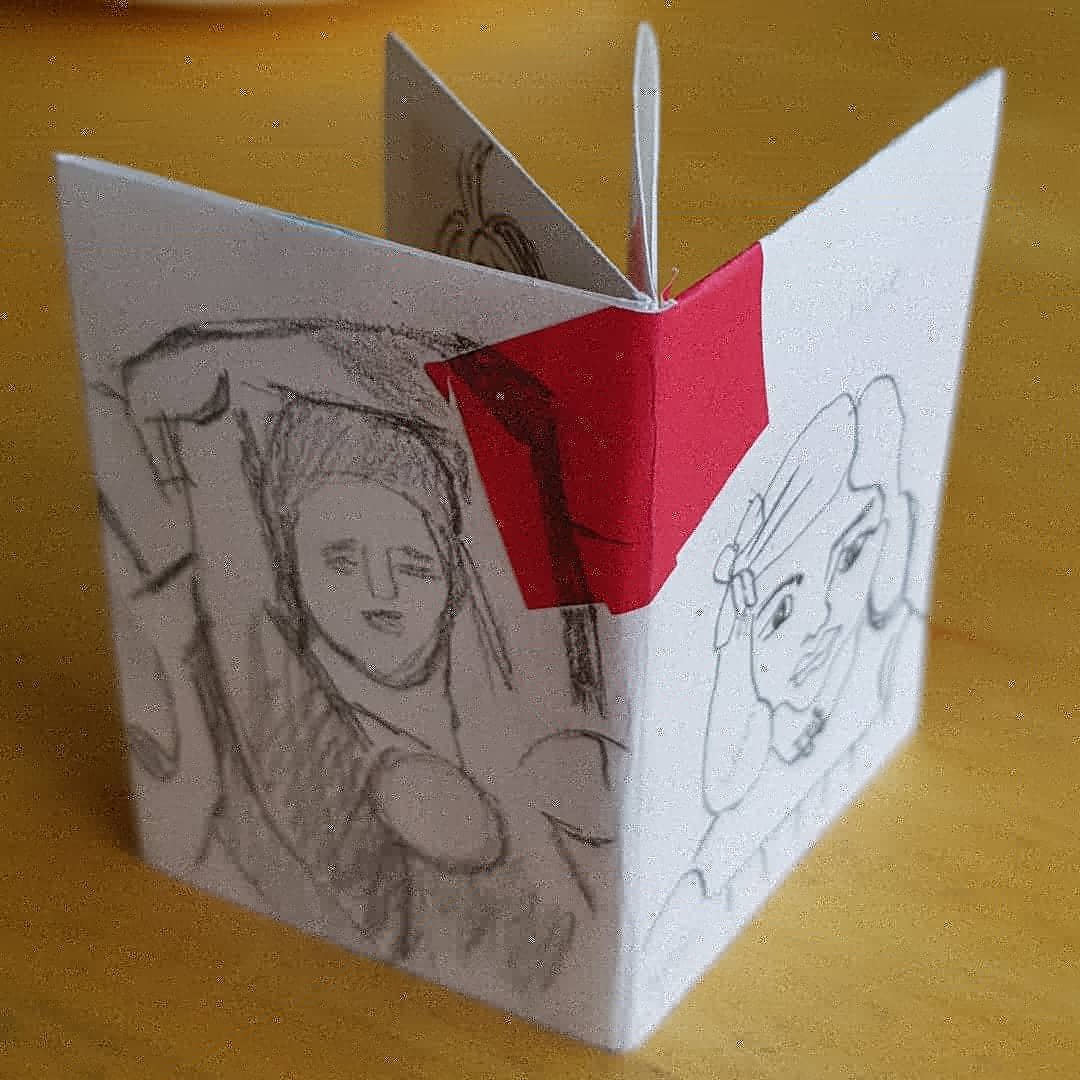
One of the advantages of making such a small book (5 cm x 7.5 cm or 2 x 3inches), is that all the sketches had to be small and fairly simple. This is the little book as it was at the gallery, (we are pencil only in the gallery).
Picasso, Head of a Boy, 1906: Matisse, Meditation (Portrait of Laurette), c.1916
Picasso, Woman with Tambourine, 1936.
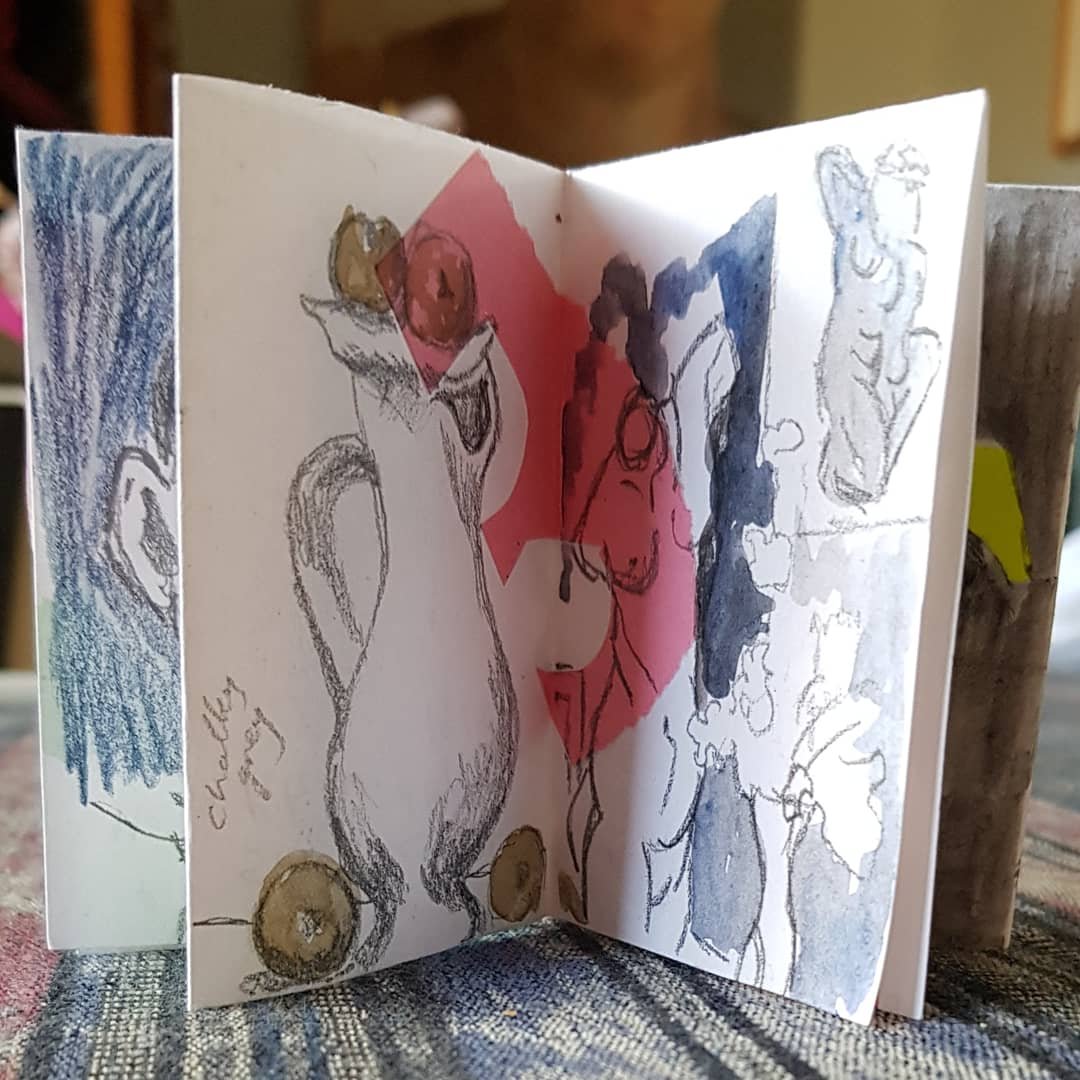
Picasso, Still Life with Pitcher and Apples, 1919: Matisse, The Plaster Torso, 1919.
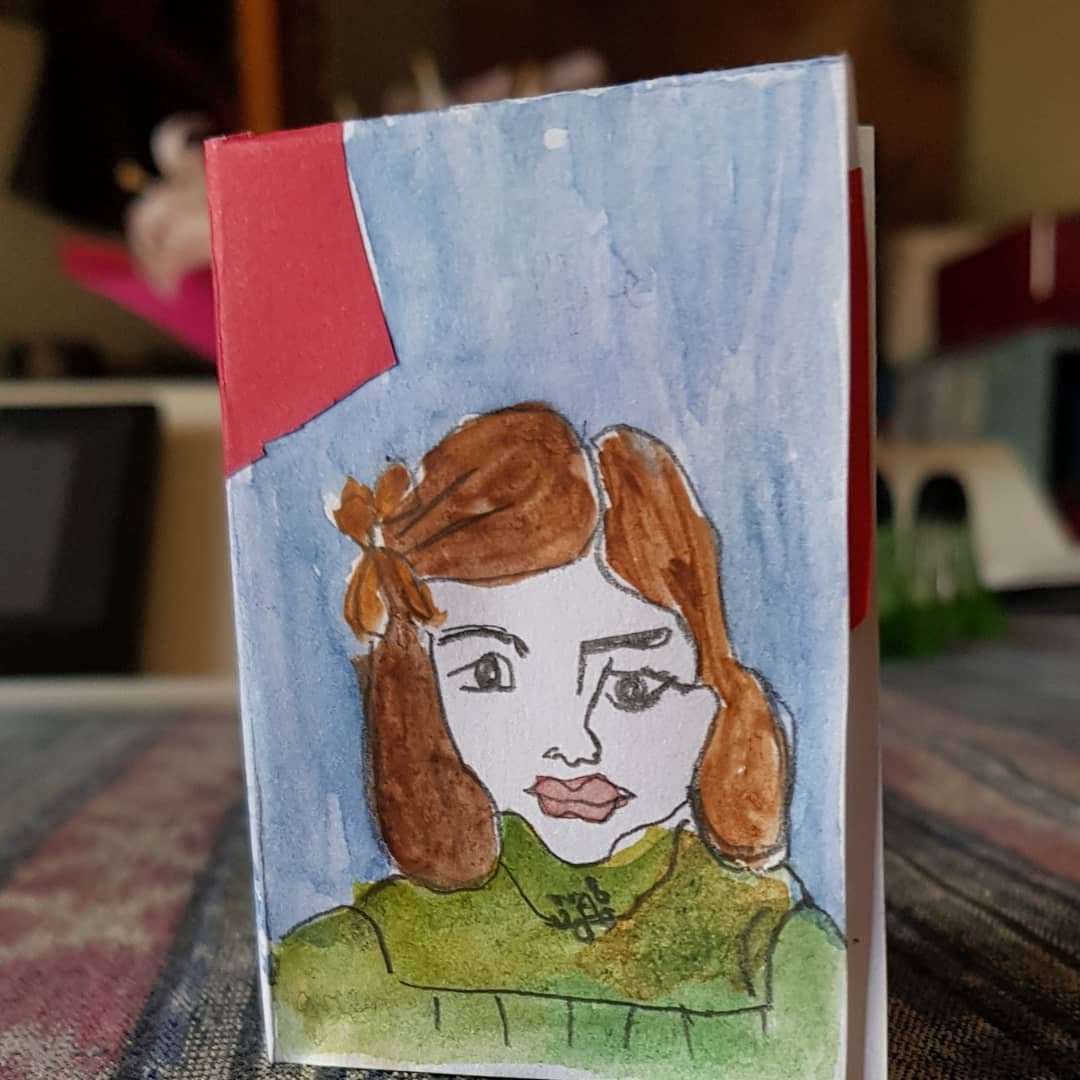
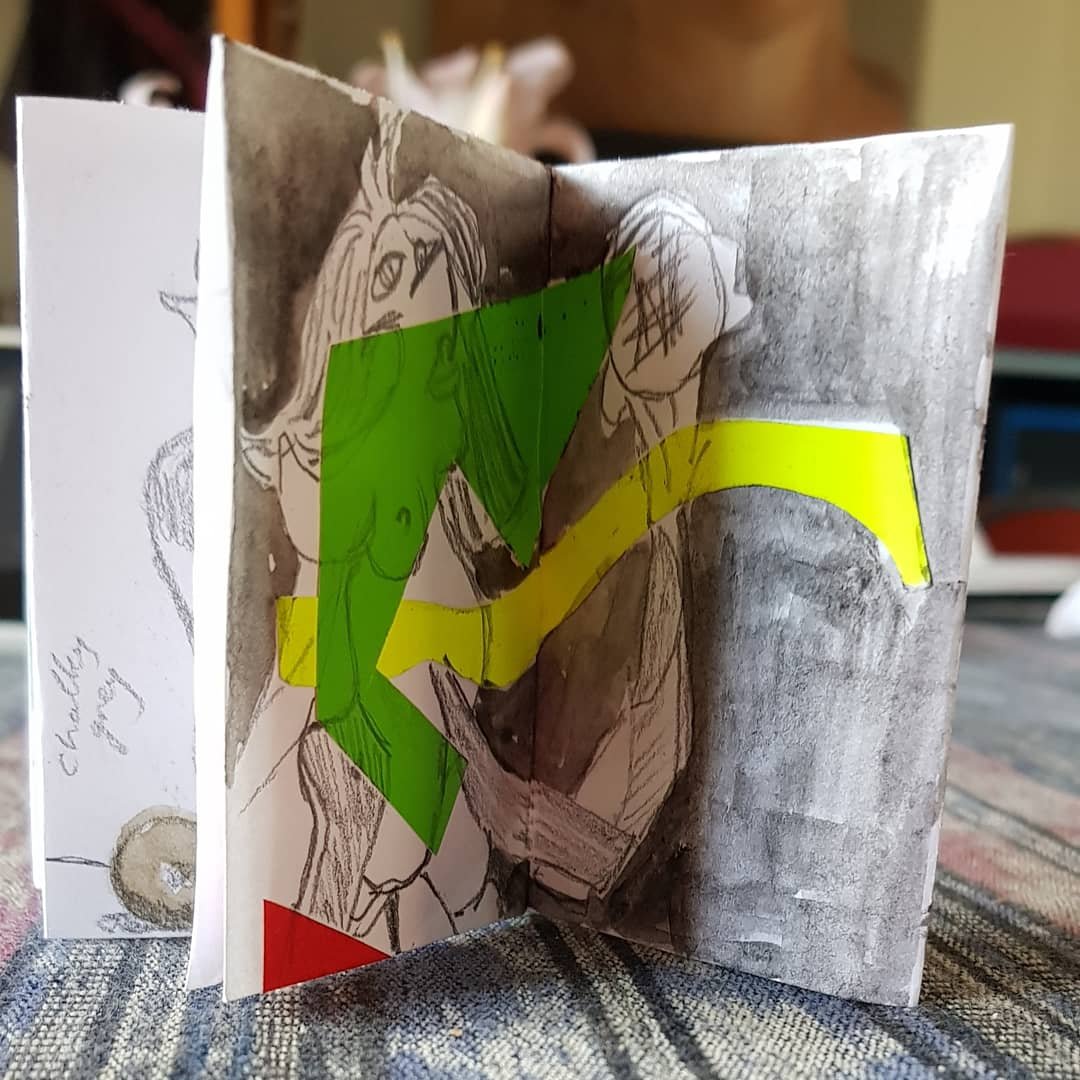
The front and back of my little zine. Matisse, The Abduction of Europa, 1929: Matisse, Nono Lebasque, 1909.
For better or worse I added colour to the zine when I got home.
I had a great time making this little zine, indeed it’s small size encouraged me to just have fun with the process. I did do some slightly larger sketches in another book, but I think this might become quite addictive.
PS the video that I used to make the book can be found here.
One more parting photo. This is the road outside the gallery strewn with shredded foliage. It looks sort of sylvan, but for knowing how damaged the trees were.














 leonieandrews