Finding space

I had one of those ‘duh’ moments this week when several observations just clicked into place for me.

I was watching a sketchbook ‘tour’ video by British artis Lis Watkins (link below), admiring, yet again, her excellent use of white space and the restrained use of detail in her work.
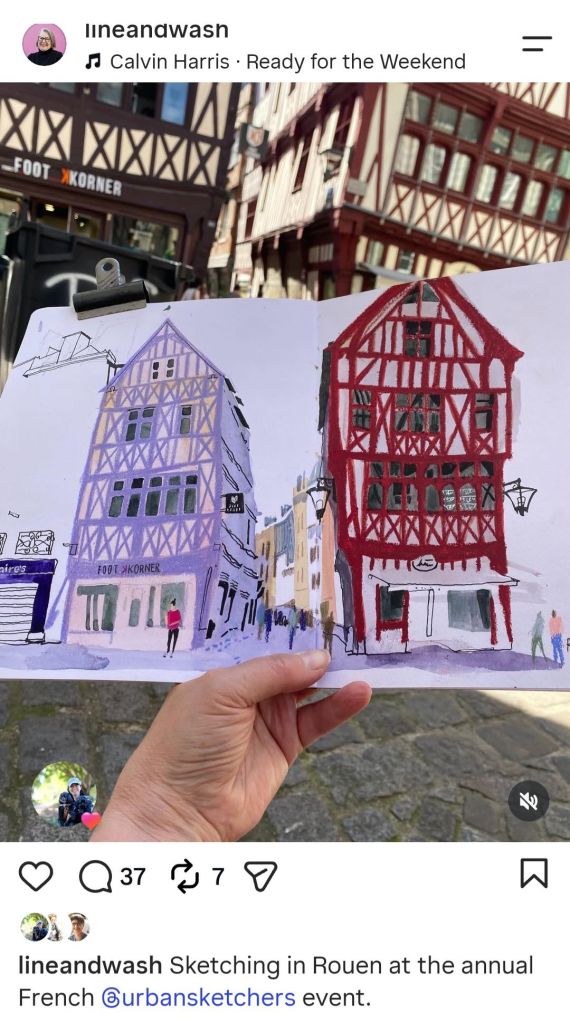
Borrowed from Lis Watkins Instagram account ‘lineandwash

Later in the evening I was sketching online with friends and was really happy with the outcome of my sketch of this bowl of peeled limes. Of course I’d left lots of space around it and felt no need to include all of the bowl in my drawing.
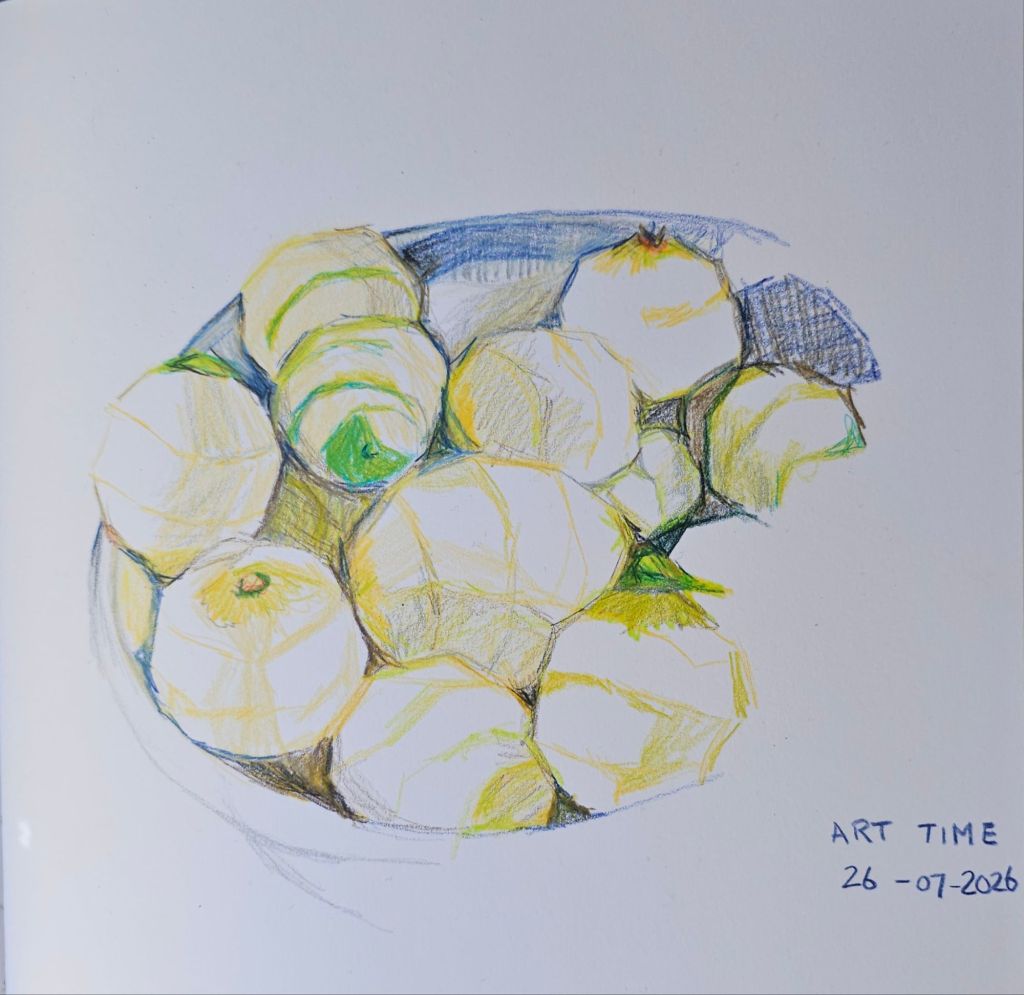
A bowl of peeled limes

Obviously I was reacting to seeing Lis’ work and when drawing objects this approach seems a pretty natural one for me to use.

On the other hand when I sketch on location,  wearing my ‘Urban Sketchers’ hat I often fall into the convention of ‘filling’ the page. I think if you look back to my previous post ‘Practice, practice‘ you can see what I”m referring to. I took a photo early on in the process and the sketch was pretty much ‘there’. I then kept going and looking back on it now, I  realise I should have stopped much sooner!

So this week I’m consciously trying to save some white on my page, while simultaneously keeping sufficient  ‘location’ information in my sketch*.
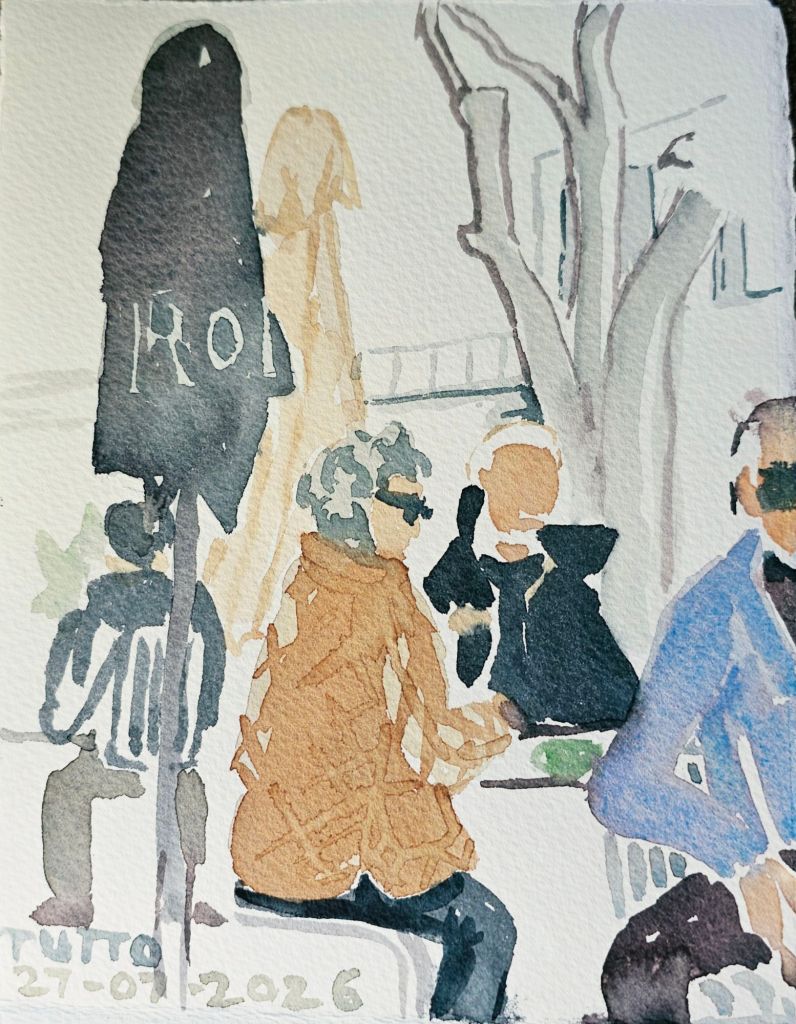
My latest ‘urban sketch’ at a local cafe on Monday.

I am liking the look of this sketch. It’s certainly a challenge to balance both space and location. I’m sure I can do this.

*If you’re not familiar with Urban Sketchers, the international sketching organisation, it’s primary goal is to encourage people to sketch on location, and that location needs to be visible (in some form) in the sketch.

Lis’ video of her sketches from recent travels is linked here:
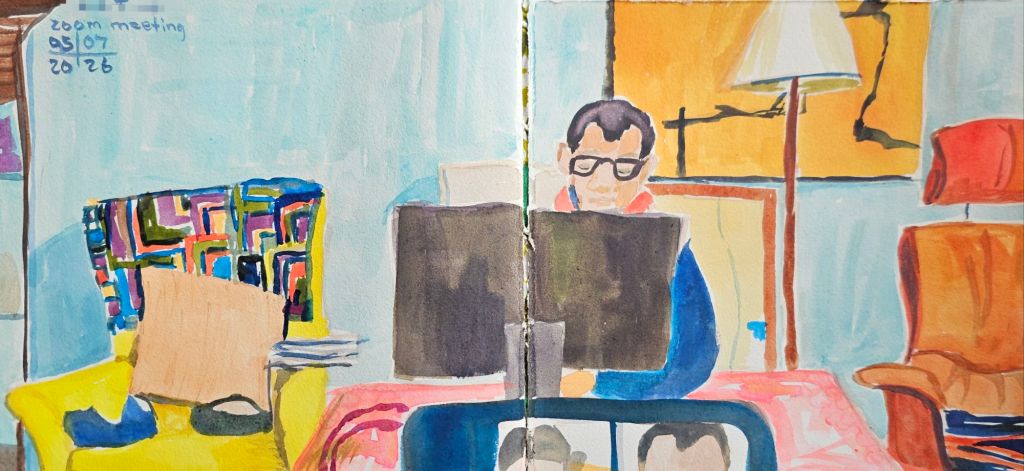
Zoom zoom

I’ve mentioned the Zoom get together I have most weeks with art friends. This time I sketched the meeting itself.

I’m testing out some materials I don’t usually work with. I’m using hot press paper – I generally use cold press – and a flat brush, not my regular round brushes.

The Zoom meeting, that’s my partner at the other end of the table. He also works with the same group.

If it’s a less than satisfying result it’s because I’m forgetting that I’m doing this precisely because I need to get some ‘brush miles’ up. Without practice and learning how to use these different techniques,  I can’t expect to get consistent results.

A brief encounter

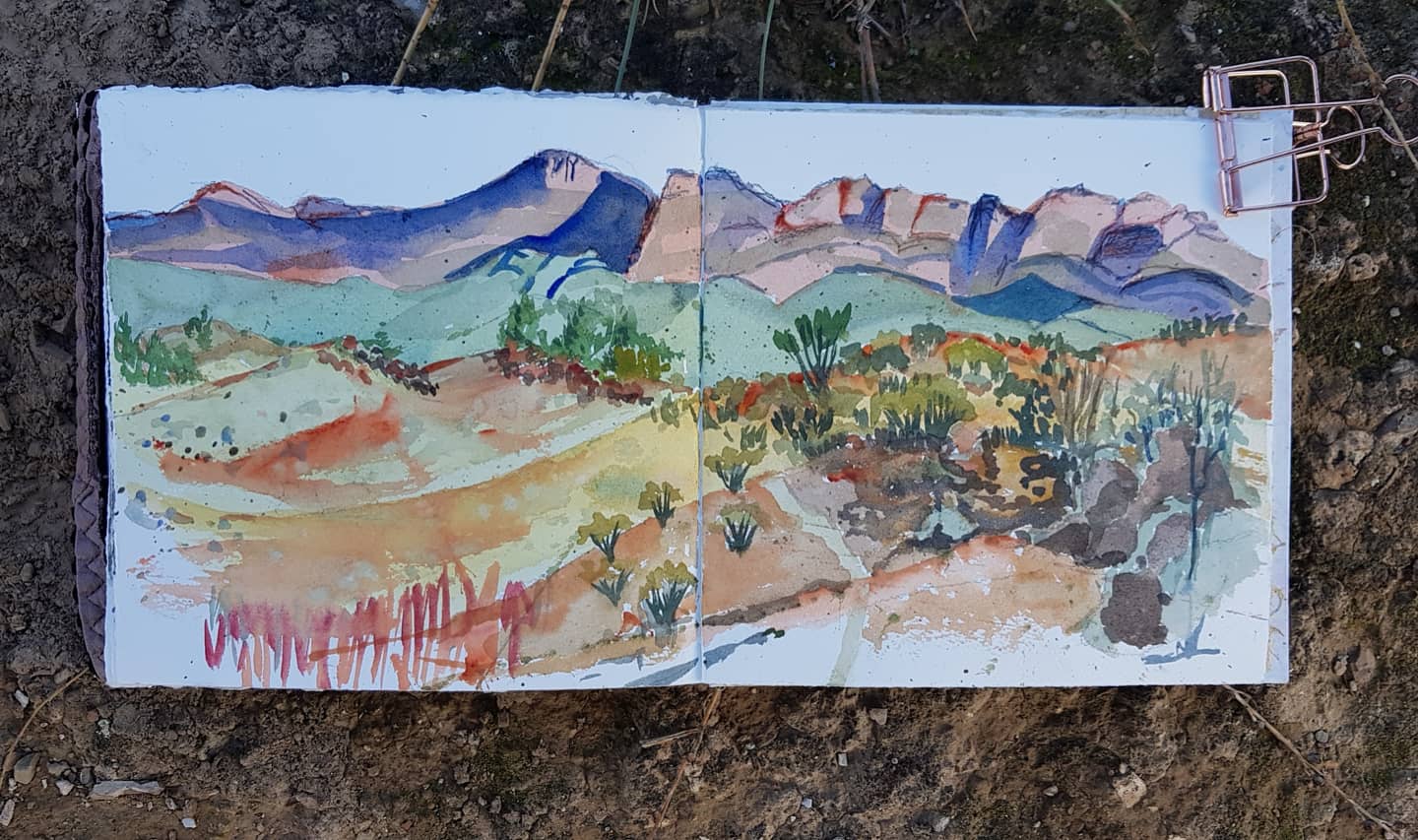
I am at the end of a very brief encounter with Ikara-Flinders Range National Park and I would desperately love to be giving it more attention.

The southern end of Wilpena Pound with a headcovering of cloud.

We have just spent the second of two full days staying at Wilpena Pound. Tomorrow we leave. The weather has been vile. Cold, rainy and blowing a gale. But, but, but … it’s breathtaking.

The view from Razorback Lookout with a rainbow between showers (PS that funny line in the photo is one of the wires around the lookout).

We have sketched from our car, all of the first day and some of our second day. But my biggest frustration with this experience is finding my own voice because I seem to be painting other people’s paintings.

Australians will have some familiarity with the work of watercolourist Albert Namatjira and possibly with photographer Harold Casneaux, whose image ‘Spirit of Endurance‘, was made only a short distance from where we are staying.

So when I start painting I see Namatjira’s work floating in front of me. It’s a challenge to paint with that over your head. However, the more I  thought about it I realised that I should learn from those artists, before I worry about my own style.

Late afternoon light on Wilpena Pound.

Obviously I just need to get on with it.

Wilpena Pound from Bunyeroo Gorge drive.

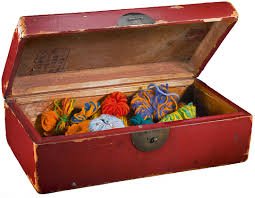
Van Gogh’s box of wool

A red painted box with balls of wool inside. I wondered what the box was used for. Vincent Van Gogh used the balls of wool to consider possible colour combinations.

Van Gogh’s box of wool, Van Gogh Museum,  Amsterdam

Synthetic dyes were discovered in the 1860’s, influencing both fashion and the colours on the palettes of artists.

Up close to Van Gogh

While in the Netherlands in 2019 we had the opportunity to binge, in person, on the works of Vincent Van Gogh at both the Van Gogh Museum in Amsterdam and the Kröller-Müller Museum in Otterlo. The latter is the largest private collection of Van Gogh’s work in the world and the second largest collection after the Van Gogh Museum. Unlike the Van Gogh Museum, the Kröller-Müller does allow photography so I was able to take photos and details of some of the works I saw during my visit.

The reason I am posting these photos now is that a fellow blogger, Rose Davies, has been spending some of her recent time attempting to copy Van Gogh’s painting Starry Night. As she commented in her recent post, “it’s so interesting to analyse a famous artwork and see what has gone into it”. So I thought I’d share a few of my detail shots and two drawings I made in the Kröller-Müller Museum.

Please note that these photos were taken standing back and using a close up lens, rather than with my face on the painting. Although I did see a man literally lean over a barricade, place his hand on the wall next to a Van Gogh self portrait in the Rijks Museum and literally stick his face only a few centimetres off the glass!

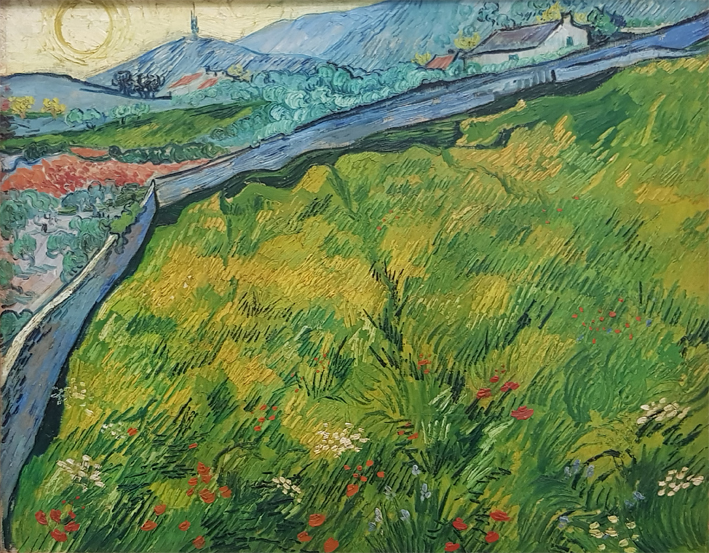
Enclosed Wheat Field with Rising Sun, late May 1889,

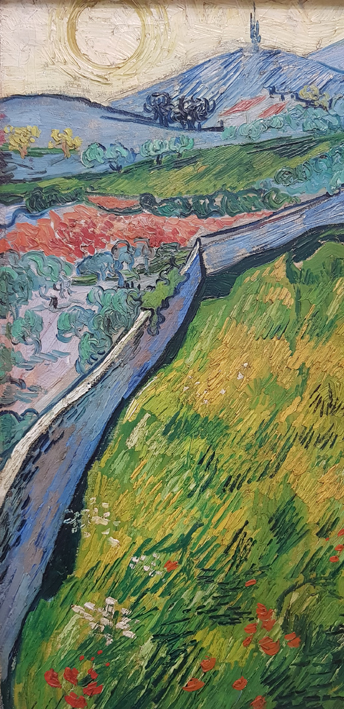
Detail from the left side of the painting (as we are looking at it).

My notes on the painting, Enclosed Wheatfield with Rising Sun.

Wheatfields in a Mountain Landscape, early December, 1889,

Details of the tree from the left side of the painting (as we are looking at it).

vvg2a

Detail of the tree in the centre right of the painting, (as we are looking at it).

My notes on the colours of the tree on the centre right of the painting

Terrace of a Café at Night (Place Du Forum), circa September 1888

Detail of the street and figures to the far right of the painting, (as we are looking at it).

You can see those black arcs of ‘dry brush’ skipping over the other layers of paint.

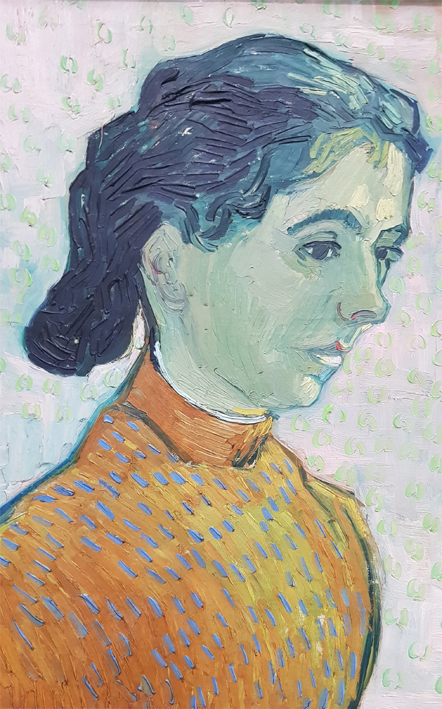
Portrait of a Young Woman, late June-early July 1890

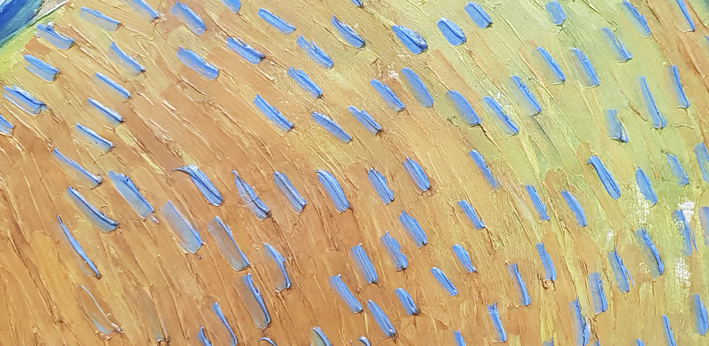
Detail of the left shoulder, (as we are seeing the painting).

I love how we are so simply led over the contour of her torso by those blue brush strokes, something that I noticed Van Gogh often does in his self-portraits as well.

Let’s hope that in the near future we will be able to see such art in person again.