As Yoda once said “do or do not”. So some days I do and some days I do not!
One thing I do want to do this year is work on reducing the ridiculous amount of art materials sitting unused in my back room, in cupboards and all sorts of other places around the house. Now I have materials I prefer to use, the rest just sit there.
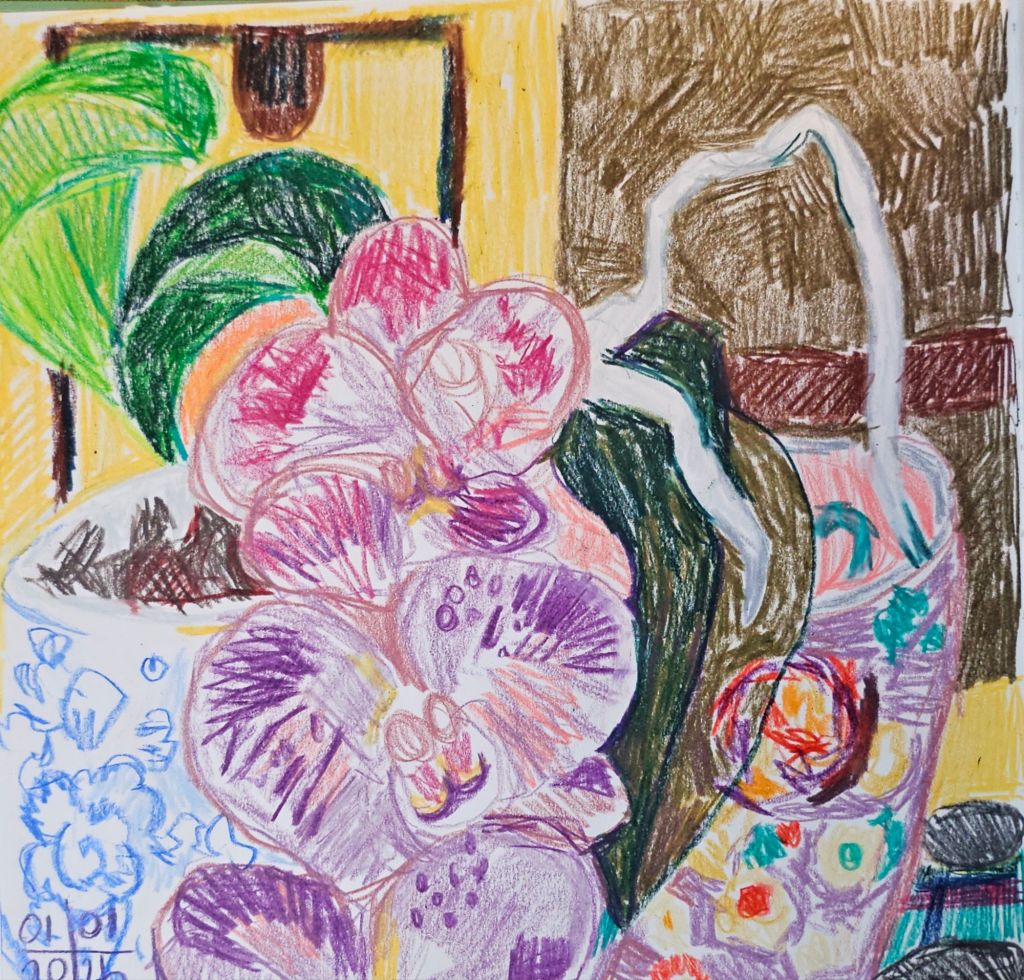
Drawing with colour pencils, trying to change the direction of my marks each time I put the pencil on the page. Also, trying not to be too ‘precious’ with my drawings.
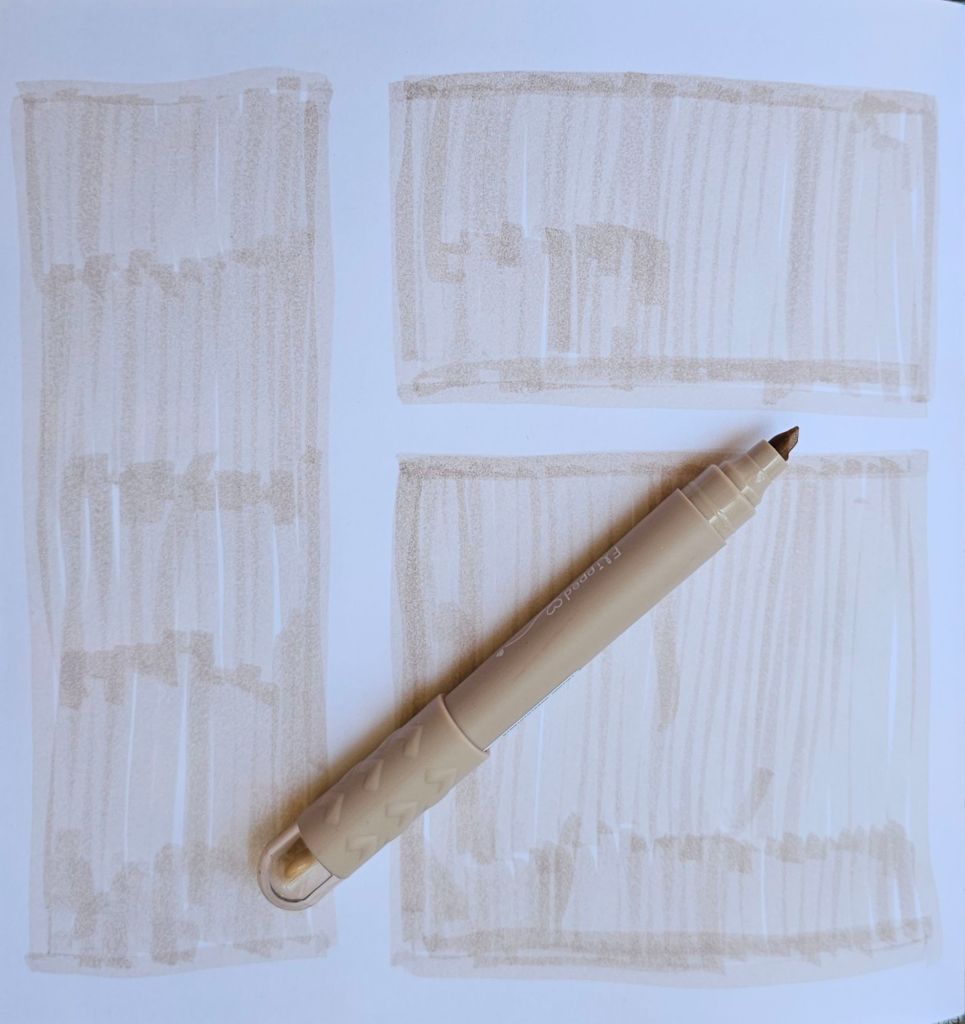
I’m trying some tactics to use things like markers, in particular. I have seen several artists use them to make this ‘window pane’ background to sketch over.
Marker pen window pane background, ready to use
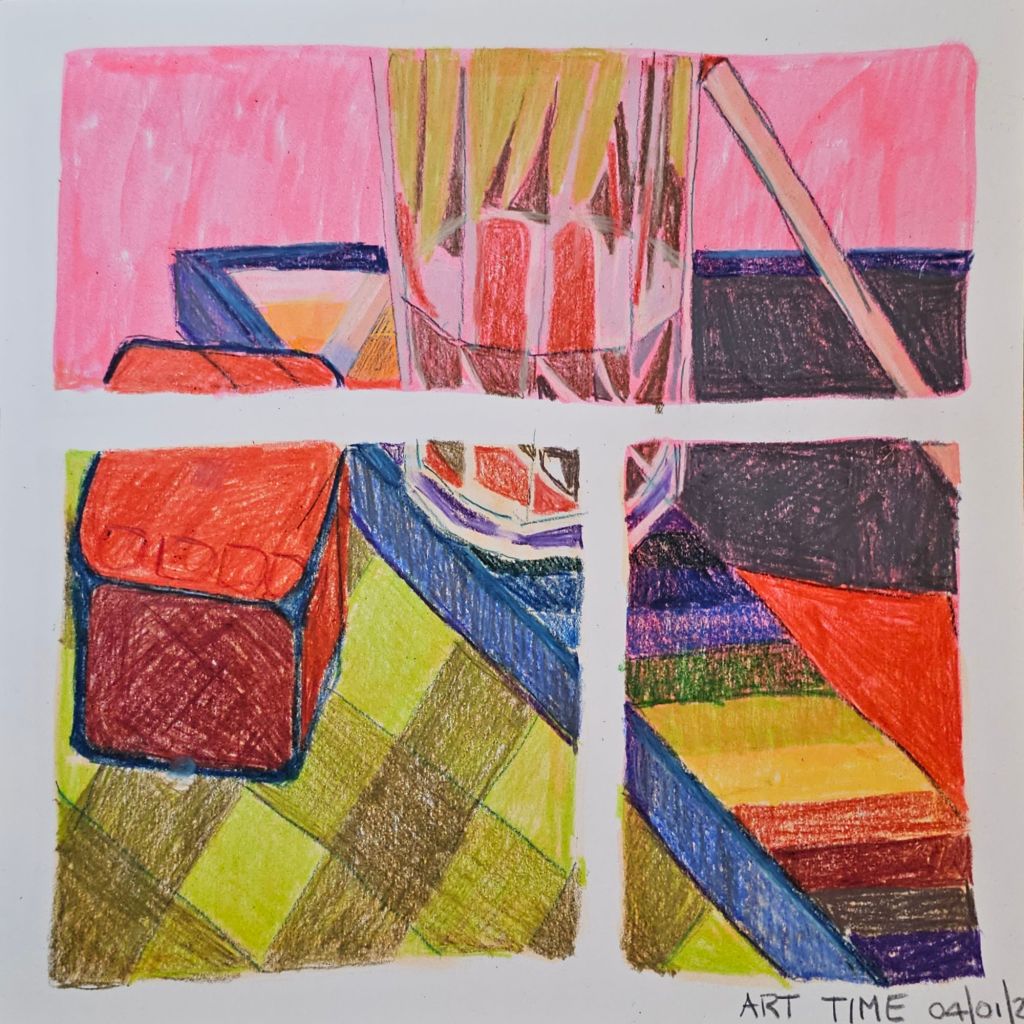
I did a similar preparation using other hot pink markers (forgot to take a reference photo) and this is what it looks like as a base with a finished drawing over the top.
Marker background colour pencil over the top. Still life from our table top.
The fact that I’m using this lovely sketchbook from Leuchtturm 1917 helps. It was part of the ‘goody bag’ I received when I taught at the Urban Sketchers Symposium in Poznan last year. This isn’t the type of paper I would usually work with, but it’s very good for all these dry media.
One of my favourite ‘goody bag’ items from Symposium 2025.
I was about to start a drawing session with friends when I accidently got in the way of some steam from the kettle – burning my hand in the process (thankfully not a major burn). It was enough to drive me to use my other hand to draw with while my dominant hand stayed wrapped in a cool damp cloth
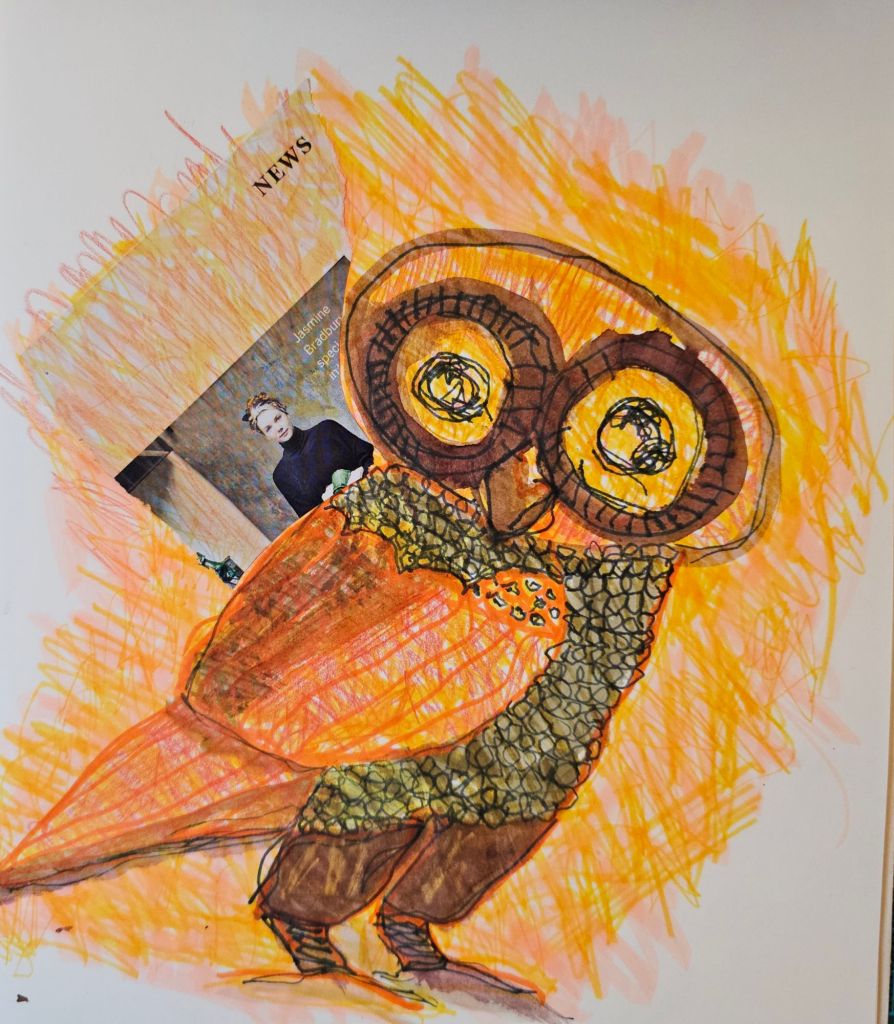
I just picked from a variety of markers and pencils already on my table and one of my fountain pens.
Markers, coloured pencil and fountain pen with collage
I really like the result! Nothing too fussy. My inspiration was this replica of a Roman Owl brooch that was found in the city of Bath in the UK. I didn’t resist adding a touch of collage when I found this tiny scrap on my table as well.
A copy of a sacrifice to the goddess Sulis-Minerva
Pure form: Japanese sculptural ceramics*, is a new exhibition at the Art Gallery of South Australia showcasing Japanese ceramics from the 1950s to the present day.
Installation shot of work, (foreground to background), Object (nogata), saiseki zōgan, Kishi Eiko, 2005; Shell-shaped covered vessel (Kai futamono), Koike Shōko, 2009: No.3 Erosion, Shingu Sayaka, c. 2020; Untitled, Katsumata Chieko, 2021; and Box Batter-17, Mishima Kimiyo, 2017.
The exhibition spreads across several rooms and is breathtaking in it’s array of forms, textures and graphic presence. I had only a limited time to draw in the gallery today. The hardest thing was to decide what to sketch first.
I started with a darkly glazed vessel by Mihara Ken, whose concertina-shaped folds reminded me of Issey Miyake garments.
Sekki, Mihara Ken, c. 2010, Matsue, stoneware and glaze, collection of Raphy Star. Sketch, graphite on paper.
Next to the work of Mihara Ken was a form by Misaki Mitsukuni. The surface, which I was unable to do justice to, is created by the artist rubbing slip into the surface, which he has described as ‘Rothkoing’.
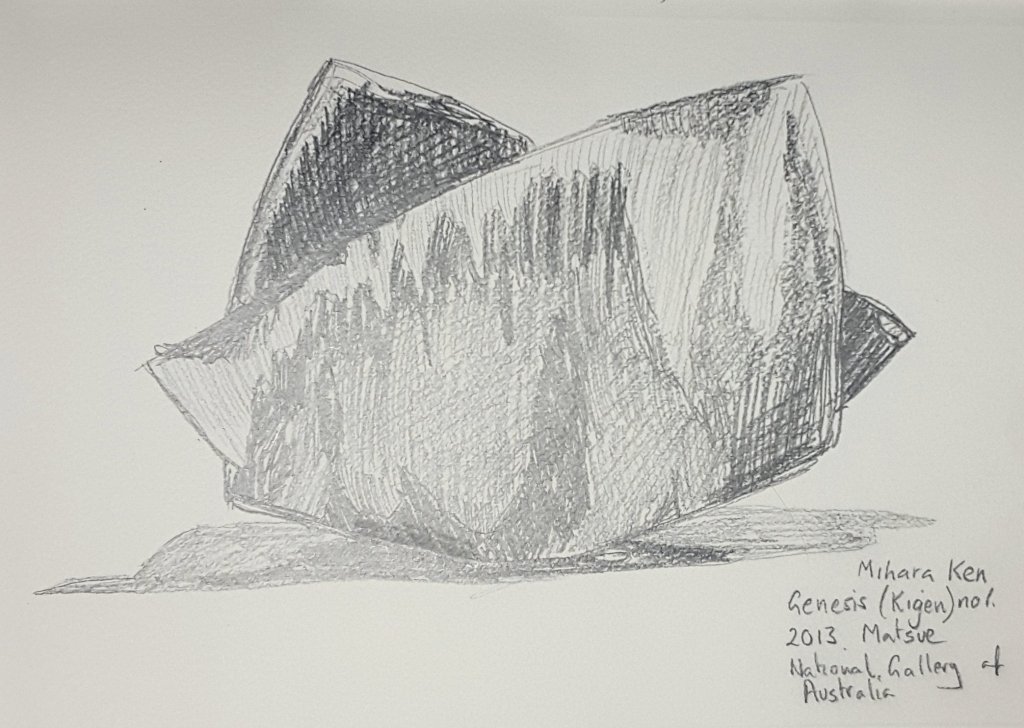
Turning my chair I could see another work by Mihara Ken, a form that appeared as if folded out of sheets of clay. The glazes were very subtle blue greys and deep brown.
Genesis (Kigen) no.1, Mihara Ken, 2013, stoneware, glaze, National Gallery of Australia. Sketch graphite on paper.
Finaly, I did a very quick sketch, part contour drawing, of Kaneshige Kosuke’s work, Tall sculptural form, c. 2006.
Tall sculptural form, Kaneshige Kosuke, c. 2006, Bizen city, stoneware, collection of Raphy Star. Sketch, graphite on paper.
*Pure form: Japanese sculptural ceramics is accompanied by an extensive catalogue (which I will be looking at for quite some time).
The exhibition and book are by Russell Kelty, Curator of Asian Art, Art Gallery of South Australia.
The exhibition runs until 6 November 2022 at the Art Gallery of South Australia. Get there if you want to see some amazing ceramics!
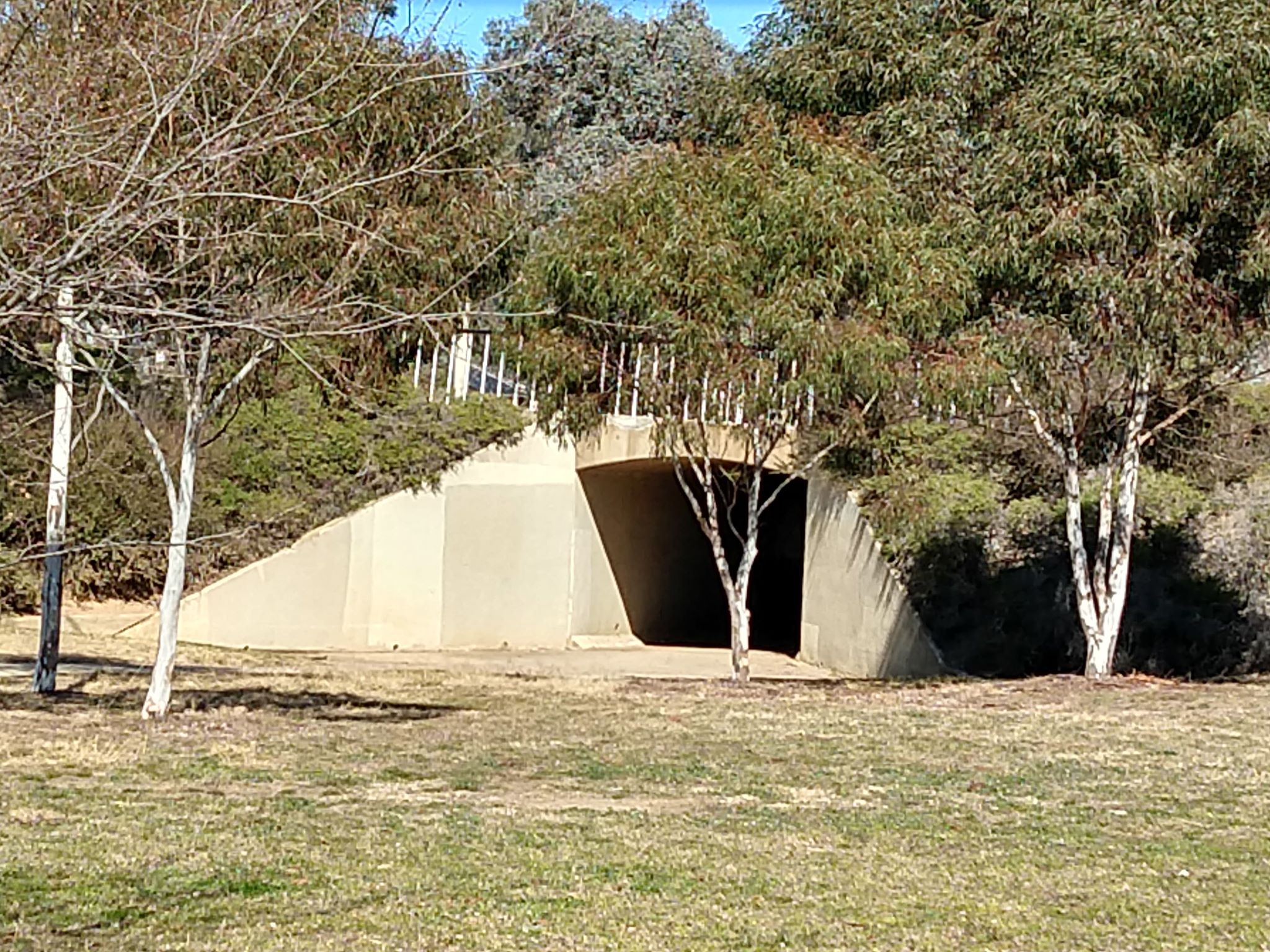
This year I have twice taught introductory classes on urban sketching for our local Community Arts Centre. We have been sketching at a local shopping centre focusing on sketching the underpass and the toilet block.
I have actually become quite fond of sketching this underpass.
Strange subjects for sketches I know, however they are simple enough shapes to practice proportional measuring and drawing for people with limited sketching experience. I want to help people experience the satisfaction of making a ‘good’ drawing; good enough to encourage them to keep on trying.
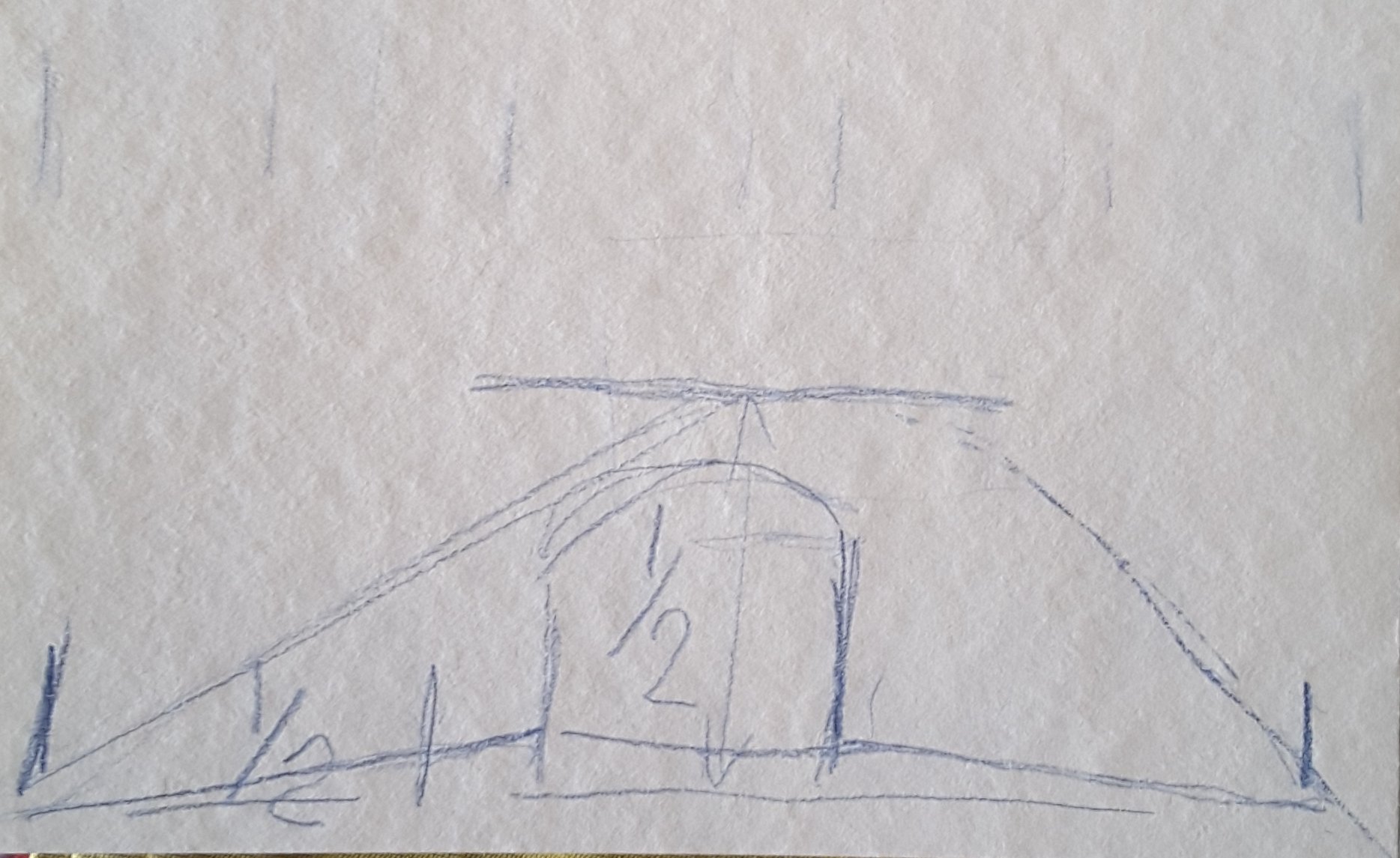
I won’t go into the details of what this all means, suffice to say that getting the relative proportions relatively correct means a much more satisfactory outcome to the drawing.
Above is a quick sketch where I’ve demonstrated how to use a pencil to measure the proportions of the underpass.
Demonstrating the results of making light and dark shades with watercolour pencils. The challenge is encouraging people to use a wider tonal range, particularly strong darks, which if nothing else save the sketch from death by mid-tone values.
Secondly some suggestions on how to use watercolor pencils. Then a small drawing demonstrating how you can emphasize the background, rather than focus on a tree in the foreground of your main subject.
A small sketch using ‘negative space, to make a tree trunk pop out from the over pass railings behind it.
And finally my piece de resistance a sketch completed upside down. This sketch shows the relative values of the underpass and how to include the two trees in front of it, without them detracting from the main subject.
All my best ideas are nicked from other sketchers. This one is no exception. Alvin Wong, an urban sketcher from Hong Kong, once explained that one of the most useful skills he learned in his early days as an architect was how to draw and write upside down, while delivering presentations to clients. Not only does it impress the socks off people, but in this case I could demonstrate the ideas I was trying to share so the sketcher could easily follow my drawing.





 leonieandrews