Up close to Van Gogh

While in the Netherlands in 2019 we had the opportunity to binge, in person, on the works of Vincent Van Gogh at both the Van Gogh Museum in Amsterdam and the Kröller-Müller Museum in Otterlo. The latter is the largest private collection of Van Gogh’s work in the world and the second largest collection after the Van Gogh Museum. Unlike the Van Gogh Museum, the Kröller-Müller does allow photography so I was able to take photos and details of some of the works I saw during my visit.

The reason I am posting these photos now is that a fellow blogger, Rose Davies, has been spending some of her recent time attempting to copy Van Gogh’s painting Starry Night. As she commented in her recent post, “it’s so interesting to analyse a famous artwork and see what has gone into it”. So I thought I’d share a few of my detail shots and two drawings I made in the Kröller-Müller Museum.

Please note that these photos were taken standing back and using a close up lens, rather than with my face on the painting. Although I did see a man literally lean over a barricade, place his hand on the wall next to a Van Gogh self portrait in the Rijks Museum and literally stick his face only a few centimetres off the glass!

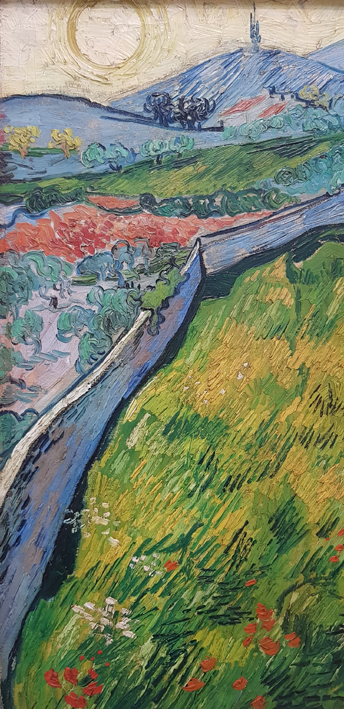
Enclosed Wheat Field with Rising Sun, late May 1889,
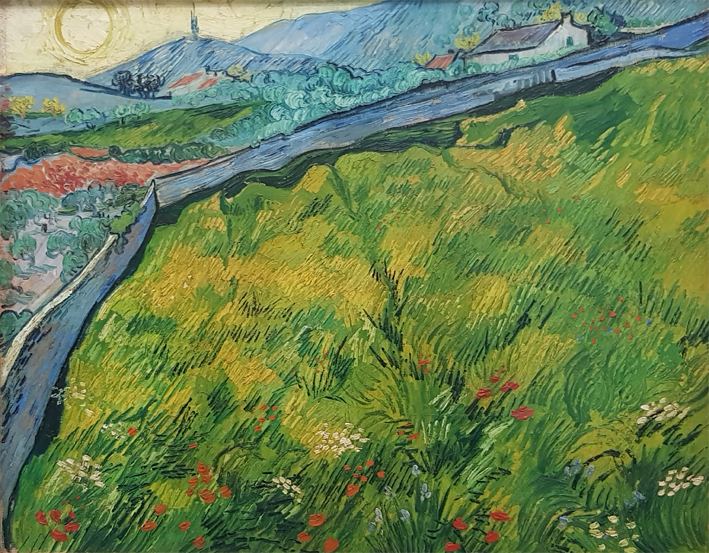
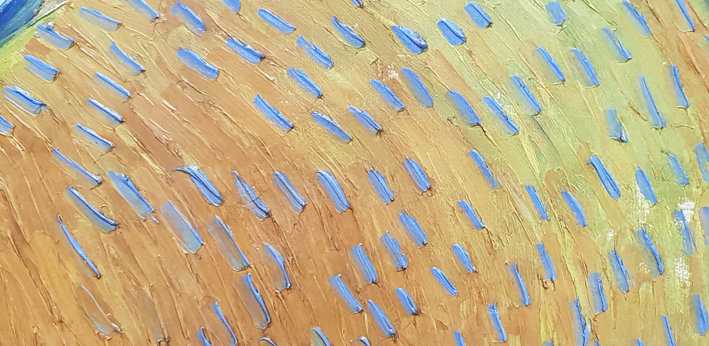
Detail from the left side of the painting (as we are looking at it).
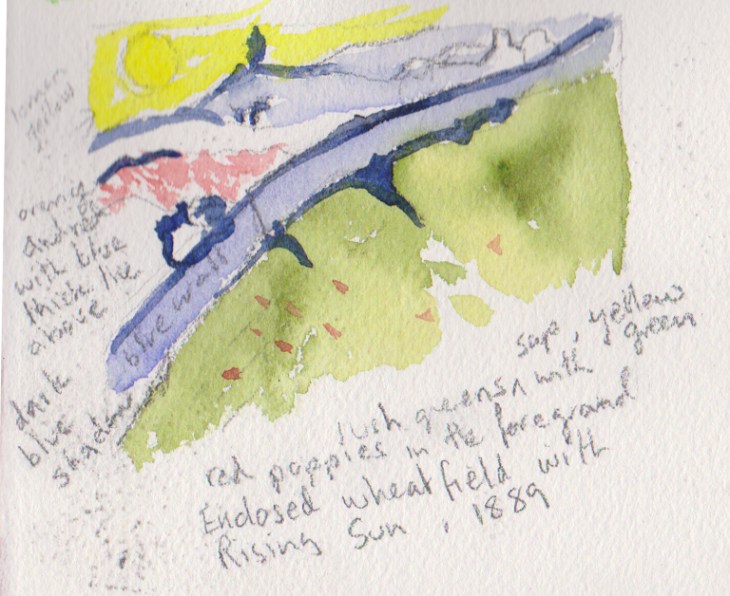
My notes on the painting, Enclosed Wheatfield with Rising Sun.

Wheatfields in a Mountain Landscape, early December, 1889,

Details of the tree from the left side of the painting (as we are looking at it).

vvg2a

Detail of the tree in the centre right of the painting, (as we are looking at it).

My notes on the colours of the tree on the centre right of the painting

Terrace of a Café at Night (Place Du Forum), circa September 1888

Detail of the street and figures to the far right of the painting, (as we are looking at it).

You can see those black arcs of ‘dry brush’ skipping over the other layers of paint.

Portrait of a Young Woman, late June-early July 1890

Detail of the left shoulder, (as we are seeing the painting).

I love how we are so simply led over the contour of her torso by those blue brush strokes, something that I noticed Van Gogh often does in his self-portraits as well.

Let’s hope that in the near future we will be able to see such art in person again.
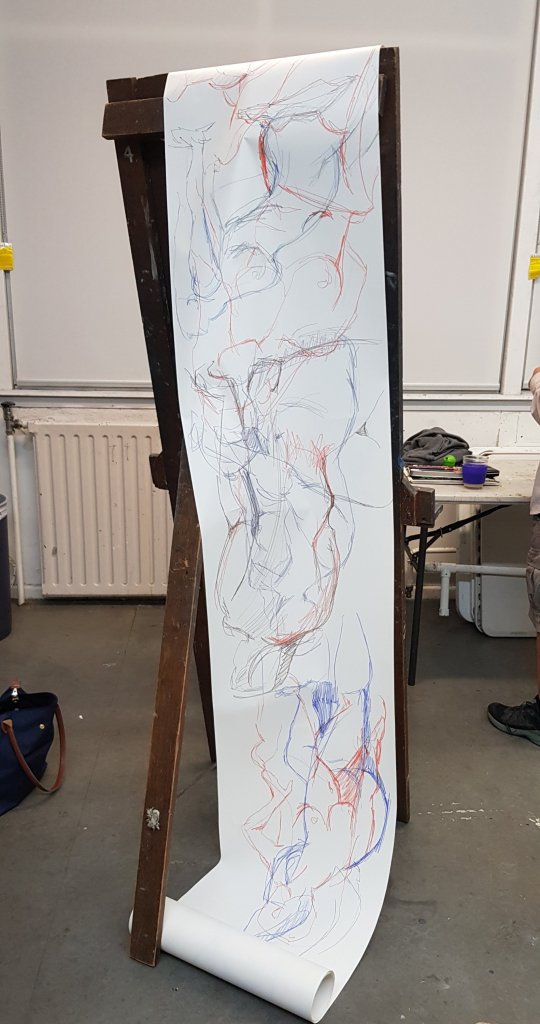
Life Drawing .

Last week I went to my first life drawing class of the year. We had a stand-in model, one of the class, as the booked model cancelled just before the class started.

I took the big tip from last year’s classes and bought myself a roll of paper from the kids section of IKEA for the short poses. As you can see you just keep rolling it up and over the easel.

Short sketches in coloured pencils.

For my quick poses I used coloured pencils, part of my drive to start using all those stray art materials I have hanging around.

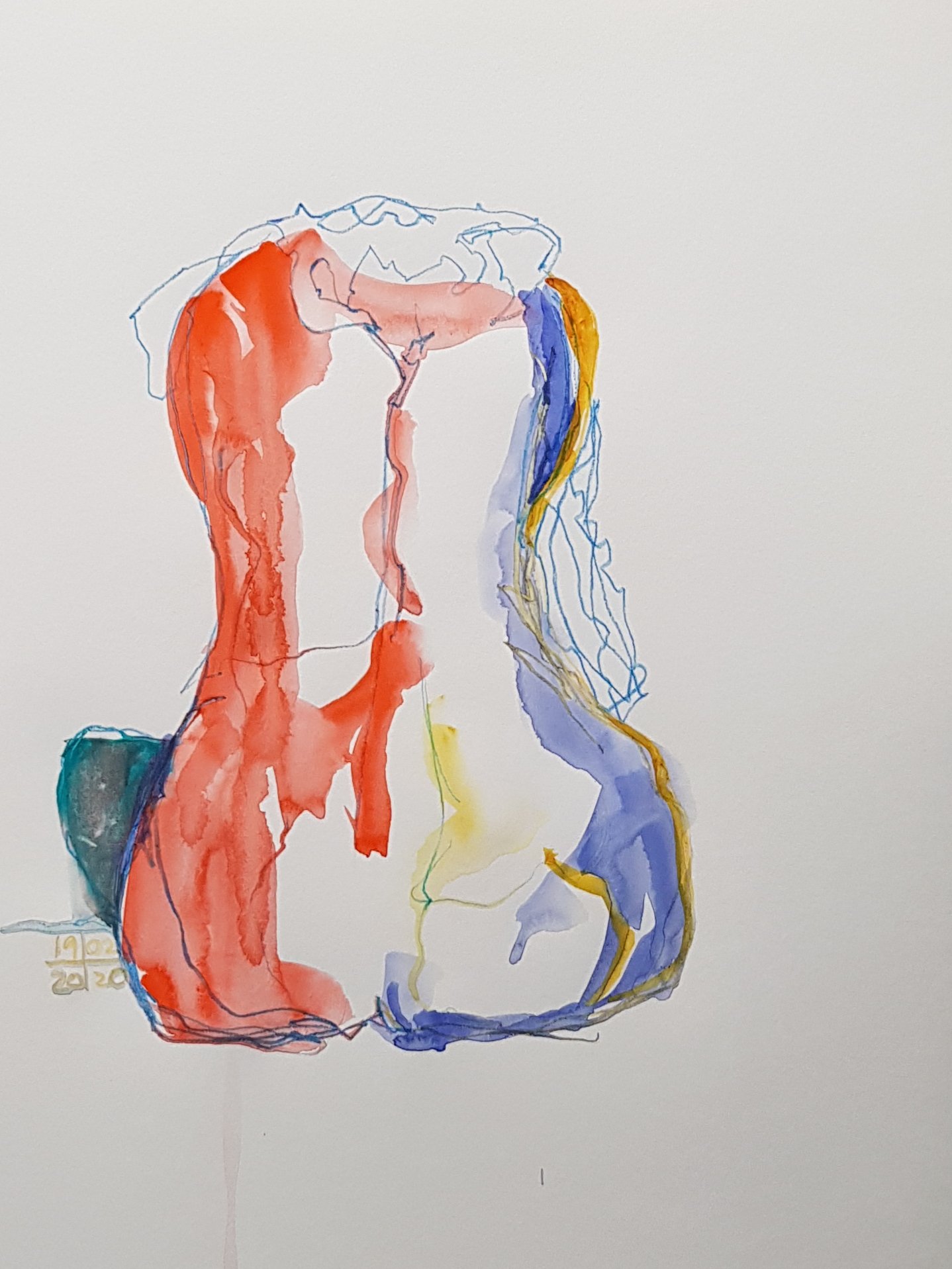
For the longer poses I swapped over to watercolour. Our group is quite eclectic in terms of media. We ranged from pencil to digital, acrylic and watercolour.

15 minute pose, watercolour and pencil, two versions.
15 minute pose, watercolour and pencil.

Matisse-Picasso mini zine

(Warning, long post with lots of photos)

In the ‘excitement’ of the terrible hail storm yesterday while we were at the National Gallery of Australia I forgot completely about my mini Matisse-Picasso zine.

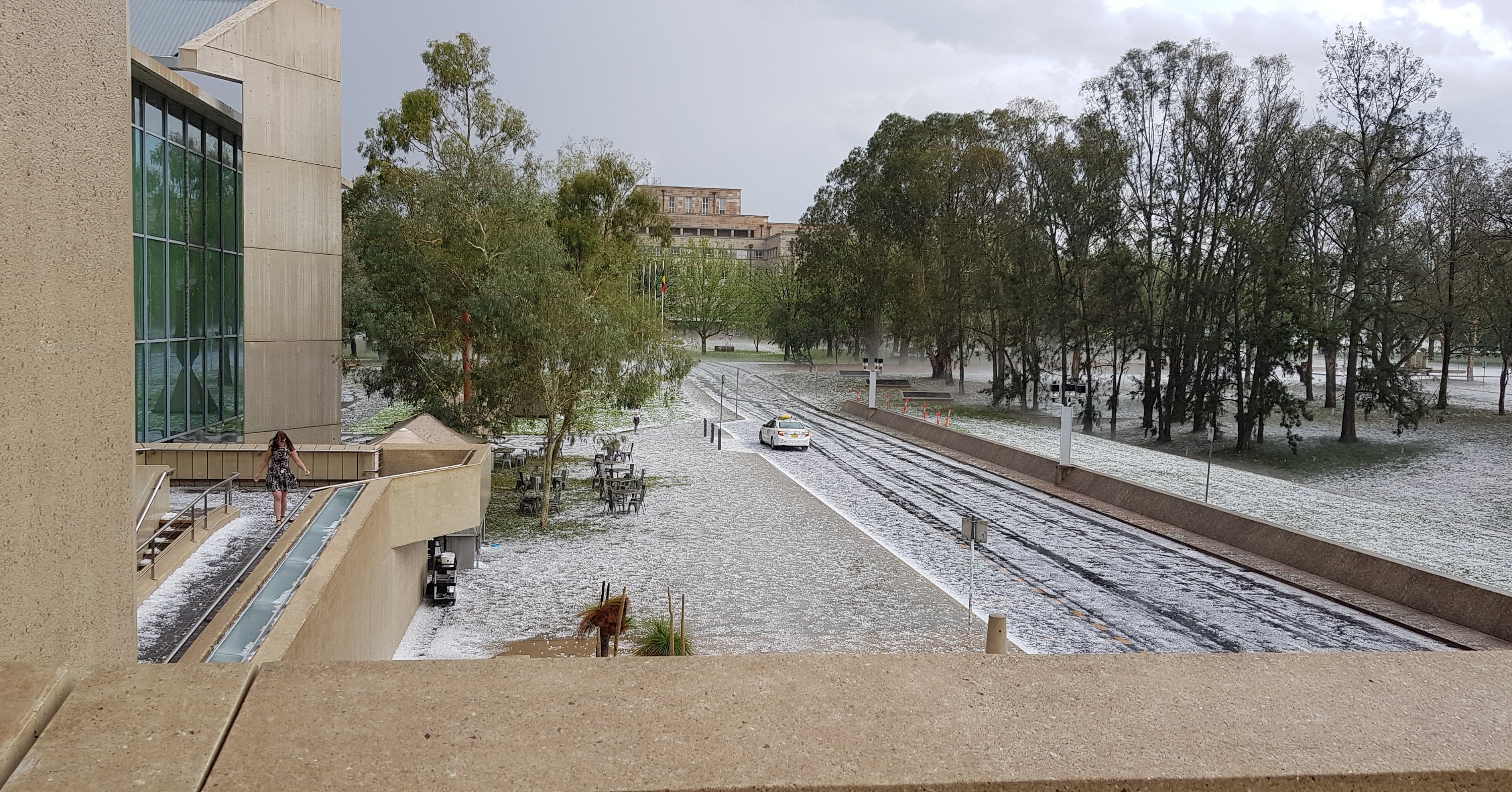
For non-locals, our weeks of smoke filled skies were cleared by a tremendously damaging hail storm yesterday. Here is a video of what the rain sounded like as we walked around inside the National Gallery of Australia. I was too stunned to get my video happening to record the sound of the hail striking the roof, suffice to say it sounded like the sky was throwing boulders.

The paintings are by Hugh Ramsay an extremely talented, Scottish born Australian artist who died in 1906 from tuberculosis at age 28.

The road and forecourt of the National Gallery of Australia covered in hail the size of golf balls.

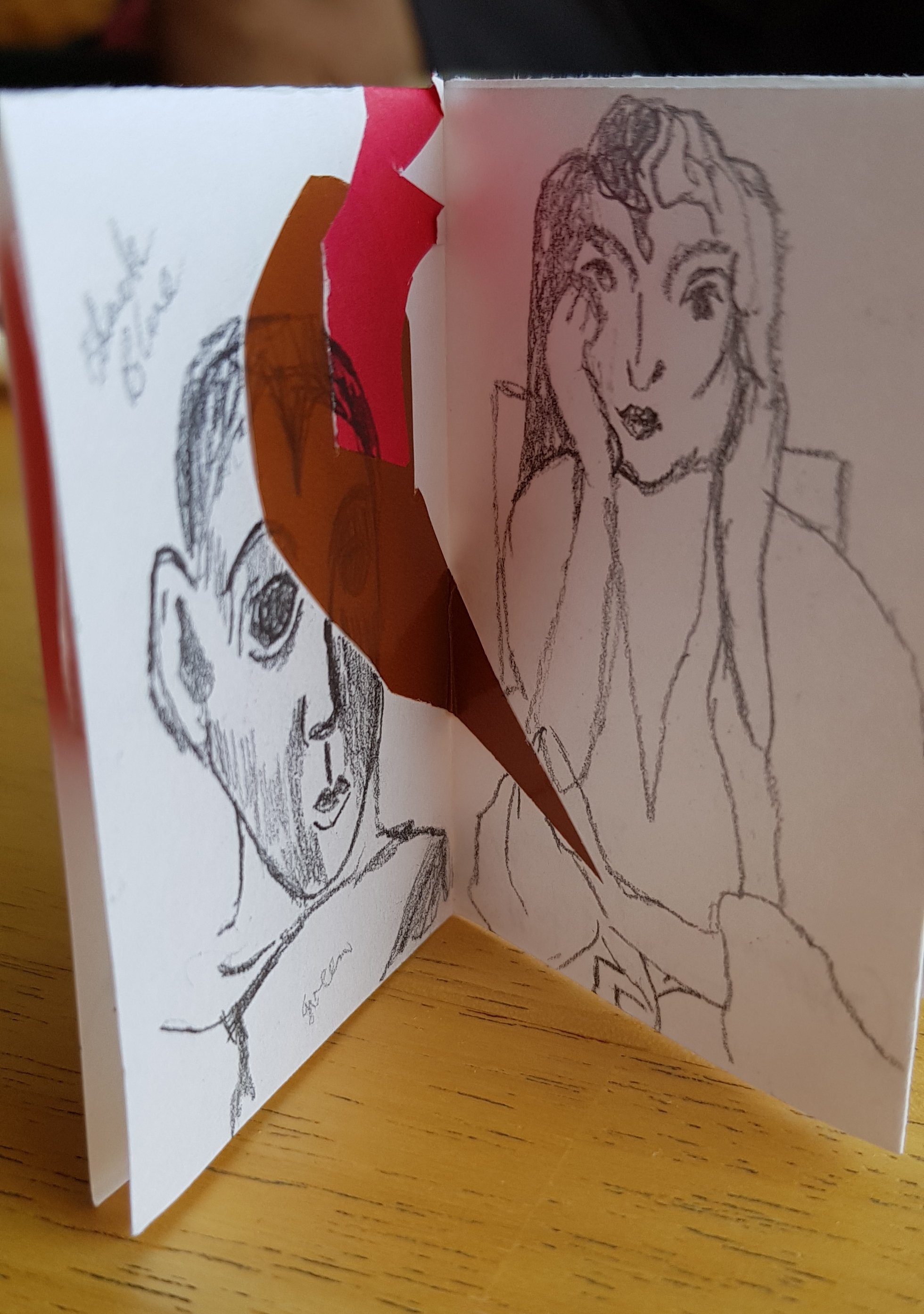
Anyway, we originally went to the gallery to make our second visit to the Matisse-Picasso exhibition. While waiting to go in I sat down at the art workshop space just outside the entrance to the exhibition and started making a little collage with the idea of using it to draw on. It then occurred to me that I could make a book out of it. I did this with the help of a short video on how to fold a piece of paper into a book (ah the benefits of the gallery free wi-fi).

This is the closest photo I have of the way the paper looked before turning it into the mini book. This is the reverse side where the painting names and dates are listed.

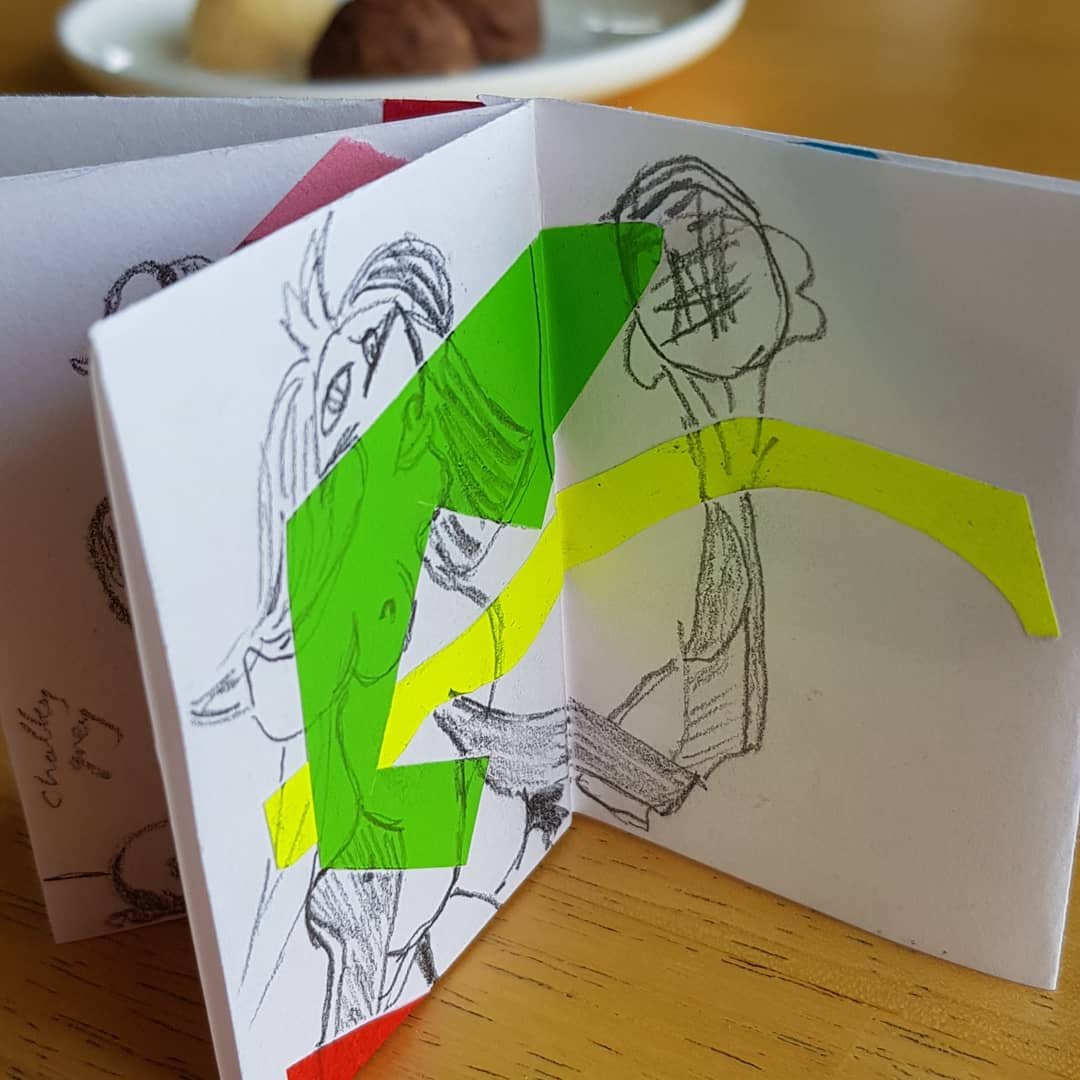
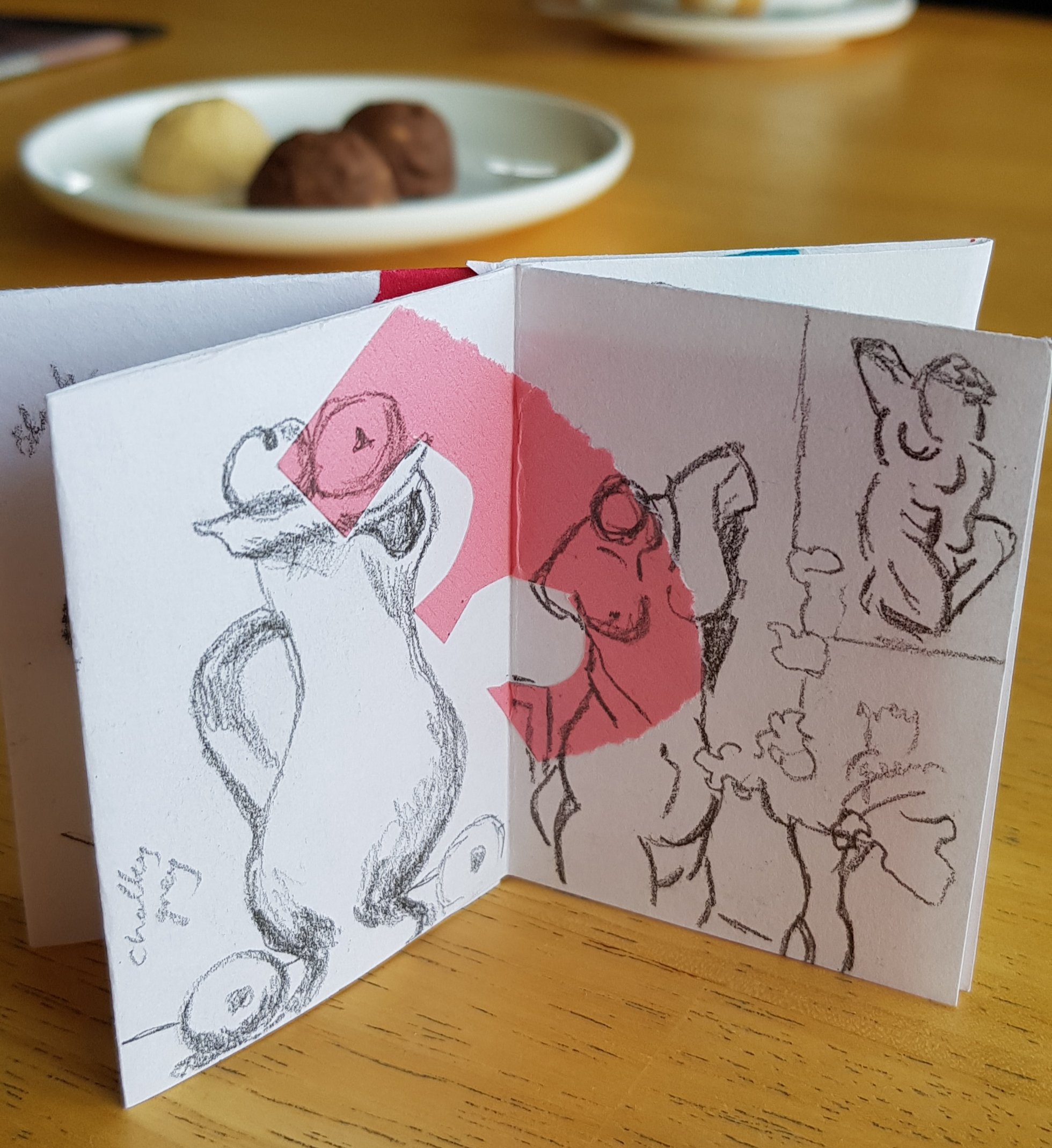
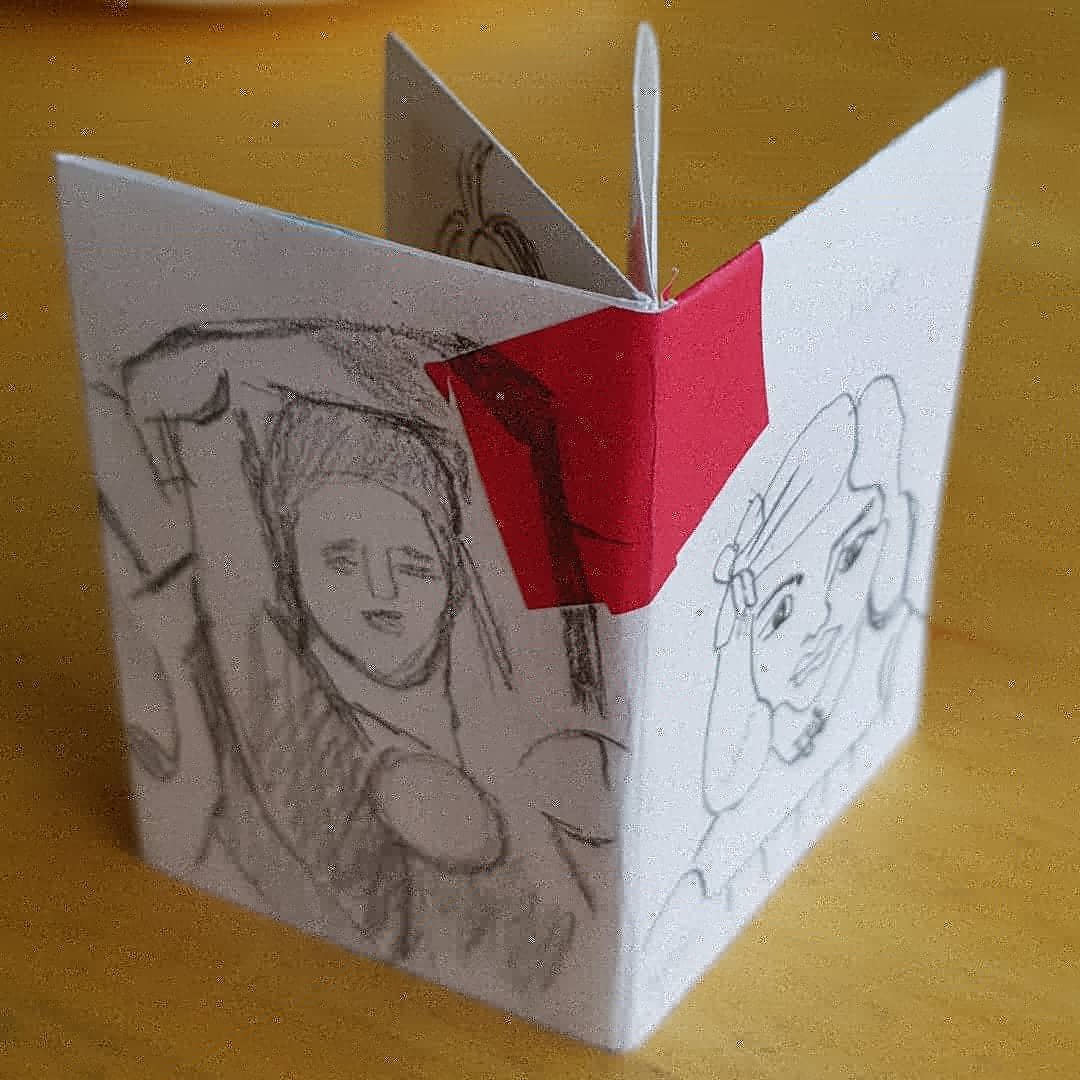
One of the advantages of making such a small book (5 cm x 7.5 cm or 2 x 3inches), is that all the sketches had to be small and fairly simple. This is the little book as it was at the gallery, (we are pencil only in the gallery).

Picasso, Head of a Boy, 1906: Matisse, Meditation (Portrait of Laurette), c.1916

Picasso, Woman with Tambourine, 1936.

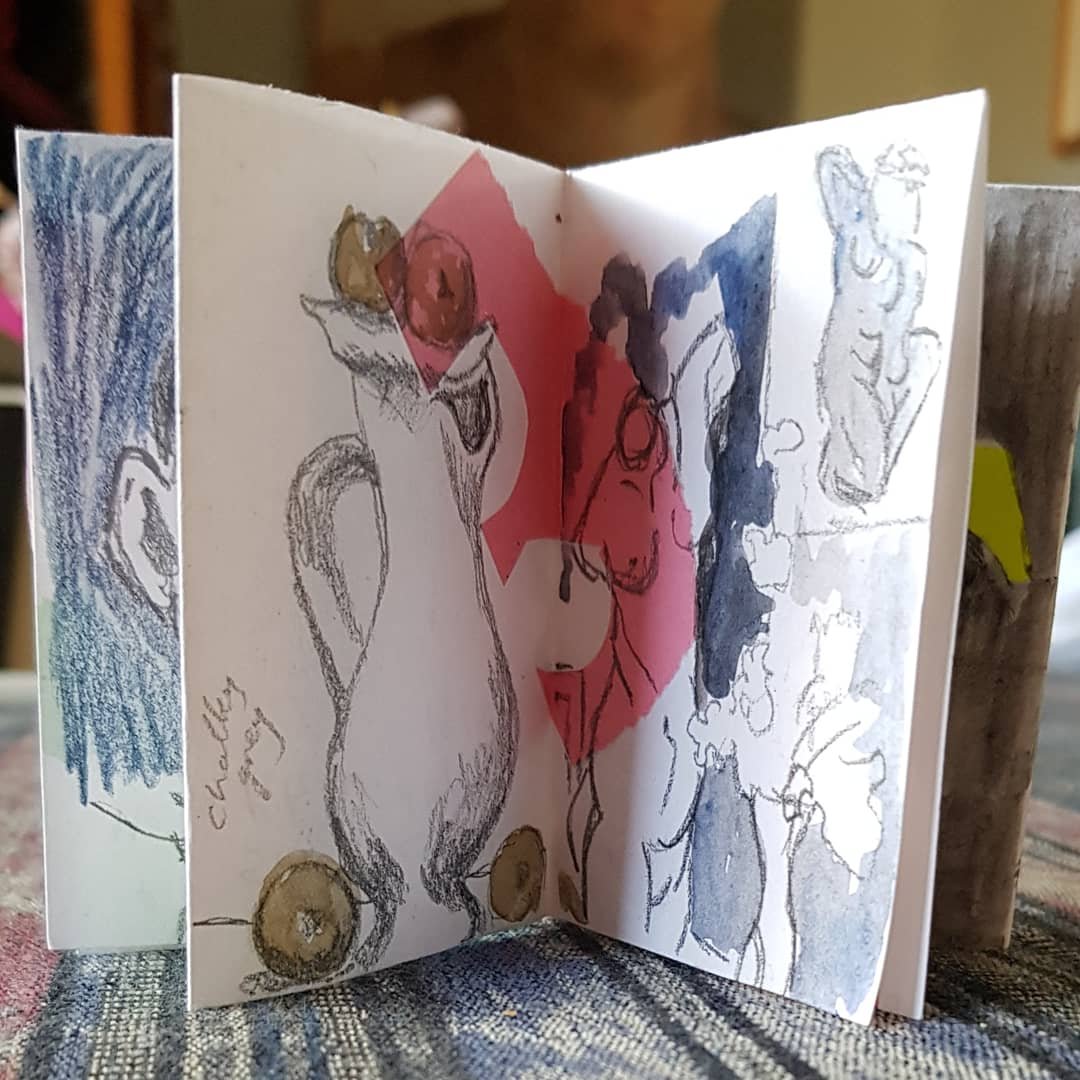
Picasso, Still Life with Pitcher and Apples, 1919: Matisse, The Plaster Torso, 1919.

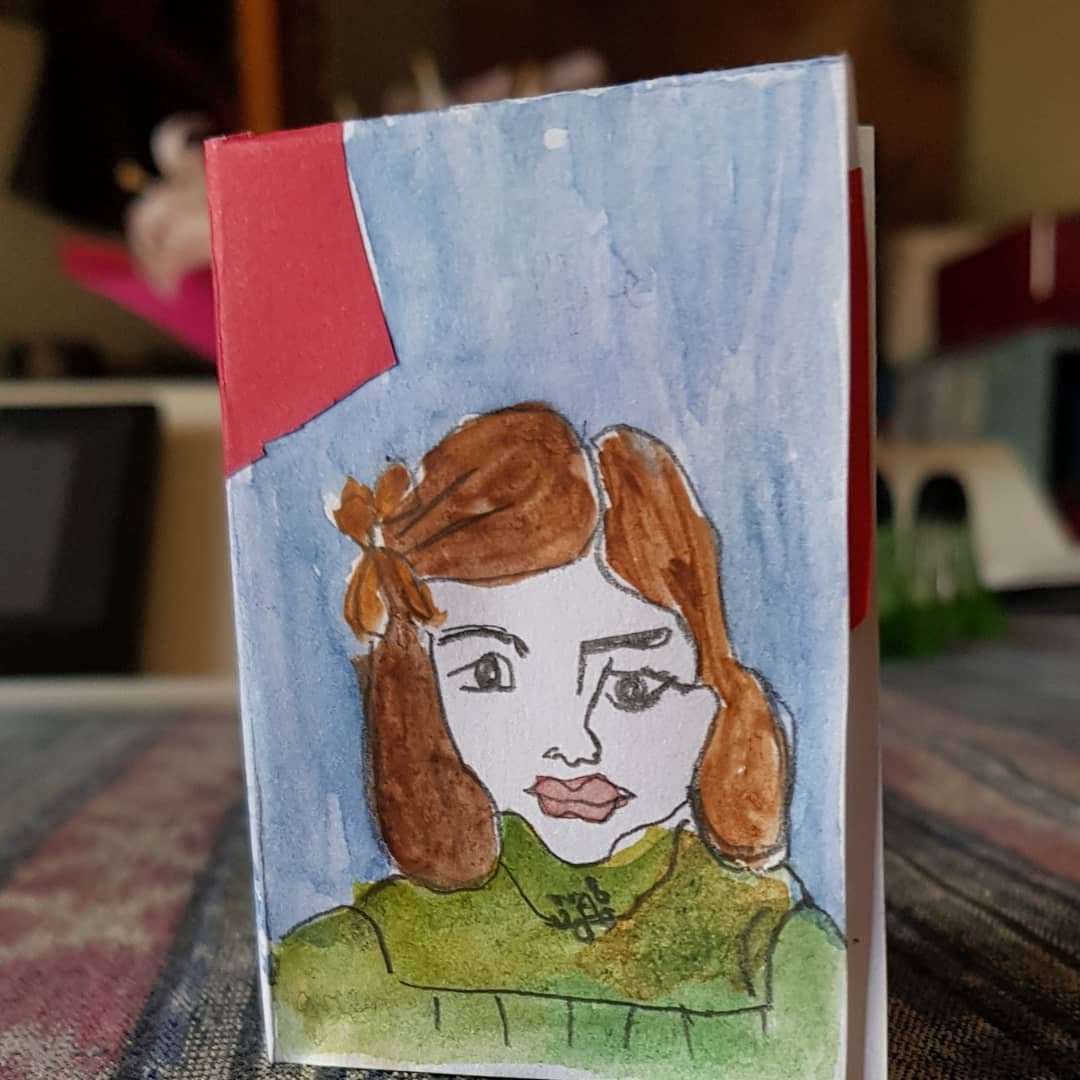
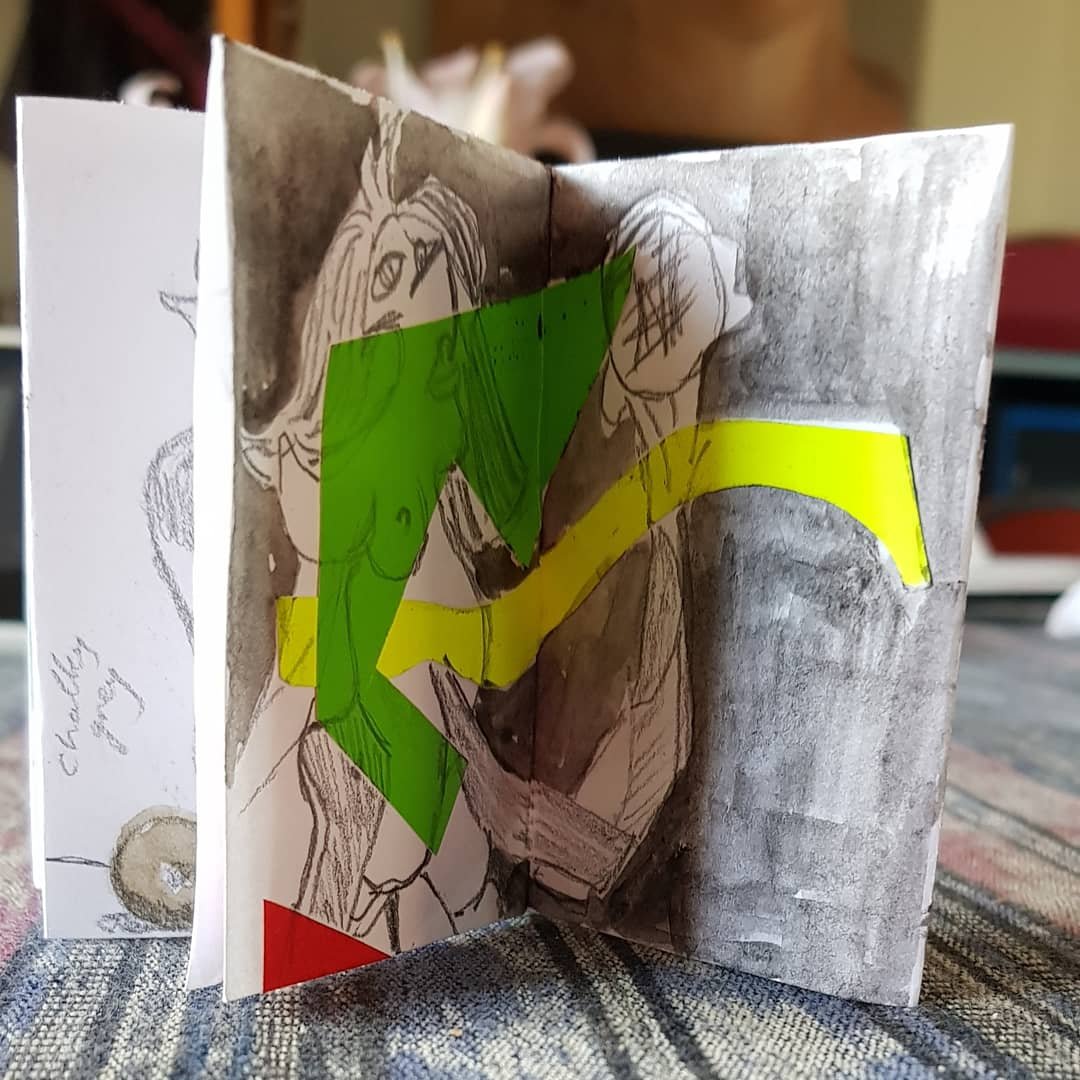
The front and back of my little zine. Matisse, The Abduction of Europa, 1929: Matisse, Nono Lebasque, 1909.

For better or worse I added colour to the zine when I got home.

I had a great time making this little zine, indeed it’s small size encouraged me to just have fun with the process. I did do some slightly larger sketches in another book, but I think this might become quite addictive.

PS the video that I used to make the book can be found here.

One more parting photo. This is the road outside the gallery strewn with shredded foliage. It looks sort of sylvan, but for knowing how damaged the trees were.

Trees

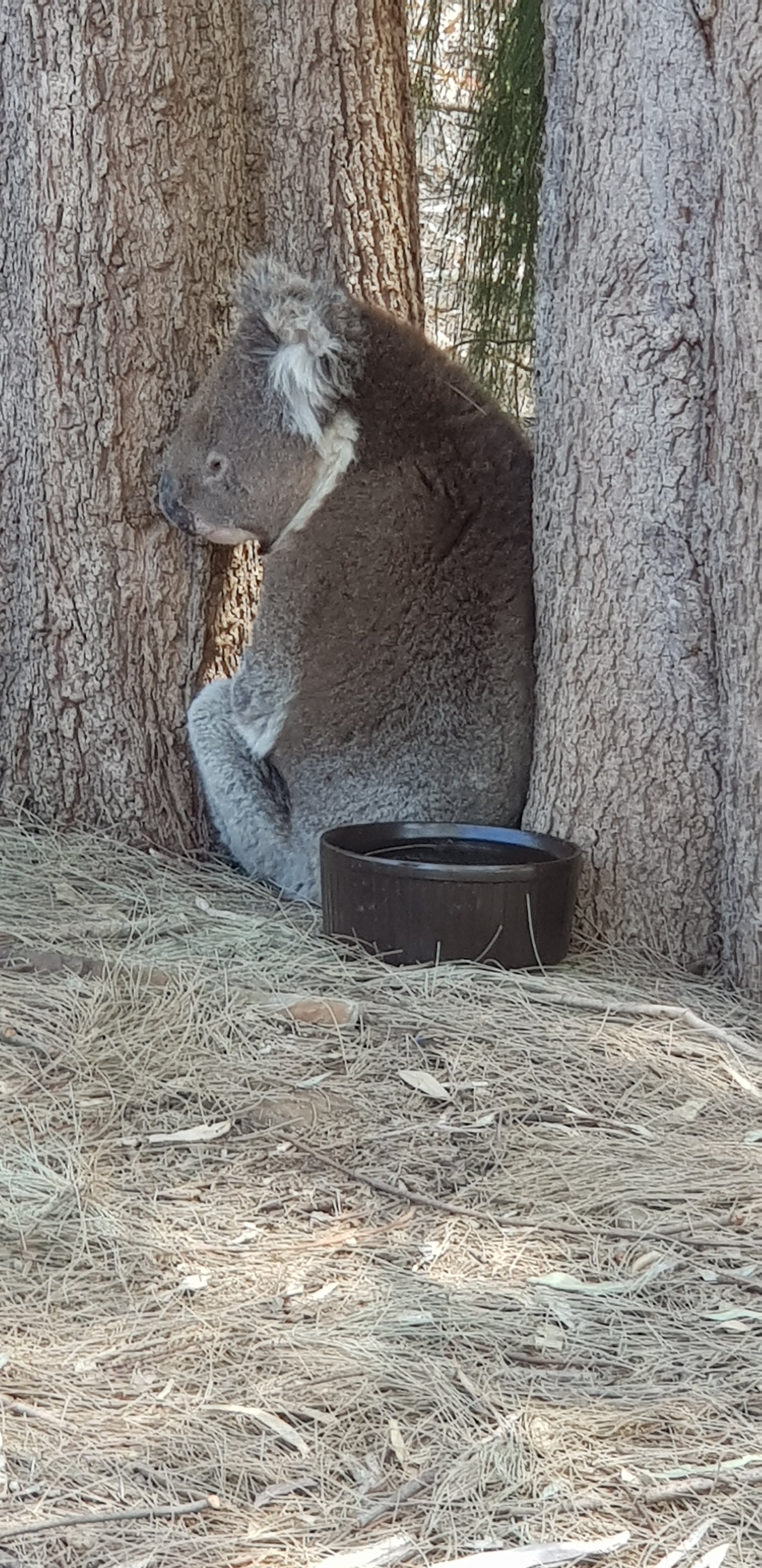
In the middle of all the hubbub that was Christmas eve I managed to get myself to the Wittunga Botanic Garden in the Adelaide Hills for some lone sketching. I was so shocked at the sight of a koala sitting on the ground just next to the footpath that I almost didn’t sketch him.

Koala and garbage bin. The latter designed with a cover to keep possums and other inquisitive animals from getting into the bins.

Wonderful to see this chap. Probably a male, as it was very big, easily up to my knee in height. That’s a waterbowl next to him so I assume he came down for a drink. The garden is fully fenced and dogs are prohibited, which is why you see this individual being so relaxed.

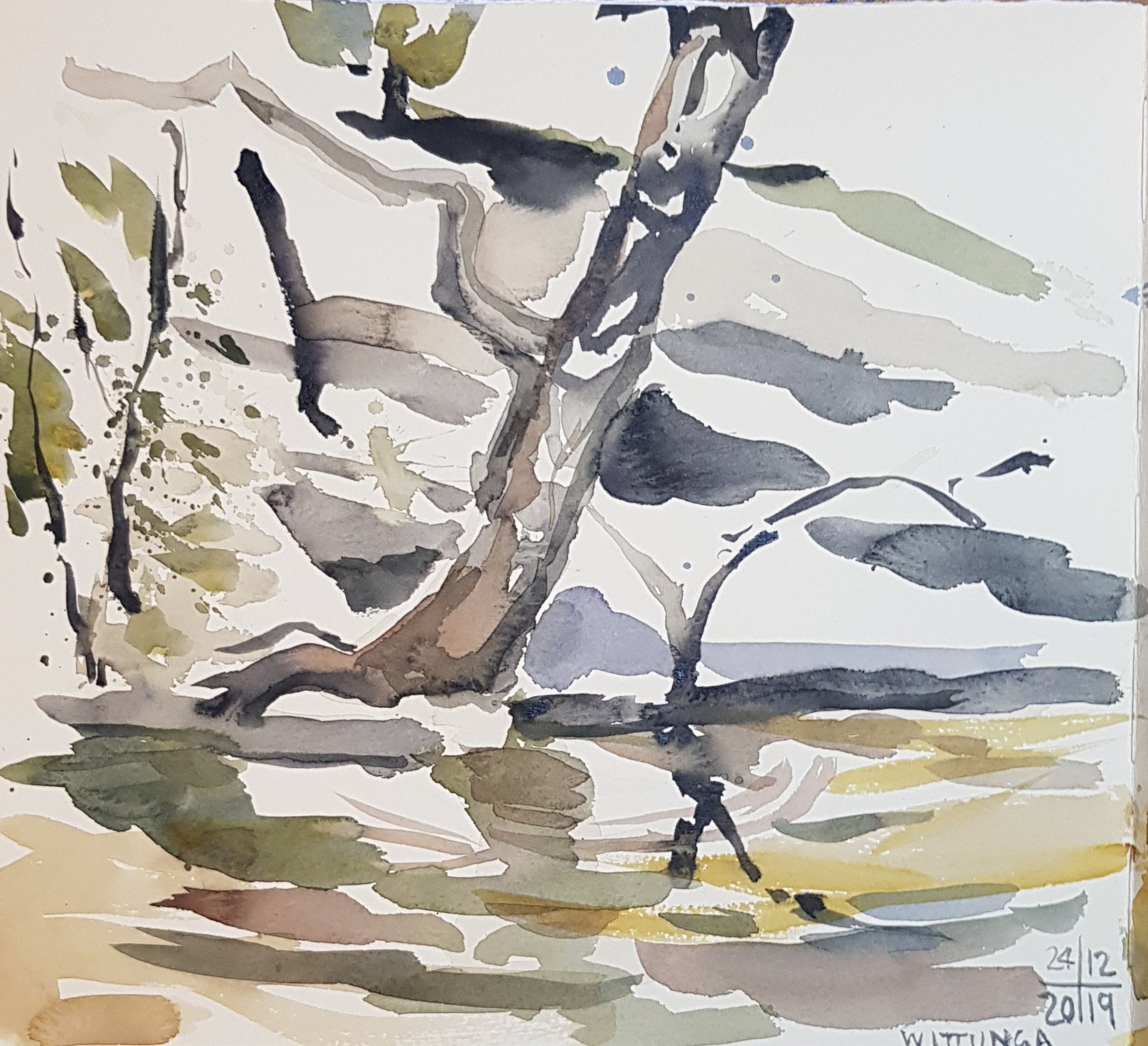
After obliging me for sitting for his portrait I moved on to the shelter of a small covered picnic table to sketch my main subject of the day the trees.

Here they are in the order that I sketched them. I deliberately went as fast as I could from one study to the next.

DESIGN Canberra sketches

DESIGN Canberra Festival is currently on and our local chapter of Urban Sketchers has been actively partcipating for the first time.

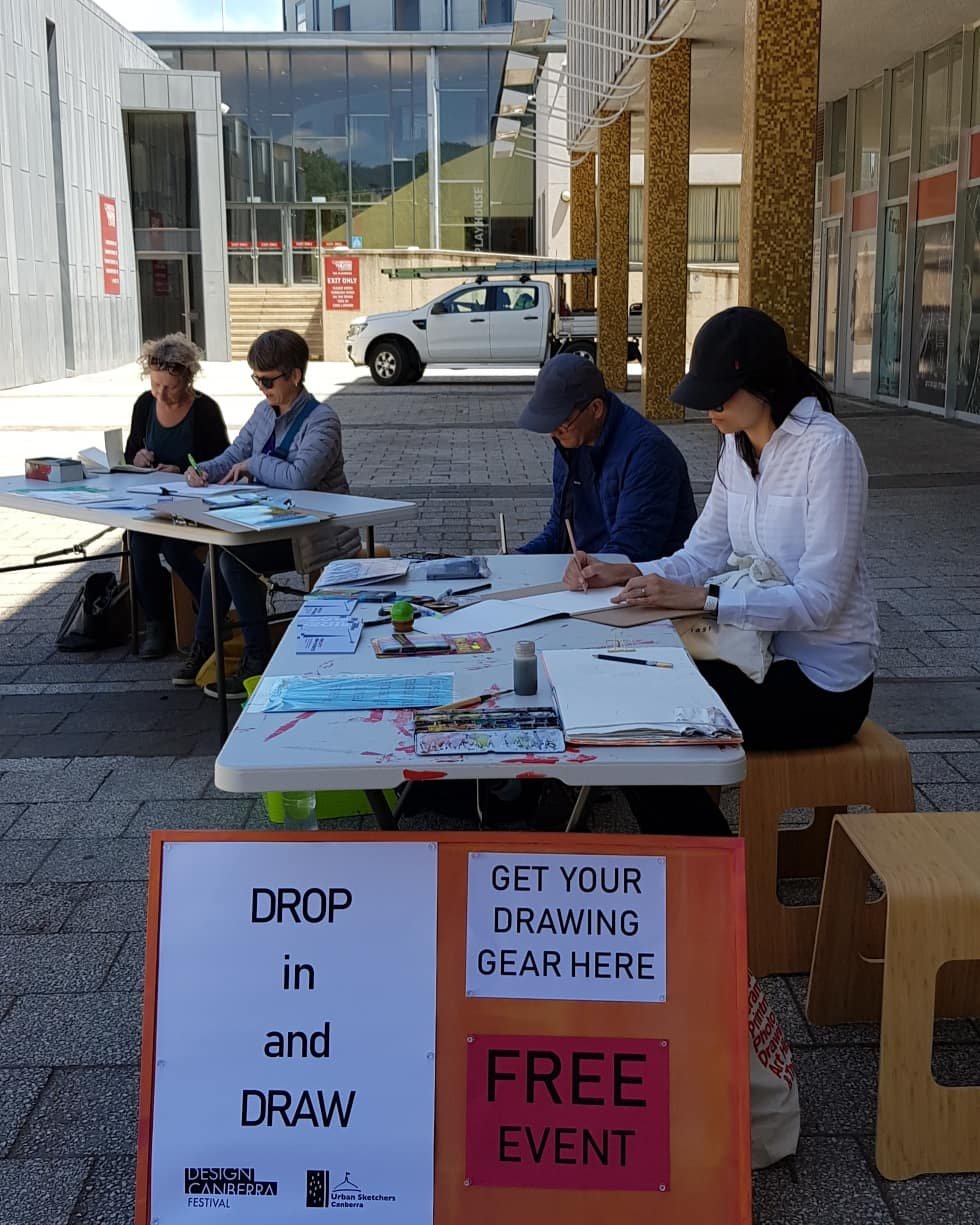
We ran a Drop in and Draw session in Civic Square on Thursday and a Sunday sketching event at Callam Offices on the weekend.

Our first event was marred by strong winds. I found this out the hard way when I got slapped with a big spray of water from the fountain I was sitting next to.

Some of the brave few that turned out to sketch.

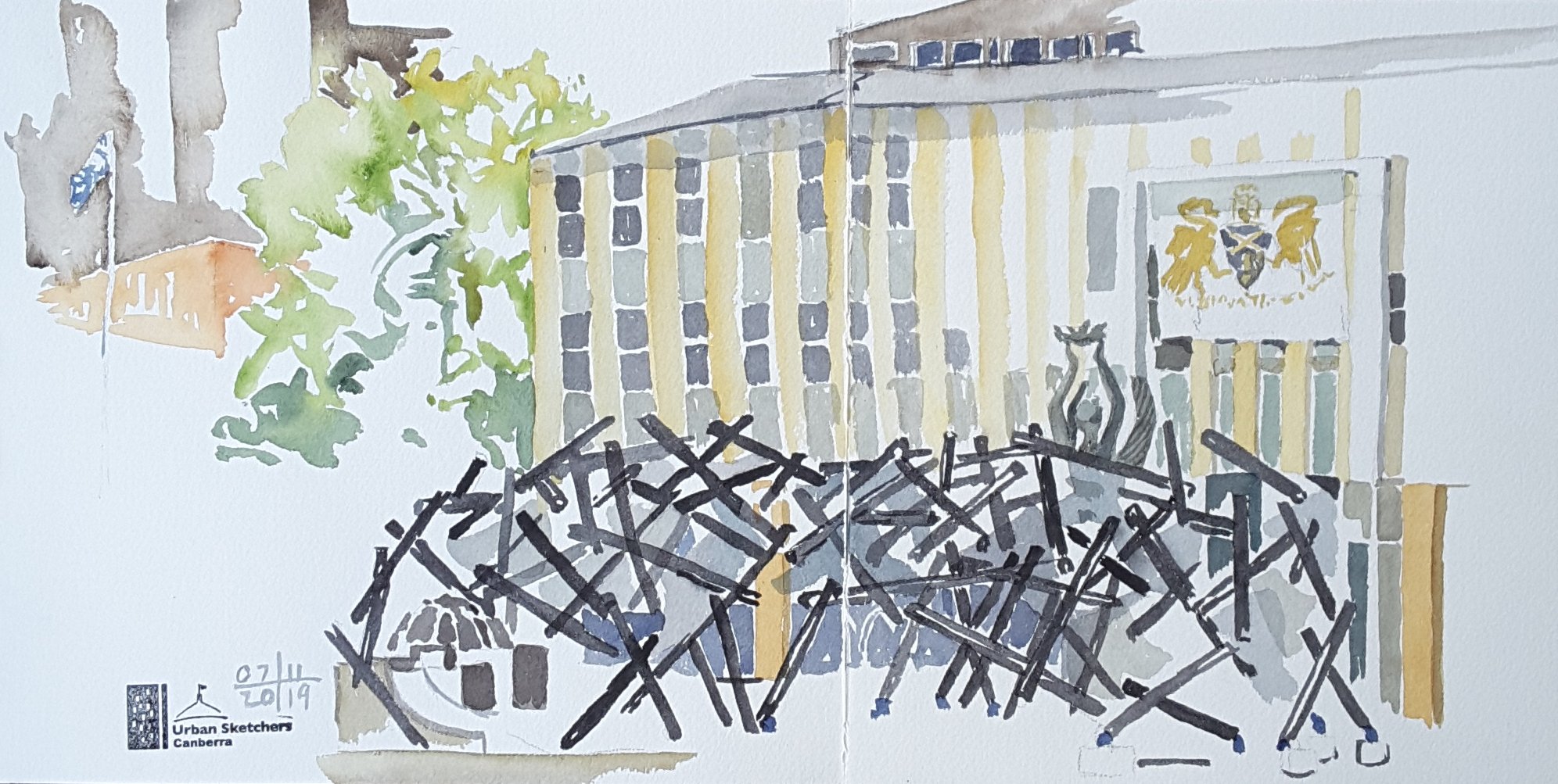
The University of Canberra’s temporary architectural installation in Civic Square.

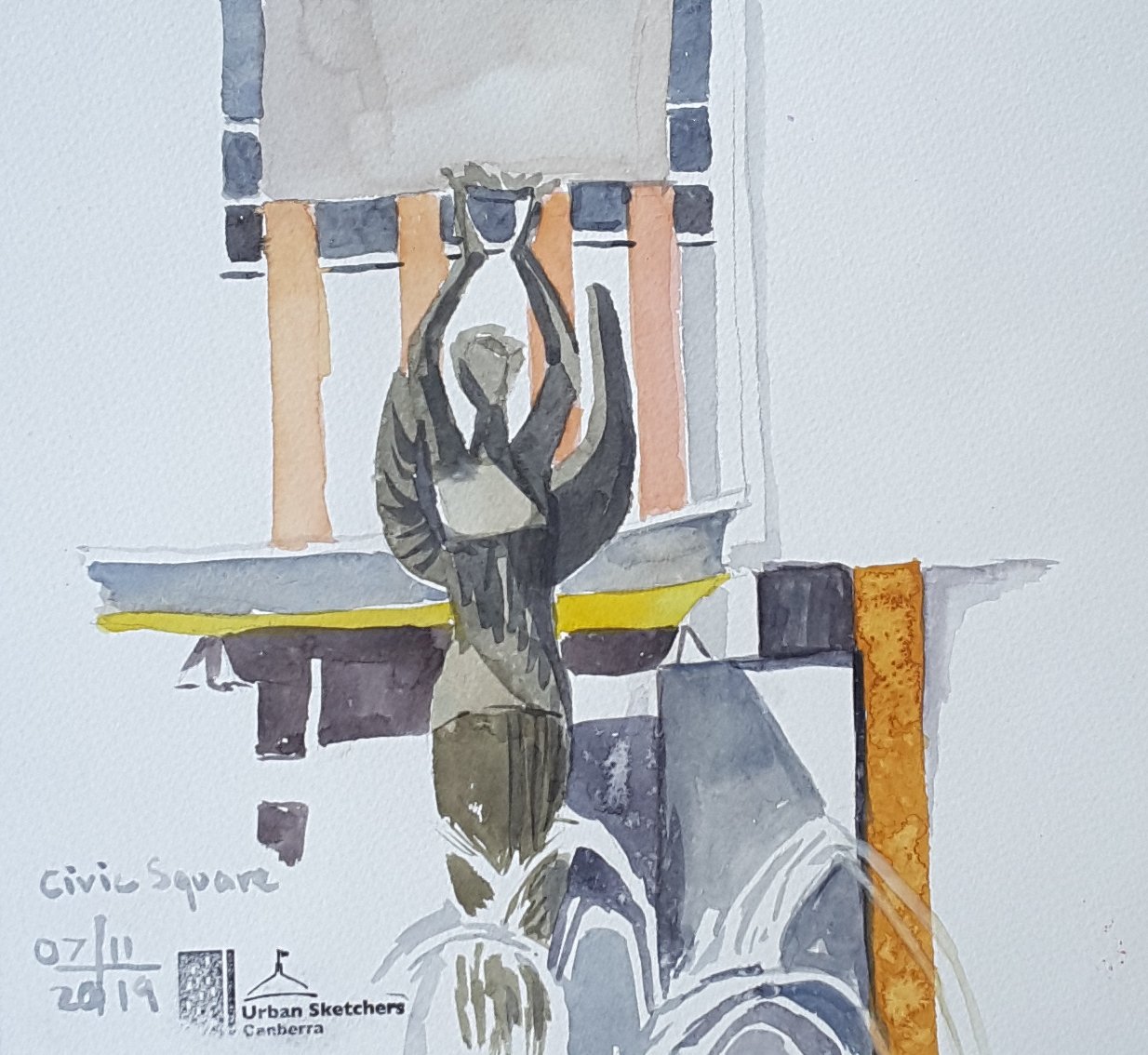
The statue of Ethos, by Tom Bass, at the entrance to the ACT Assembly building, with fountain (notice the water splotch in the dark grey section of the paint).

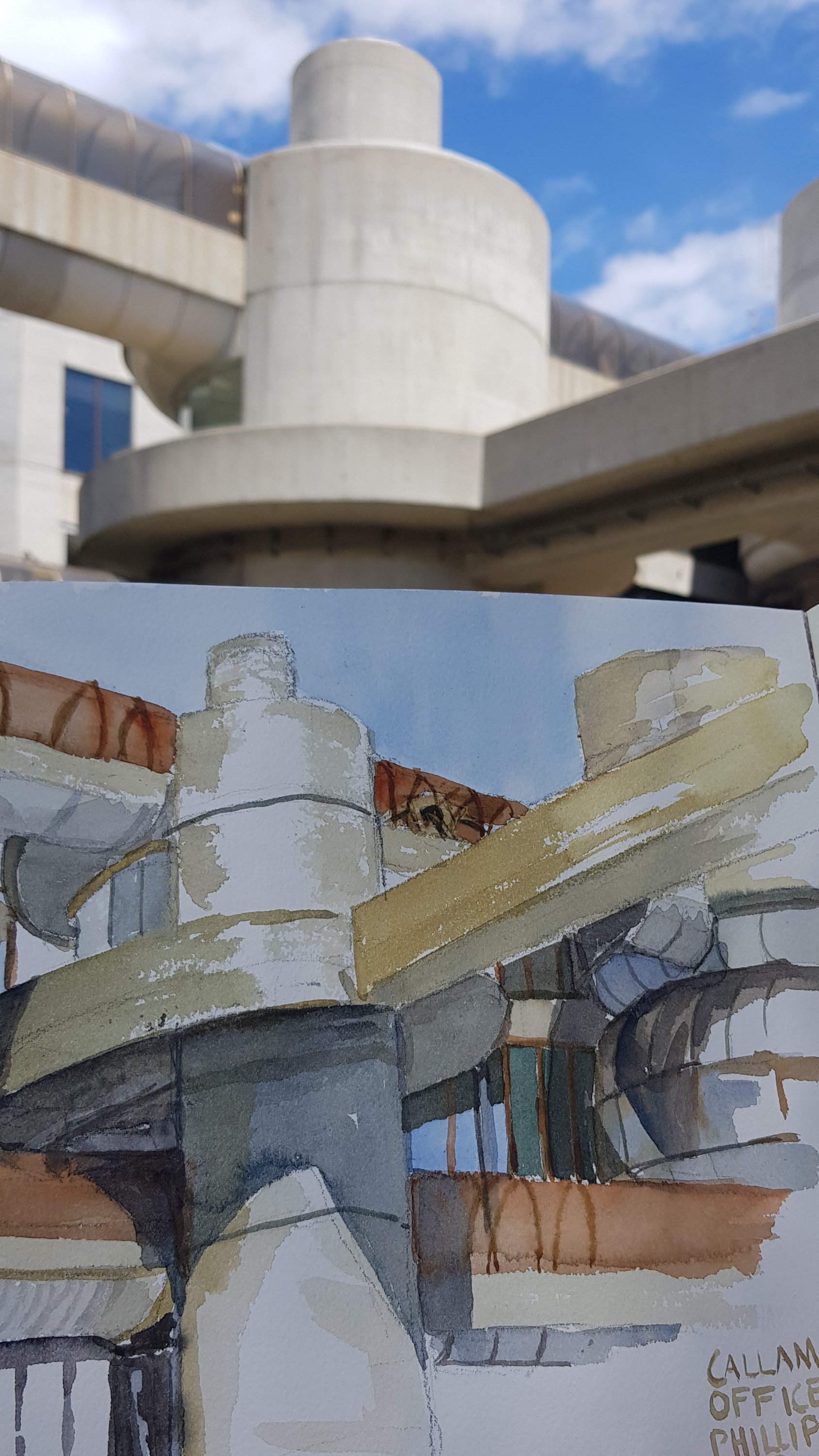
Sunday was marginally better weather wise. Callam Offices looks like a futuristic space module dropped into the Woden Town centre.

It was designed, amongst other things to demonstrate construction to survive potential floods. Hence it is set above the ground suspended around a series of concrete cores.

Designed by architect John Andrews and built in the late 1970’s these buildings are currently used as local government offices. It was originally intended that 26 modules be built, but only 3 were completed. Sadly one of Andrew’s other major Brutalist buildings in our city, the Cameron Offices has largely been demolished, which is pretty awful, but par for the course as far as our local lack of interest in heritage buildings goes.

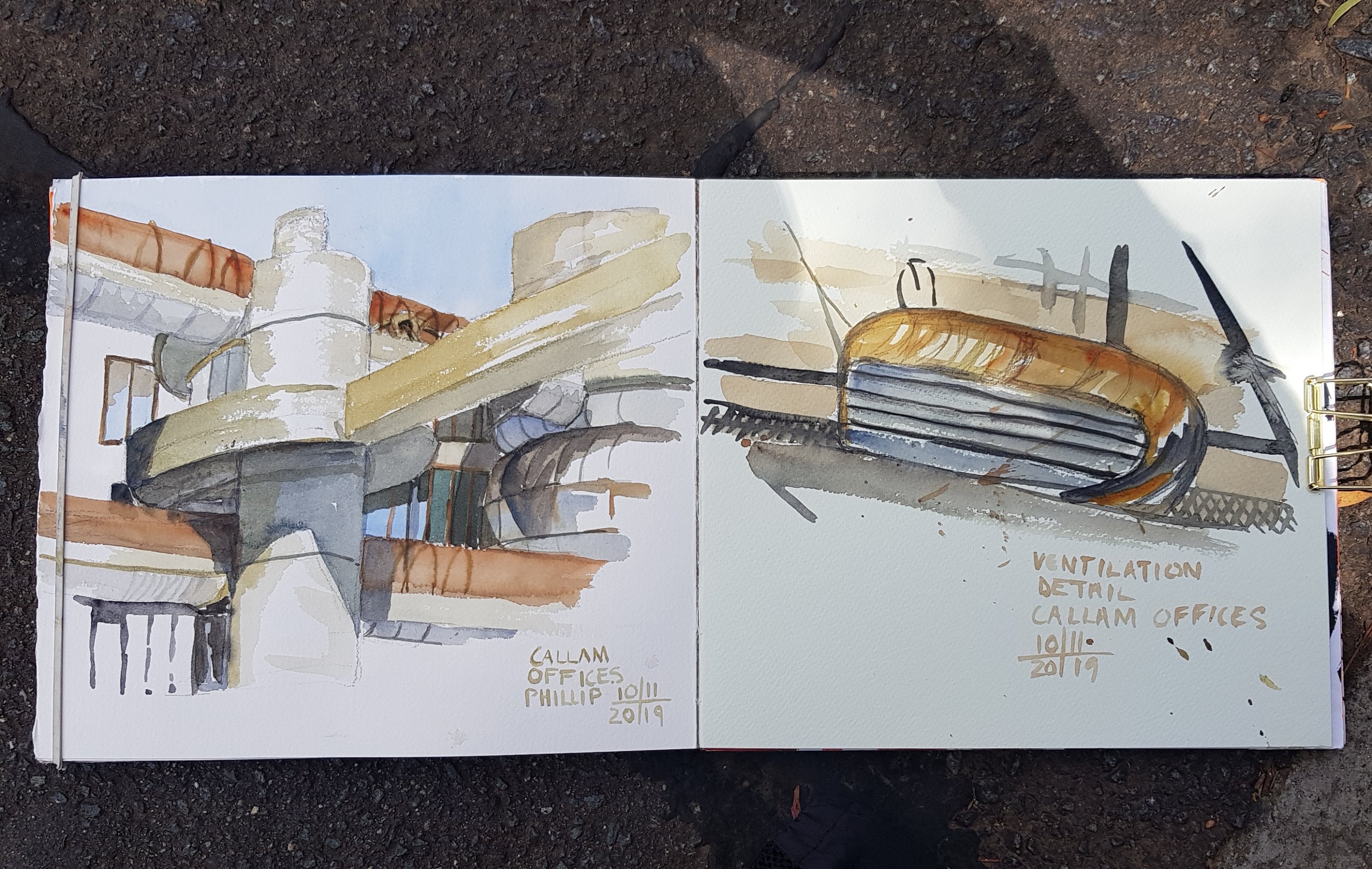
My watercolour of one of the building cores.

Along with my main sketch I painted a detail of this ventilation outlet.

Tonight we are off to hear a conversation between the architect John Andrews and Tim Ross (a great promoter and documentor of Australia’s modernist heritage). I am really looking forward to hearing more about Andrews ‘ work.