Dr Sketchy and the blue woman

Last week we went to our second Dr Sketchy event at the National Gallery. It seems odd that such an event takes place withing the formality of Gandel Hall, however everyone enjoys themselves, the burlesque is well done and the art making fun.

This time we had two male models which provided different body shapes and poses to come to terms with.

Three two minute poses, graphite, 2 July 2015

Three two minute poses, graphite, 2 July 2015

We worked up from two and five minute poses to longer poses at the end of the evening.

Two, five minute poses, graphite, 2 July 2015

Two, five minute poses, graphite, 2 July 2015

And then there was the blue woman. Two of the models were covered in body paint and despite the colour, or perhaps because of it, I found it much easier to come to grips with the shape of their bodies when I drew them. One of the women was painted blue (not Yves Klein blue I hasten to add) and wore a white wig. I really enjoyed drawing her.

Five minute pose, graphite, 2 July 2015

The Blue Woman, five minute pose, graphite, 2 July 2015

Per usual the gallery restriction on media meant I was limited in how I could respond to the colourful models. One of the other people at our table gave me some chalk pastels and pastel paper which allowed me to make a more colourful drawing.

The Blue Woman, chalk pastel, 2 July 2015

The Blue Woman, chalk pastel, 2 July 2015

I enjoy these evenings as I come away with a sense of having had a really good artistic workout.

Cafe Wednesday – another place

This Wednesday I had to go across town for an appointment so afterwards I had coffee at a different cafe, The Front in Lyneham. It a quirky place with retro furniture and a funky feel, well this is in the heart of university / inner urban Canberra.

I was blessed with a subject who was completely involved with reading the paper and a quirky window above him. The window, which was originally some sort of external fan or vent has been replaced by a sculptural arrangement of brass taps.

reading Man, pen and ink, 1 July 2015

Reading Man, pen and ink, 1 July 2015

(Personal) Treasures from the Australian War Memorial – Part 1

A friend recently told me about a jumper (pullover) she thought I might be interested in. It belonged to an Australian soldier who made it when he was a prisoner of war in Germany during the First World War. The jumper was made, very skillfully, of many strands of wool gathered from comfort packages. As I often work with re-cycled fabric and find signs of the history on a garment of great interest I decided to see what more I could find out about these items. Which led me to where I was a few days ago – standing with one of the curators from the Military Heraldry and Technology section of the Australian War Memorial (AWM) with two archive boxes in front of me.

It turns out that the AWM has a number of similar items in its collection. I located them through the Memorial’s online collection search facility. I had requested access to two items (the one my friend mentioned is currently on display in the First World War galleries), a hand-knitted jumper made by another WWI prisoner of war; and a Second World War pullover, which had been improvised by an Australian soldier held prisoner of the Japanese in Singapore, Burma and Thailand.

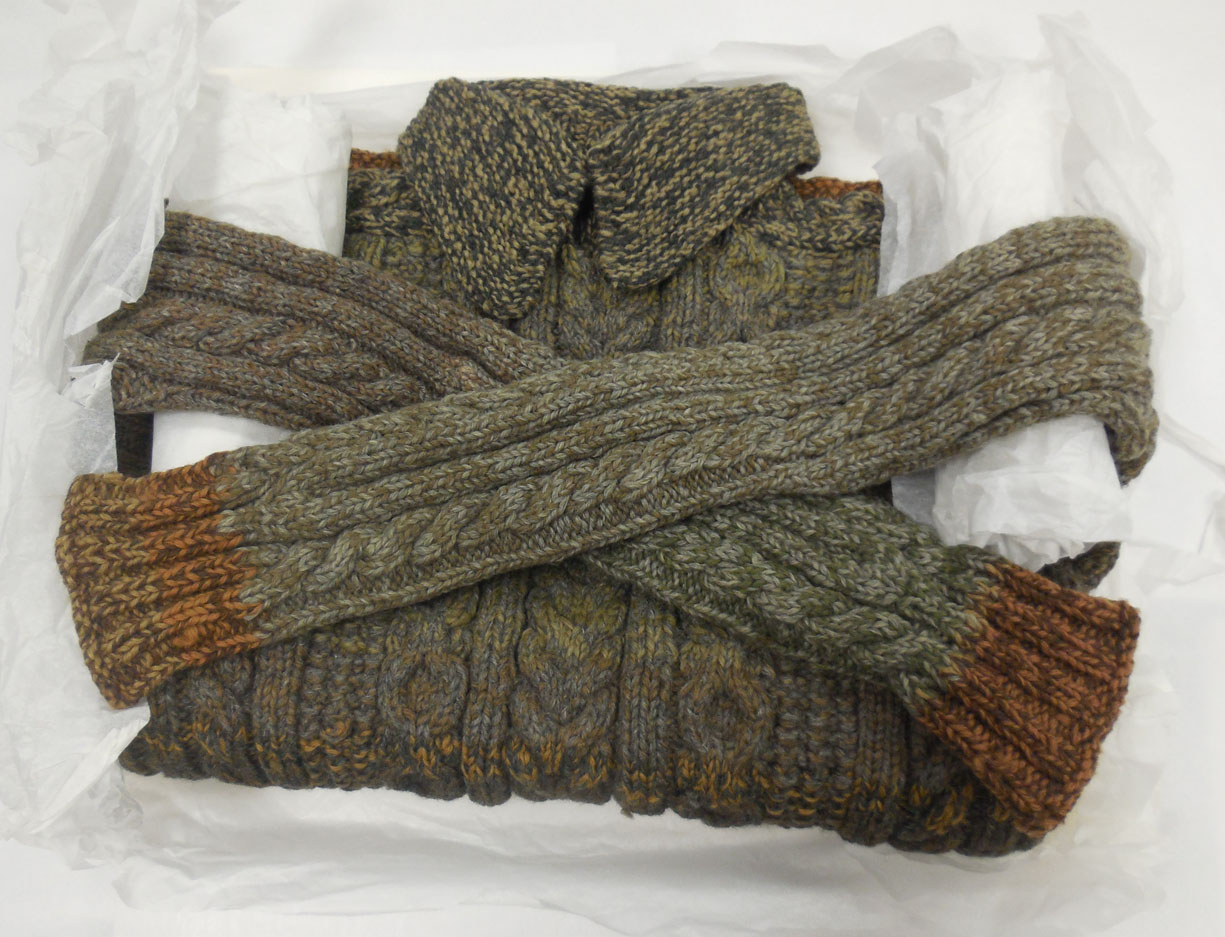
To do each item justice I will look at them in turn, starting with the First World War knitted pullover made by Lance Corporal Percy Augustus Burge, 14 Battalion AIF (Australian Imperial Forces). Lance Corporal Burge, who was 18 when he enlisted, was captured at Bullecourt after being wounded in the legs by a grenade and also sustaining a shrapnel wound to the kidneys. After a period in hospital being treated for his wounds he spent time in two POW camps. This garment was made from the wool from worn out socks and was knitted on needles made from wire.


Pullover knitted by Lance Corporal PA Burge, 14 Battalion AIF, in its archive box

Pullover knitted by Lance Corporal PA Burge, 14 Battalion AIF, in its archive box

As the curator pulled it out of its box it became clear that this is one of the most beautiful jumpers I have ever seen. The colours are amazing and even these photographs don’t do justice to how bright the colours appeared. The whole piece is worked in two strands of wool. It was like Lance Corporal Burge had knitted all the colours of a lichen-covered boulder into this one garment. The colours used include varying shades of grey, soft ochres, browns and rusty oranges, khakis and other greens. I counted 15 colour changes on the body of the jumper alone.

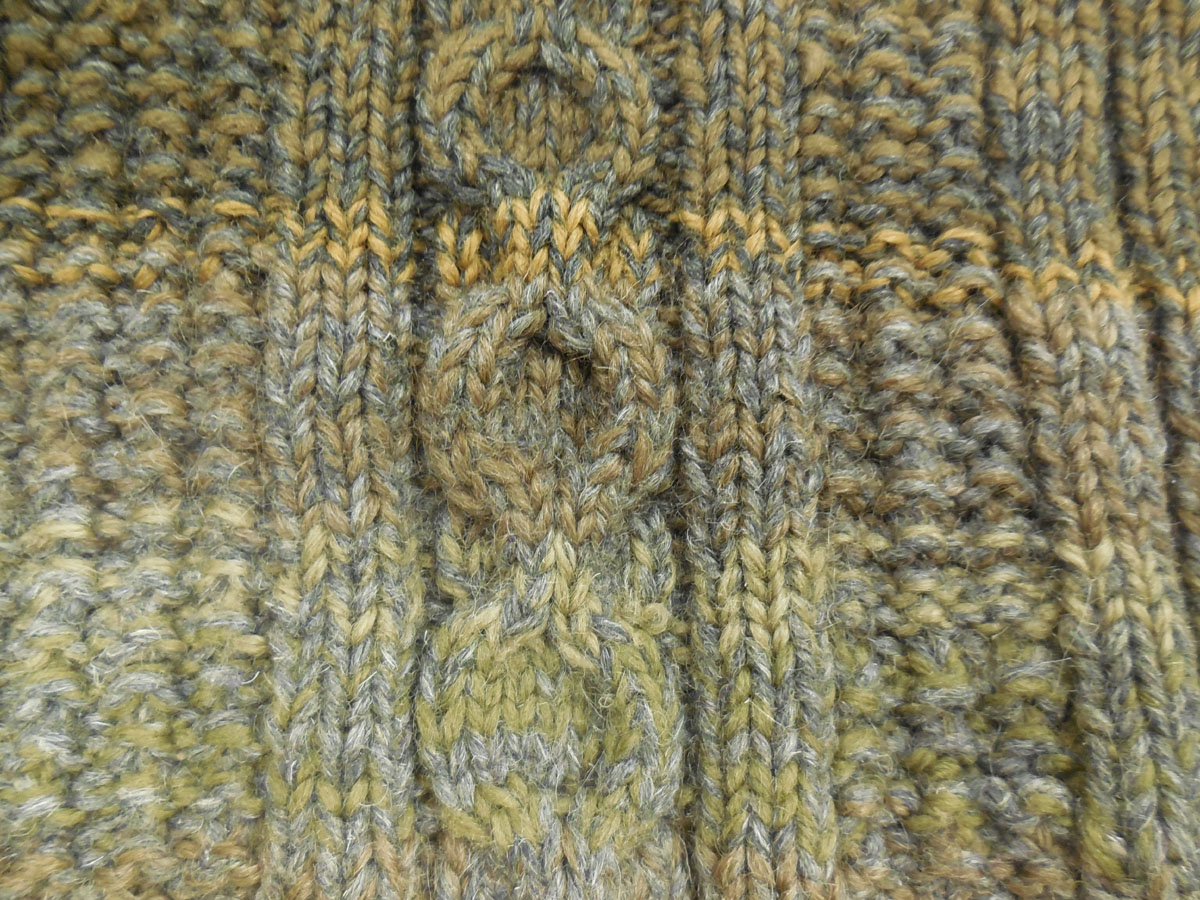
Cable and Broken Rib stitch from the front of the jumper.

Cable and Broken Rib stitch from the front of the jumper.

The jumper appears to be a classic gansey style with the body knitted in the round and gussets under the arms. There are several cable patterns on the body and the sleeves and another stitch which has been identified as blackberry stitch, but that a friend has been suggested is in fact a broken rib stitch. Looking at the two types of stitch online I’m inclined to agree that it is the reverse side of broken rib stitch, (an image of which can be seen here).

Ribbing on the lower front of the jumper

Ribbing on the lower front of the jumper

This is a beautifully knitted garment. Although there is no information that says whether Lance Corporal Burge could knit before he became a prisoner I suspect that he could. ****It turns out that I am wrong. Staff at the AWM have since checked the detailed information associated with this item and it said that Lance Corporal Burge didn’t knit prior to his internment.**** Whether he was an artist is any other part of his life I do not know but he certainly had the eyes of a natural colourist.

I took some photos of the jumper along to my hand-spinning group and we had a lively discussion about whether the wool was commercially produced and whether they would have been using synthetic or plant dyes for colouring. I can at least answer the first question as there were certainly woollen mills operating in Australia since the 19th century. Waverly Woollen Mills near Launceston, was founded in 1874 and in Sydney, the Vicars Woollen Mill moved to their Marrickville premises in 1893. Vicars also had the contract for supplying the National Military Training Scheme contract in the First World War. Looking at the grey wool that features throughout the jumper we wondered whether it was spun directly from a grey fleece rather than being a dyed yarn. We also wondered, given this garment was made from worn out socks and suchlike, whether there is a possibility that some of those yarns could have been made from handspun yarn. I don’t know.

I had a quick look at some of the other records held by the AWM and was interested to see that on being repatriated to England in 1918 Lance Corporal Burge’s condition was summarised as “Wounds healed. Feels well.”

Percy Augustus Burge lived until 1970.


Coffee shots

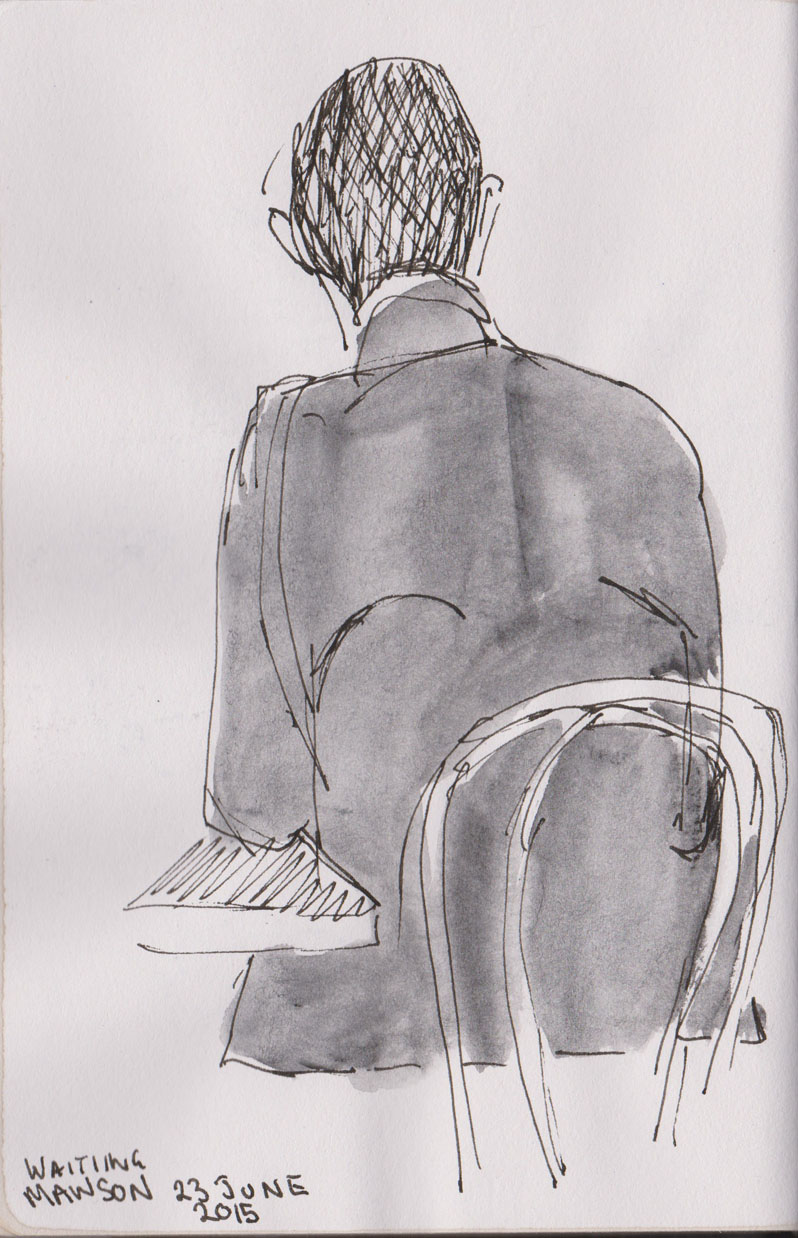
I’ve been busy this week so my regular coffee schedule has been all mixed up. However, I managed to make two drawings on Tuesday. One person sat very still while waiting for his coffee (if only I could get everyone to do so).

Seated man, pen, ink and wash, 23 June 2015

Seated man, pen, ink and wash, 23 June 2015

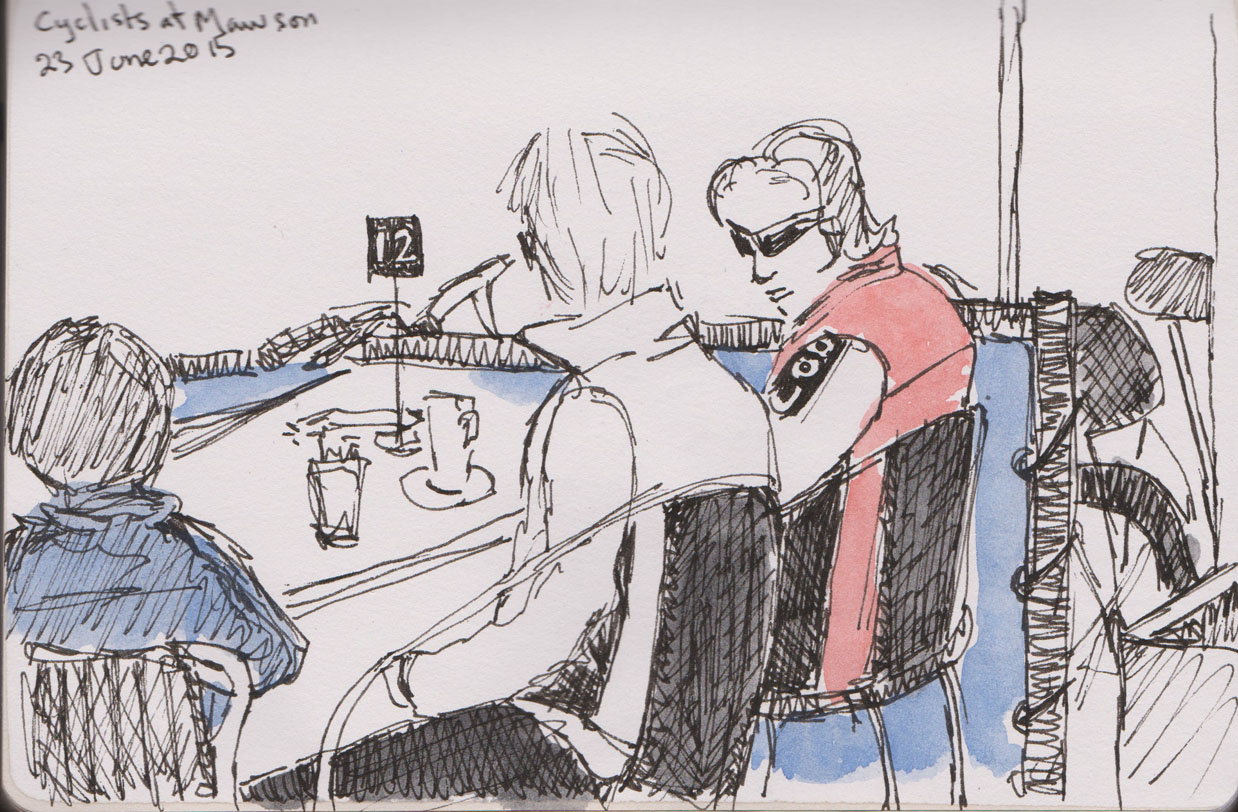
After he left I drew some cyclists sitting in the outside area.

Cyclists, pen and ink and wash, 23 June 2015

Cyclists, pen and ink and wash, 23 June 2015

After several days of not so good weather we are finally having a bright sunny winter’s day. Not wanting to miss out on such a pleasant day we called some friends and met up for coffee. Per usual finding something interesting to draw when I go to the same place most weeks is a challenge. Today we were the only customers when we arrived at the cafe. So I settled on painting the tree trunk and shadows that we cast on it. I’m pretty pleased with the result.

Tree with cast shadows, watercolour, 25 June 2015

Tree with cast shadows, watercolour, 25 June 2015

BTW I’m the odd figure on the left with ‘horns’. I’m wearing my novelty hat with the cat’s ears that I bought in Beijing last year! (Oh well if you can’t be a good example you just have to be a horrible warning!)

Going medieval – part 2

The National Library’s Medieval Manuscripts day was something I was looking forward to and it didn’t disappoint. Our guide for the day was Professor Emerita Michelle Brown and she was both very engaging and extremely knowledgeable.

We were led through 1500 years of manuscripts, looking at materials, construction, images and text. There was so much ground covered that I was grateful to have studied, albeit in my deep past, Roman civilisation, Byzantine and Medieval European history, which gave me something to hang onto as we careened through various historical epochs. The morning was spent looking at the development of tablets, scrolls and book forms, reed and quill pens not to mention the difference between parchment – made from sheep and goat skins and vellum – made from calf skins. Thankfully we were supported mid morning by yummy pastries and copious quantities of tea and coffee.

We were diverted by interesting anecdotes such as the martyrdom of Saint Boniface, who held a book over his head in an unsuccessful attempt to save himself from the swords of the Frisians who killed him in 754. Indeed the very book he was purported to have held to protect himself, the Ragyndrudis Codex (Codex Bonifatianus II) still exists and is located in Fulda in Germany.

One of the earliest images of Saint Boniface using a book as protection. Detail from Fuldaes Sakramentar, ca. 975. Image source

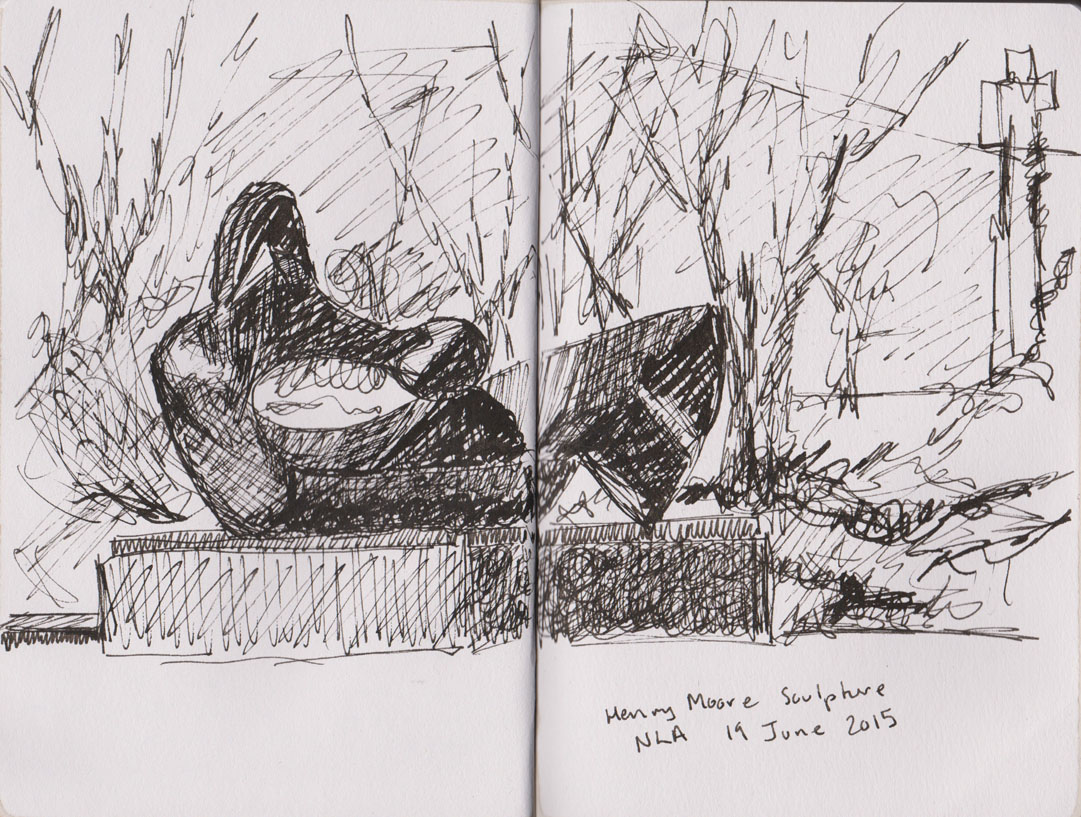
But I’m getting sidetracked. By lunchtime my head was just about exploding with information. So I took myself outside the library for a breath of fresh air and a Modernist detour with the help of Henry Moore’s sculpture, Two Piece Reclining Figure, No. 9, (1969)
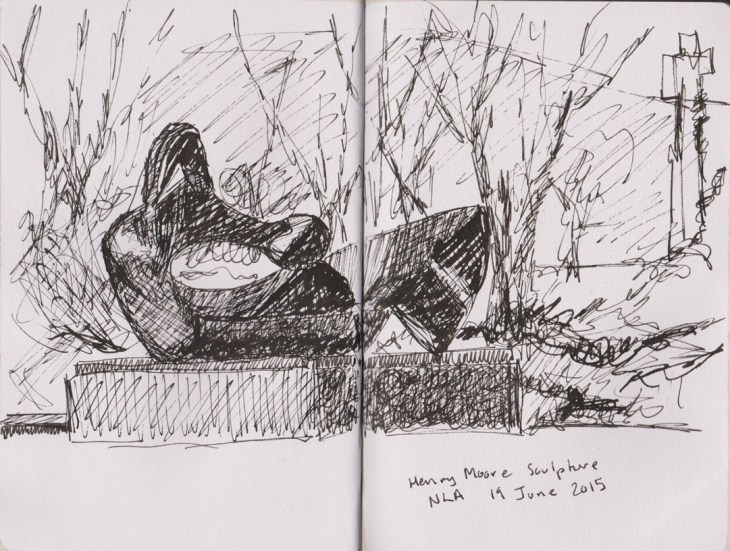
Henry Moore, 1969, Two piece reclining figure, no. 9, outside the National Library of Australia, pen and ink, 19 June 2015

Henry Moore, 1969, Two piece reclining figure, no. 9, outside the National Library of Australia, pen and ink, 19 June 2015

The afternoon session held the pleasure of getting very up close and personal to some of the volumes and fragments that form part of the Library’s medieval collection.

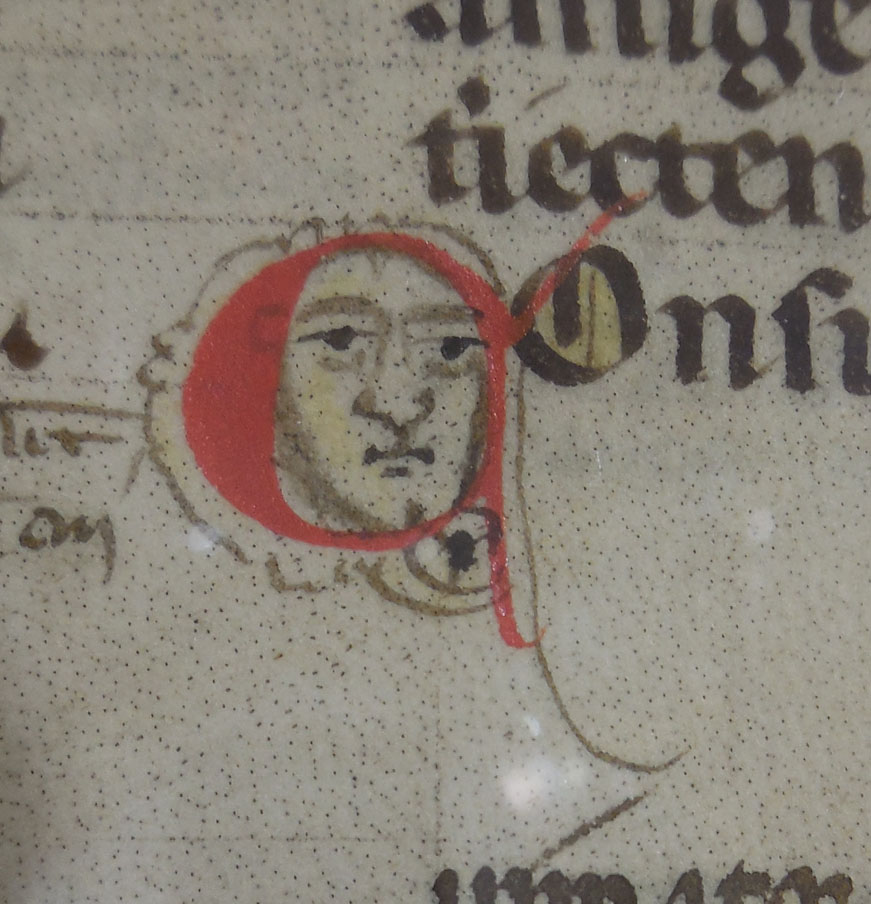
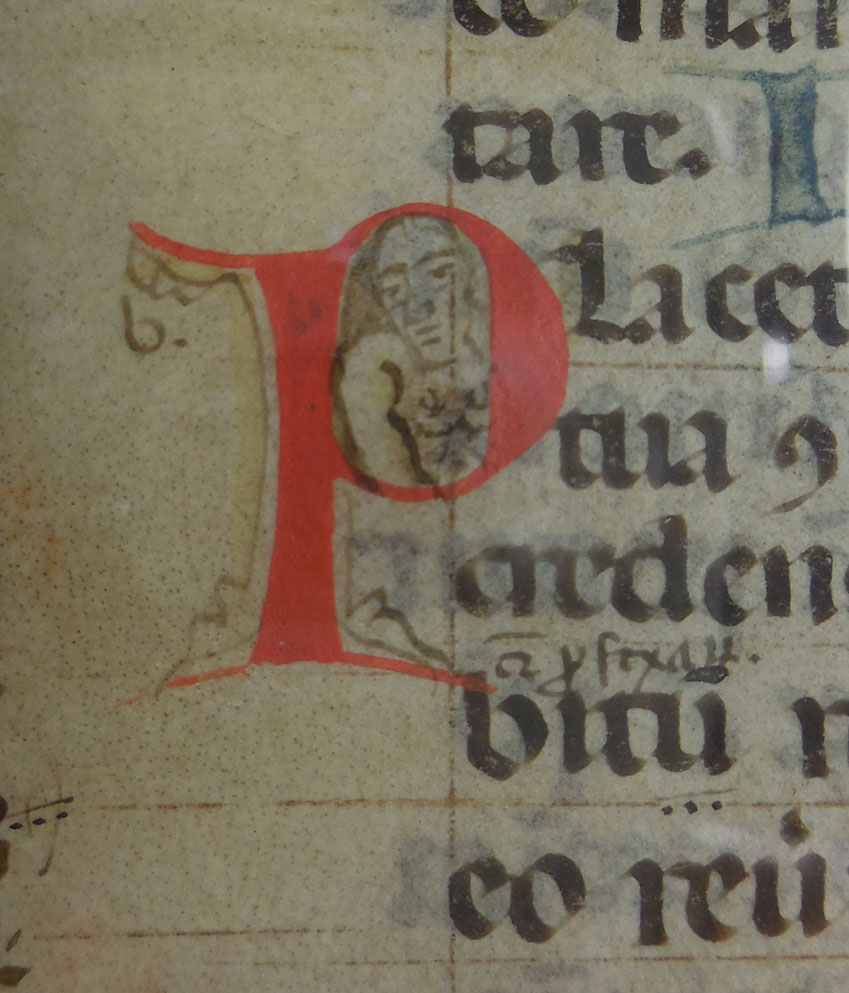
There were little faces included in capital letters – the faces below are about 1 cm in height.

Looking out of the past, the spots are the pores in skin that was used to make the parchment. Fragment from the Nan Kivell Collection

Looking out of the past, the spots are the pores in skin that was used to make the parchment. Fragment from the Nan Kivell Collection, National Library of Australia
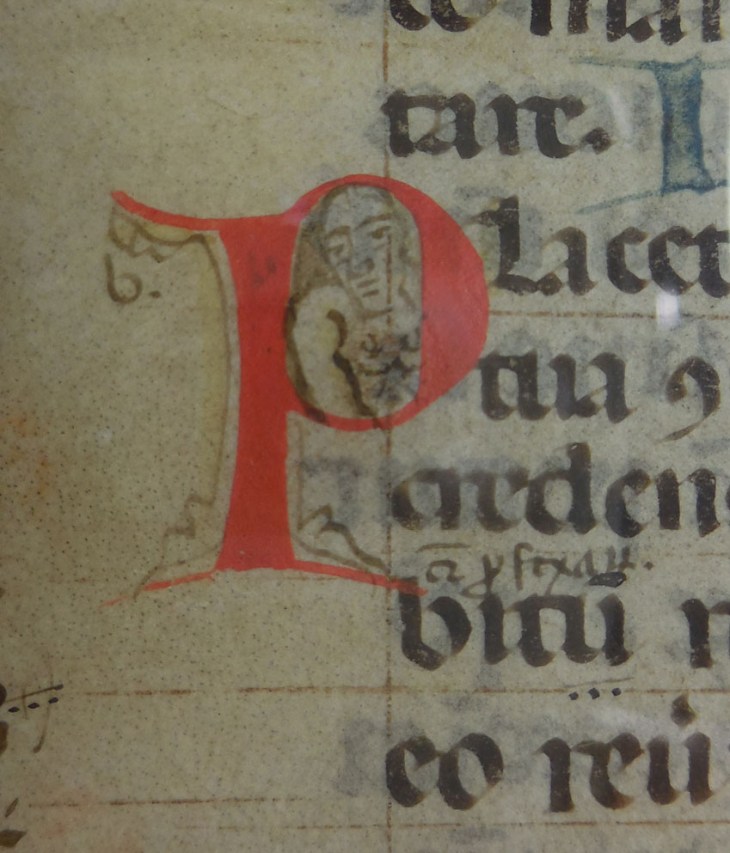
Who is that?, Fragment from the Nan Jovell Collection, National Library of Australia

Who is that?, Fragment from the Nan Kivell Collection, National Library of Australia

And we were given an insight into the manufacture of these books when looked at manuscripts with unfinished artwork in them. This is an unfinished ornamental capital in an Italian book from the 15th century.
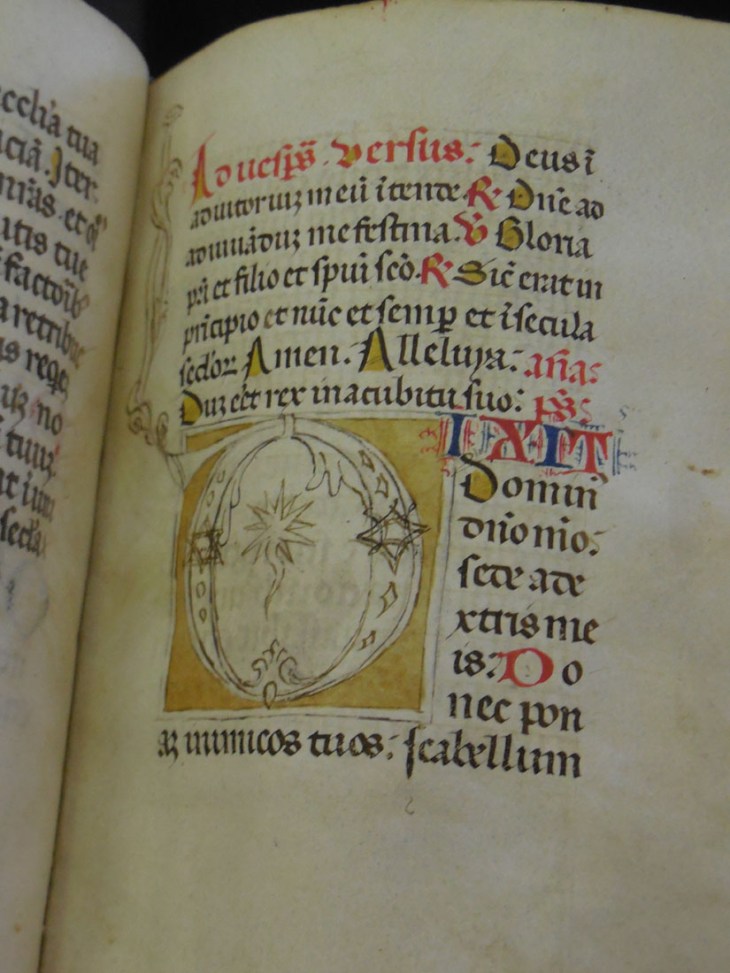
An unfinished ornamental capital, Mantua, 15th cent.

An unfinished ornamental capital, Mantua, 15th cent.

Obviously this didn’t stop the book from being used and someone even thought they should have a go at completing the book themselves.

The man in the moon, addition to a capital letter, Mantua 15th cent.

The man in the moon, addition to a capital letter, Mantua 15th cent.

But this was a minor indignity compared to what some old manuscripts have suffered. As printed books became more readily available and affordable, the parchment and vellum pages lost their value and were used by bookbinders as covers …

Manuscript re-used as a part of a book binding.

Manuscript re-used as a part of a book binding.

and fragments were used to stiffen book spines and some pages were even used as pasting surfaces!

Re-use manuscript to strengthen a book spine

Re-use manuscript to strengthen a book spine

The last part of the afternoon we spent looking at magnificent volumes such as the Luttrell Psalter (only images on the screen) and comparing the use of page layouts with contemporary web designs. Wow what a ride! I’m still trying to consolidate what I heard on the day and follow up all sorts of interesting images.

Thanks to the team at the National Library and Professor Brown for such an amazing day.

PS if you would like to look at the Luttrell Psalter, The British Library has a version that you can turn the pages of, click here. I particularly like the designs that act as ‘line fillers’ on each page.