Water Diversions

To divert my nervous energy from the exhibition opening last Friday my partner suggested we get on our bikes and ride to the nearby Lake Tuggeranong to do some drawing. The most difficult thing was to decide what to draw. The lake is wide and the view of the mountains and the town centre on the far side was far too broad a panorama to make a particularly good composition. So I plumped instead for the storm water diversion system at the northern end of the lake.

Alright not everyone’s first choice for subject matter but the complex system of drains, catchment basins and structures to slow the flow of water made it quite interesting from an artistic perspective. Not to mention the variety of waterbirds that were using the different depths of water to catch their food. Here is the initial section where the storm water flows into the first collection basin. I was looking towards the sun so there were lots of dramatic contrasts and back-lighting of the vegetation. I did some additional work on the grasses at home.

Storm water diversion system

Storm water diversion system

While I was letting the paint dry on my first painting I was able to turn my attention to do some quick sketches of a Great Egret (Ardea alba) which was fishing in the small creek running off the bottom of the system. As the egret’s plumage is pretty much all white it was an easy choice to paint it by using negative space. Here are two views.

Great Egret

Great Egret

Great Egret

Great Egret

I’m also pleased to report that while we were watching the egret actually caught a fish! We enjoyed watching it manouvre the fish around before swallowing it.

My final sketch, using watercolour pencils, is of the lowest level of the structure where large natural boulders have been placed to break up the flow of fast water in order to limit erosion to the banks of the lake.
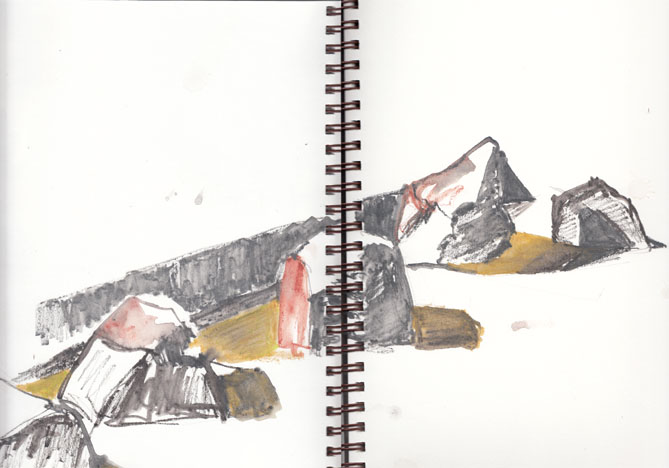
Boulders at the bottom of the storm water diversion system

Boulders at the bottom of the storm water diversion system

There are still more sections of this structure to paint so I’m sure I’ll be back.
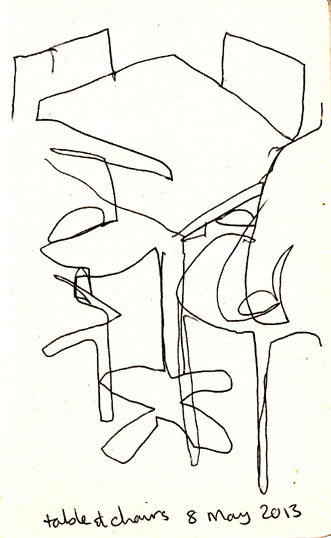
Cafe Table – 8 May 2013

I usually take my tablet to draw on at the cafe but I’m not always thrilled by the results. So today I went old-fashioned and took a pen (also useful for the crossword) and small sketchbook.

I also used my preferred blind-drawing technique. Here is the result:

8May13lra

I also decided that it might be improved by a bit of light colouring:

cafe table with a light watercolour wash

cafe table with a light watercolour wash

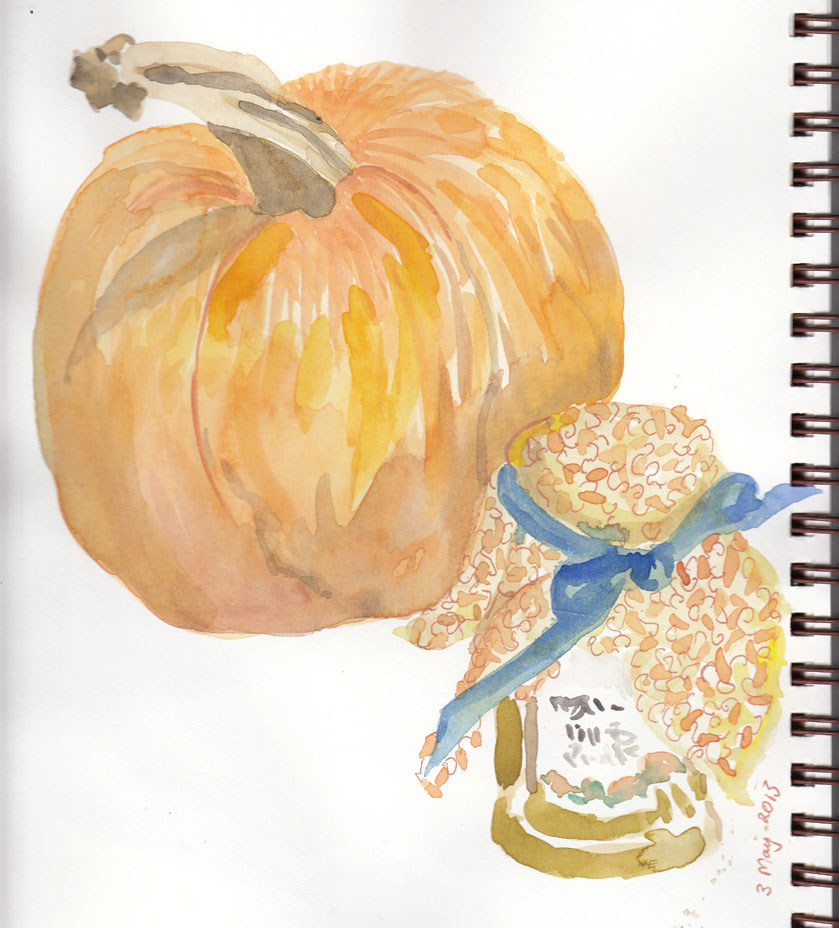
Watercolour 1 May 2013

I’ve been really encouraged reading other peoples blogs about drawing to keep up with my own work so thanks to DesignedbyDooge, CrenellatedArts and Kestrelart for the ‘virtual’ inspiration.

My latest effort is this tea cup and saucer which my partner bought for me at an op-shop a few weeks ago. The cup and saucer was made by the Westminster Fine China Australia ( see item 247) and is rather fetchingly described as a ‘tennis set’. I presume this is because ladies who were taking a break from playing tennis could easily fit their cake onto the saucer/plate (it’s rectangular in shape) while still balancing their cup. I think it is from the late 1950’s/early 1960’s.

Westminster Fine China Australia 'tennis set'

Westminster Fine China Australia ‘tennis set’

I was aiming to paint this without resorting to outlining –  which might have been more easily achieved if I hadn’t decided to use watercolour pencils. To add to the challenge the set is highlighted with a gold rim (which is “guaranteed 22 carat” by the manufacturers label). There are some passages, inside the cup which I think have worked well, but I’m most pleased with the result with the black and white gingham tablecloth.

Turner from the Tate

While in Adelaide I saw the Turner from the Tate  exhibition at the Art Gallery of South Australia, closing 19 May. This exhibition will open in Canberra at the National Gallery of Australia on 1 June.

The visitors numbers were reasonable so we were able to have a really good look at the works. Much to my surprise you were allowed to take photos in the exhibition as long as you didn’t use a flash (don’t expect such liberties in Canberra). Here is Turner’s paint box.

Turner's paintbox - pigs bladders for carrying mixed pigments at the top of the box and jars of ground pigment at the front

Turner’s paintbox – pigs bladders for carrying mixed pigments at the top of the box and jars of ground pigment at the front

The rounded shapes at the top are the pigs bladders in which the mixed pigments were carried.

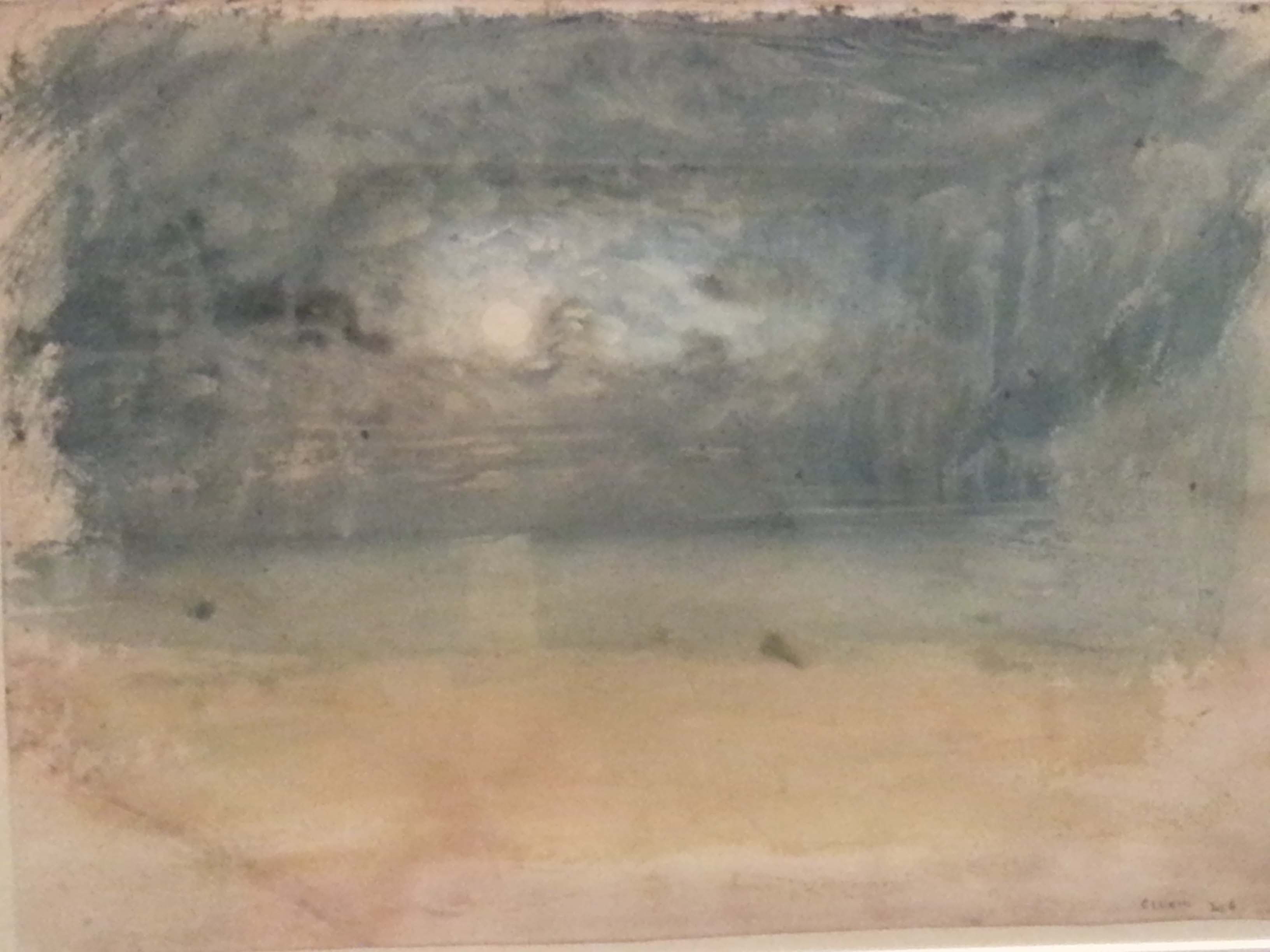
What I really enjoyed about this exhibition was the number of studies and sketches that were included. I am intrigued by the Turner’s process, particularly his watercolours. Some of were titlted “A Beginning” and were colour studies or pieces left almost as soon as they were started.

A close -up of one of One of  Turner's colour studies, Blue moonlight over yellow sands, c 1824

A close -up of one of One of Turner’s colour studies, Blue moonlight over yellow sands, c 1824

If you want to see more of this type of work the Tate Gallery (holders of the Turner Bequest) have digitised Turner’s sketchbooks. If you look at the Turner’s Finberg sketchbook  you will see many colour studies which to our contemporary eyes look like abstract works. In these works there is only an occasional figure or recognisable shape emerging from the picture. No wonder Turner’s contemporaries had trouble understanding these works.

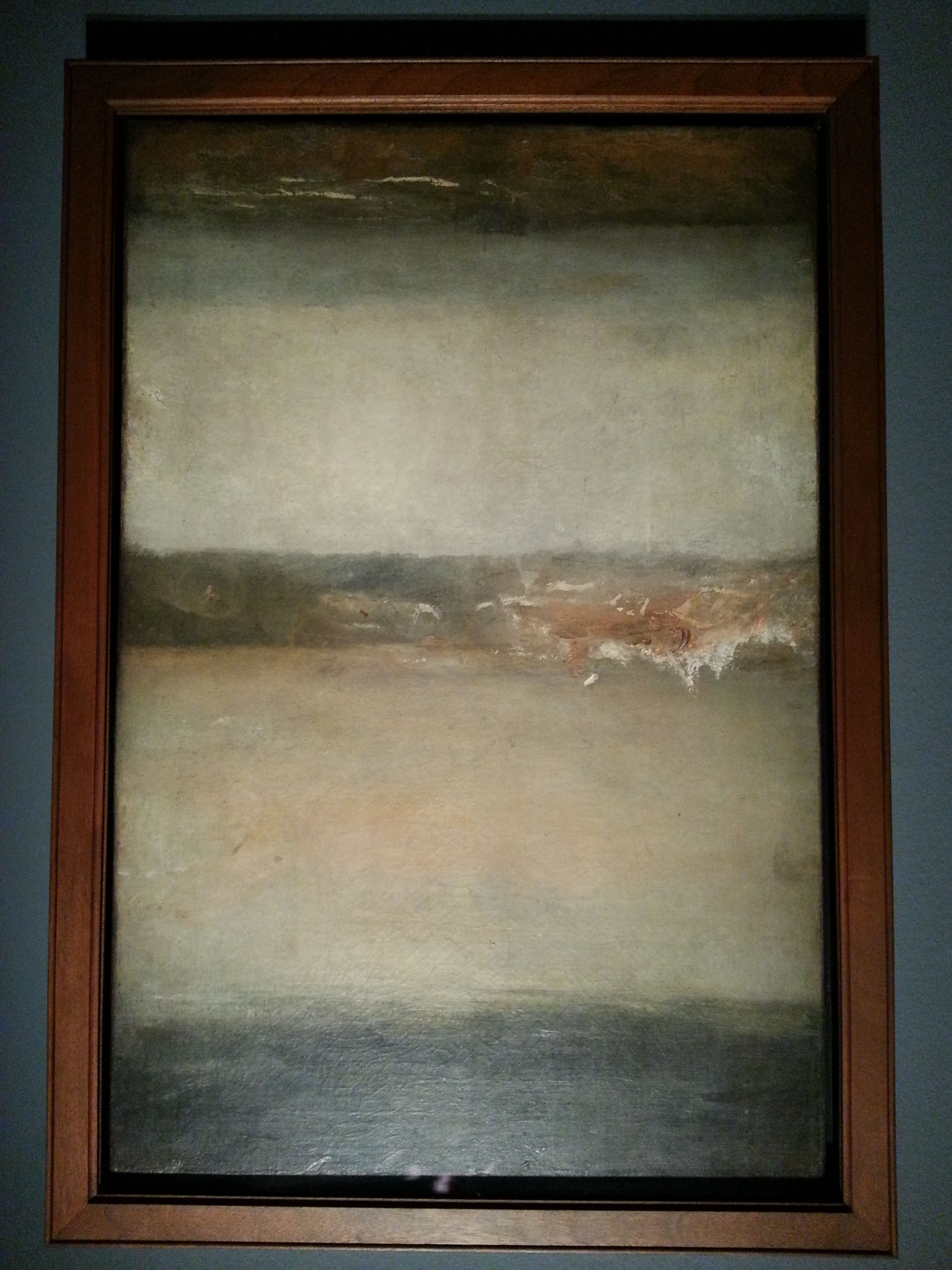
Whenever I go to an exhibition I like to  play the game of  “if I could take one piece from this exhibition …” . For this exhibition my number one pick would be this triple seascape study, Three Seascapes, c 1827. What is interesting is that the painting also works when it is turned upside down. The dark section at the top becomes the land and the centre section’s sea and sky for become reversed for the lower section of the work. I wonder did Mark Rothko ever see this work?

Turner’s Triple Seascape, c 1827

Turner's Triple Seascape turn upside down

Turner’s Triple Seascape turned upside down

The works in the exhibition are drawn from the Turner Bequest to the Tate Gallery. If you want to see more the Tate has digitised the bequest so you can look at your leisure, that is as long as you have plenty of  time to look (when I checked it showed over 2,000 pages of work)!