The Big Draw at the NGA

Today was the annual Big Draw event held at the National Gallery of Australia. Several members of Urban Sketchers Canberra met up for the event and joined the crowds. Just inside the front door patrons were serenaded by the Ukelele Republic of Canberra band, singing and playing their way through a wide ranging repertoire.

The Ukulele Republic of Canberra at the National Gallery of Australia, pen and ink, 8 November 2015

The Ukulele Republic of Canberra (most of them), at the National Gallery of Australia, pen and ink, 8 November 2015

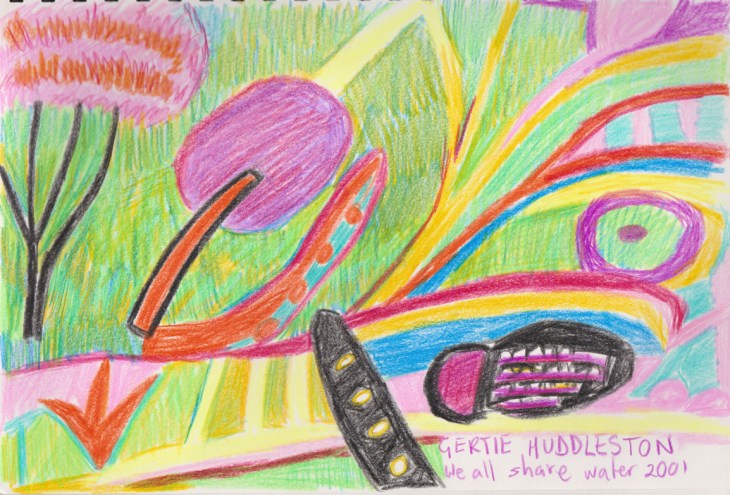
There were eight activities on offer and per usual it was impossible to get around them all in the three hour timeframe. First stop for me was Garden Country, in the Aboriginal and Torres Strait Islander Art section. Here the work of Gertie Huddlestone was used as a starting point for a group work on the floor, or for some of us some individual inspiration.

Sketch after Gertie Huddlestone, We all share water, 2001, coloured pencil

Sketch after Gertie Huddlestone, We all share water, 2001, coloured pencil

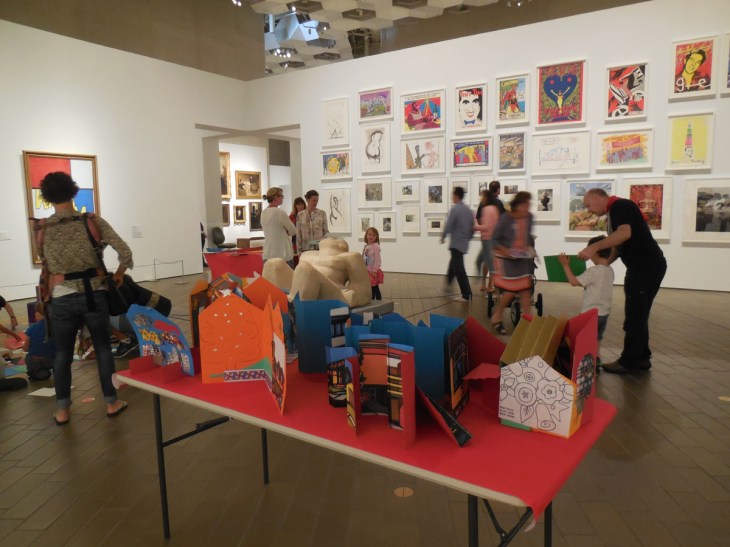
I started to walk through to some other areas of the gallery, stopping to talk to the staff members overseeing other areas such as House and Garden, where some urban houses were being put together.

House and Garden, in the Australian Art section of the Gallery

House and Garden, in the Australian Art section of the Gallery

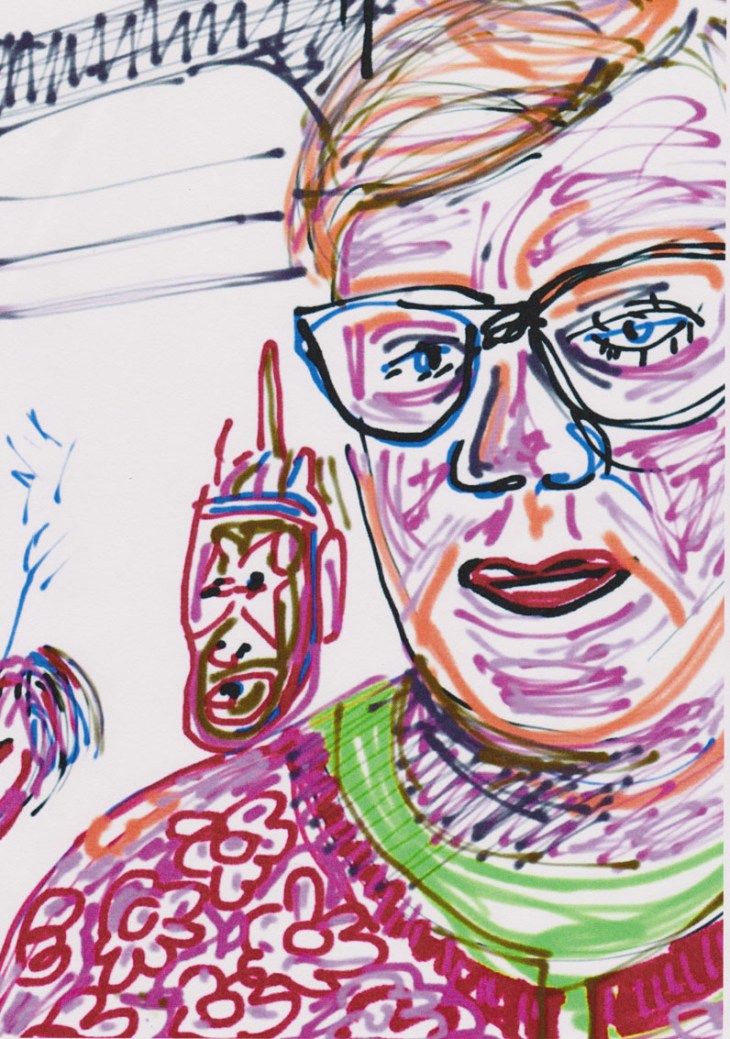
I only managed to get to one other activity before the agreed meet-up time. At Is your face a mask, people were given an I-pad to sketch themselves over a ‘selfie’. This proved to be popular with everyone as you could get a print-out of your efforts at the end.

Self-portrait with masks, I-pad

Self-portrait with masks, I-pad

Our group decided to get together for lunch over at the National Portrait Gallery where the crowds were not so busy. Here are our collective efforts from the morning.

USk Canberra sketches from the Big Draw

USk Canberra sketches from the Big Draw


Urban Sketchers Canberra at the National Library of Australia

On Sunday we had our first official outing as Urban Sketchers Canberra, a goal we have been working towards since our sketching group started meeting in February this year. We had 15 people come along, including two people joining us for the first time.

With a bad weather forecast we had to do a last minute change from our planned outside venue to one that offered indoor drawing opportunities. So it was off to the National Library of Australia (NLA). As luck would have it the rain held off for a bit so many of us took the opportunity to draw outside the building.

Spot the non-sketcher, USk Canberra takes to the National Library of Australia

Spot the non-sketcher, USk Canberra takes to the National Library of Australia

I decided to tackle a part of the building that I must say I haven’t paid much attention to before, the large sculpture above the entrance to the library. The work is called Knowledge and was designed by Tom Bass, who is probably better known to most Canberrans as the designer of the sculpture of Ethos in Civic Square. Commissioned in 1966 the work was installed on the building in 1968. At just over 21 metres in length, 2 metres in height and projecting nearly 2 metres from the wall this is a complex piece of work. Indeed I didn’t really consider how complex until I tried to sketch the projecting elements of the work.

Part of the sculpture, Knowledge, at the National Library of Australia, watercolour and brush pen, 1 November 2015

Part of the sculpture, Knowledge, at the National Library of Australia, watercolour and brush pen, 1 November 2015

I managed to get through to the start of the watercolour when it began to rain. I retreated to the portico along with most of the other sketchers to complete adding the colour to my sketch.

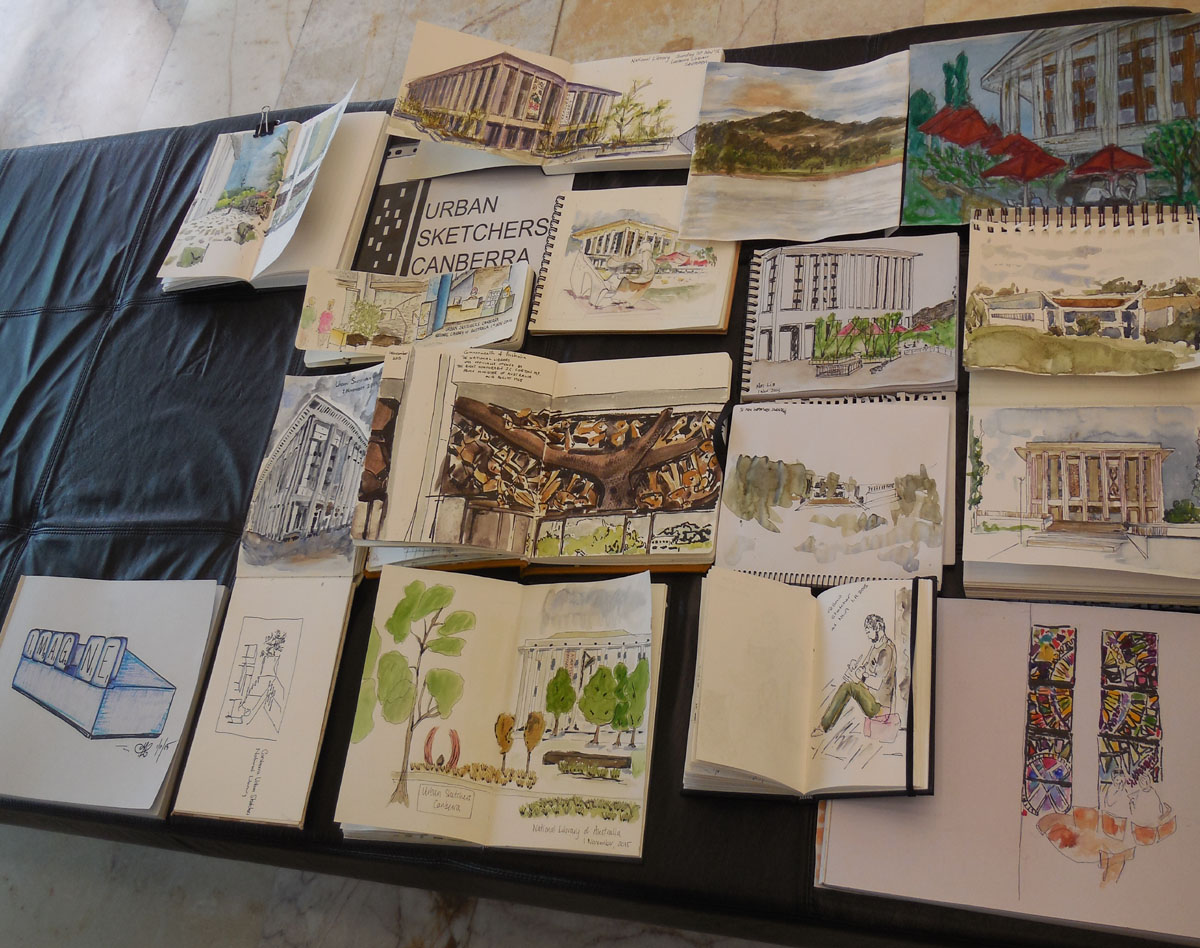
As is traditional we met up at the end of our two hours of sketching to compare our efforts. As always the  subjects and approaches were quite varied.

Some of our final works on the day

Some of our final works on the day

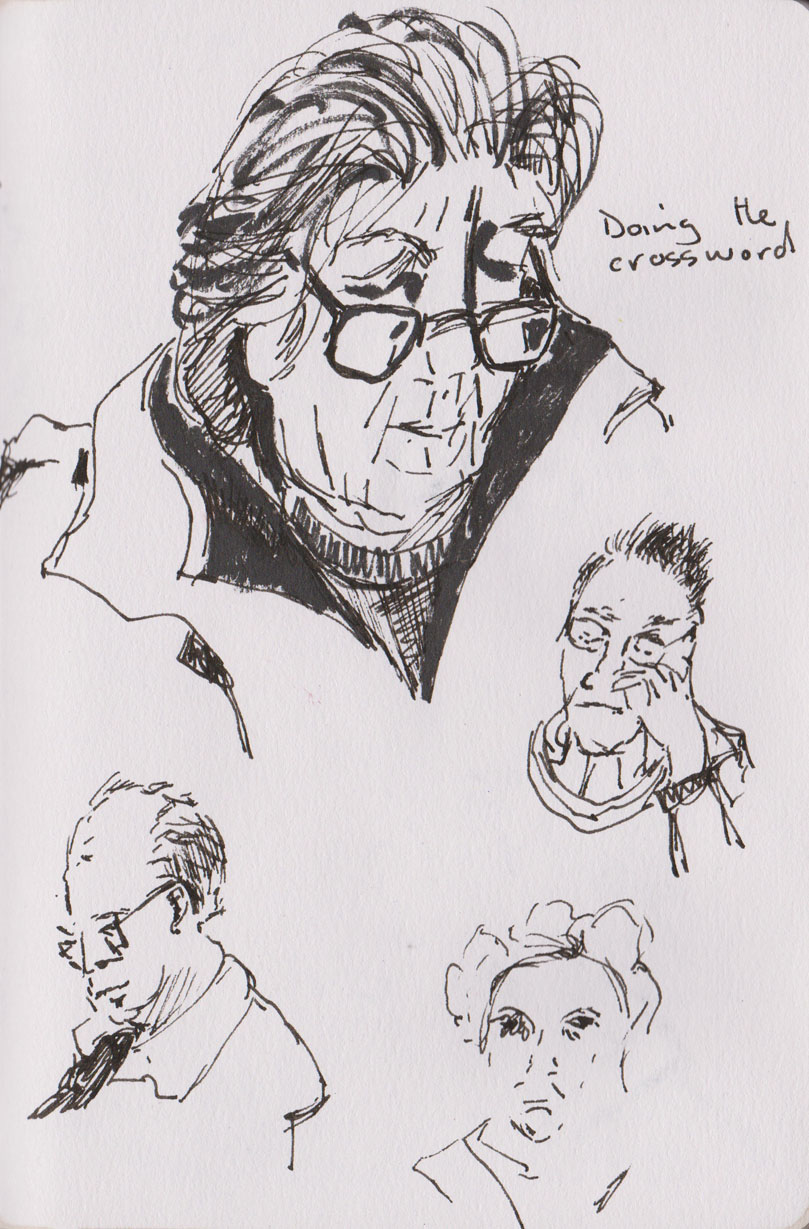
Discussions of the day’s work continued over coffee and lunch in the Library’s cafe. Some of us also looked at the exhibition of work of William Strutt currently on display in the Library. Strutt’s ability as a draftsman really stood out and we were in awe of his fine pencil sketches.

Studies of two male figures and a woman's head, William Strutt, c. 1860, pencil (PIC R3339 LOC1132/F), collection of the National Library of Australia

Studies of two male figures and a woman’s head, William Strutt, c. 1860, pencil (PIC R3339 LOC1132/F), collection of the National Library of Australia

The next meeting of Urban Sketchers Canberra will be on 5 December, at the Australian National Botanic Gardens. You can find details of events and more pictures on the group’s Facebook page, or contact us directly at urbansketcherscanberra@gmail.com

Facing up to it

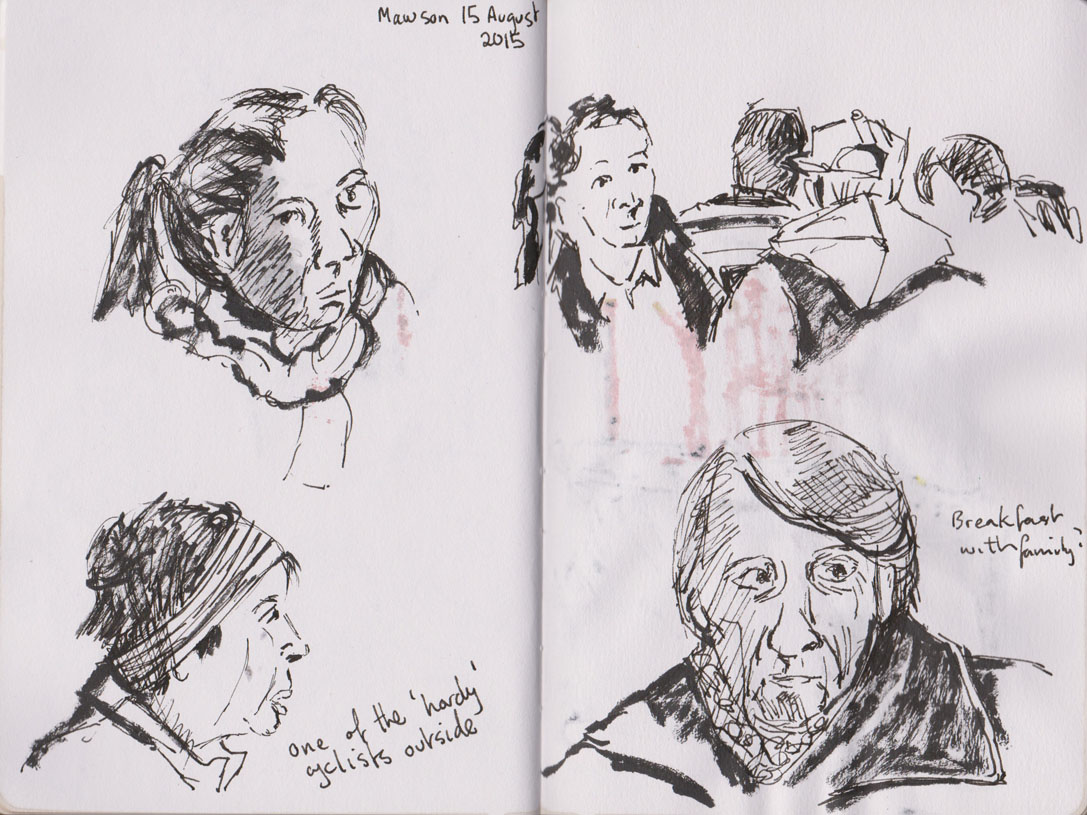
I’ve said it before that drawing faces is one of the biggest challenges I have in drawing. I’m not even talking ‘likenesses’ – I don’t expect to become a portraitist – I just want to draw someone who looks like an individual. This is currently the bread and butter of my sketchbook routine, go to the coffee shop and draw people’s faces.

Faces at a coffee shop, pen and ink and brush pen, 14 August 2015

Faces at a coffee shop, pen and ink and brush pen , 14 August 2015

I opted to do the Marc Taro Holmes workshop at the Singapore Symposium to try and get a handle on how I could approach this task and I found it quite helpful.

Double spread, typical of my cafe drawings, pen and ink and brush pen , 15 August 2015

Double spread, typical of my cafe drawings, pen and ink and brush pen , 15 August 2015

Marc has very kindly posted the link to his notes for this class on his blog.

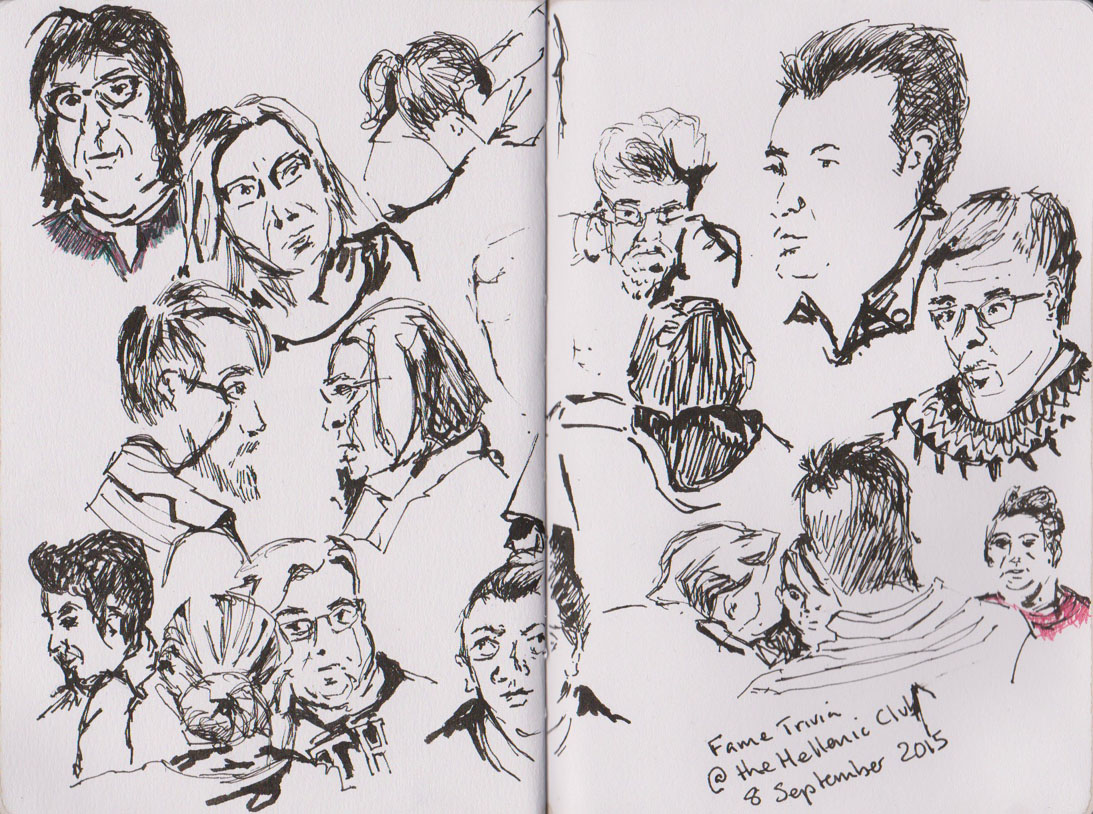
Here’s last night’s effort. A double-page of faces and gestures from our pub trivia night at the Hellenic Club in Canberra. They may not recognise themselves, (possibly better if they don’t), but I’m happy that at least these people look like individuals.

Faces at the trivia night, pen and ink and brush pen , 8 September 2015

Faces at the trivia night, pen and ink and brush pen, 8 September 2015

Drawing the Exhibition – Myth + Magic

Myth + Magic, Art of the Sepik River, Papua New Guinea, is the current featured exhibition at the National Gallery of Australia (NGA). The art works on display are predominantly sculptural and relate to the spiritual practices of the people who live along this major river system of Papua New Guinea. The works are quite dramatic and often have a visceral quality which derives both from their subject matter and also from the materials they are made from – wood, shell, pig tusk, fibre fur, hair and mud. This sense of drama is enhanced by the display of these items in largely darkened rooms set off by tightly focused spotlights.

There are a plethora of interesting subjects to draw. I was intrigued by these two large figures which are costumes worn during initiation ceremonies. They represent spirits or awan, that “frighten harass and bully” young initiates during their period of seclusion. Like many other pieces on display, these items were collected in 1916, when Australian forces entered the Sepik River to wrest control of the territory from Germany, as an extreme outlying action of the First World War.

Two awan (spirit) costumes, East Sepik River, before 1916 collected by Captain Walter Balfour Ogilvy, from the collection of the Museum of Victoria. Water soluble graphite

Two awan (spirit) costumes, East Sepik River, before 1916 collected by Captain Walter Balfour Ogilvy, from the collection of the Museum of Victoria. Water soluble graphite, 17 August 2015

These costumes are constructed of fibre, the bodies are woven from plant material and are decorated with clay, shell hair and ochre. The figure to the rear has a head dress made of densely packed cassowary feathers. When the costumes are worn all that can be seen are the wearers feet (there is a photograph of similar costumes being worn, in the exhibition catalogue). The wearer can look through the mouth opening of the nearest figure and the second figure has two eyeholes in the chest to see through.

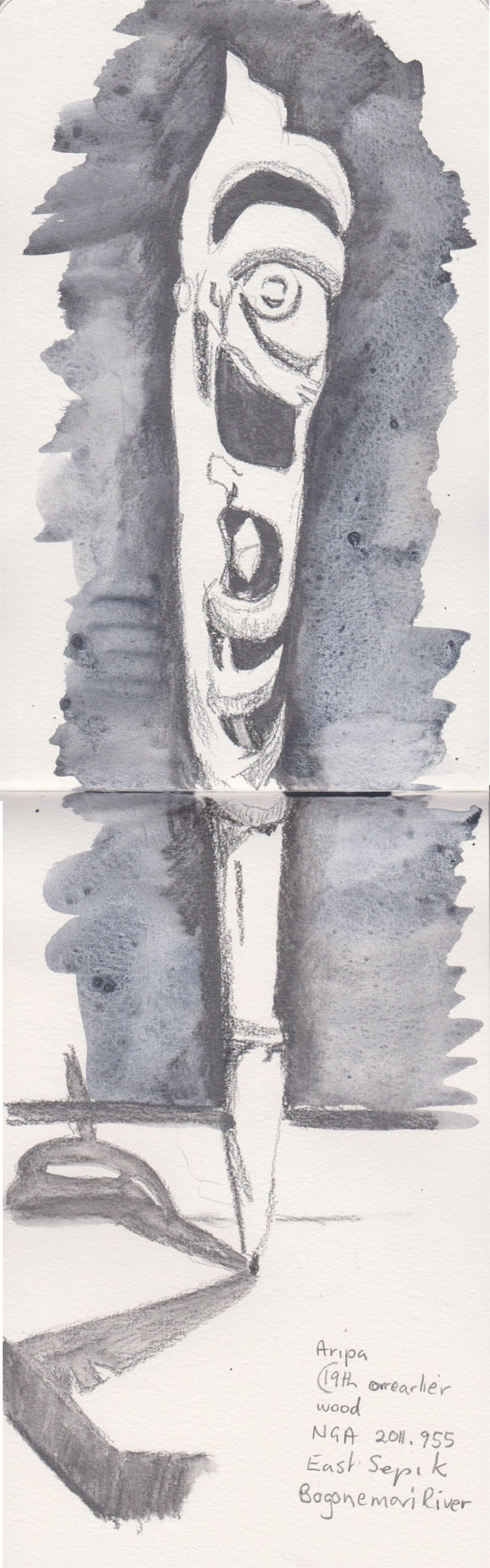
In each room there were astonishing items to see. In the last room, apart from the massively carved crocodile sculpture on loan from the Museum of Papua New Guinea, are several aripa, or hunting helpers. These aripa are an abstracted human figure, sublimed to a most minimal form, ‘standing’ on their one foot. To quote from the website “If the spirit [aripa] has been correctly appeased it will track down and kill the desired prey’s spirit so it will show itself to the hunter to be killed easily. It was believed the soul (tite) of the aripa spirit being, not the artist, was responsible for the creation of their physical bodies.”

Aripa, 19th century or earlier, wood, Bogonemori River, east Sepik, collection of the National Gallery of Australia, Water soluble graphite and watercolour (added later), 17 August 2015

Aripa, 19th century or earlier, wood, Bogonemori River, east Sepik, collection of the National Gallery of Australia, Water soluble graphite and watercolour (added later), 17 August 2015

While we were in the gallery my partner commented on how the sculptures felt somehow familiar – even though we hadn’t seen them previously. We concluded that this sense came not from these figures per se, but from the inclusion of tribal art or the influence of similar works from Africa and elsewhere in the globe, into ‘modern’ art of the early 20th century. We had seen the reflection and now we were seeing the ‘real thing’.

The exhibition is on until 1 November 2015 at the National Gallery of Australia in Canberra. It will not be touring. Well worth a visit if you are in the area.

USk Singapore Symposium Day 3

OK there has been a bit of a gap in the Singapore saga, a result of problems uploading my posts while traveling, traveling in general and having other things to do, like traveling. So now the big catch up.

Day 3 in Singapore saw me in a workshop with Melanie Reim, titled ‘Found in Translation – The influence of Calligraphy on Gesture in the Figure‘, exploring how we can use the influence of calligraphic marks to make lively sketches. Melanie walked us through some of the calligraphic styles found around the world and then showed us the work of artists who have used this approach. You may like to check out the work of Ben Shahn or David Stone Martin.

We were encouraged to draw using shorter, more graphically interesting lines. This is in contrast to the way I usually draw with a continuous line. As Melanie said we should look at the joints of arms and legs and the shift of weight in the body as the point where you could use a calligraphic mark to indicate the body’s movement. The other instruction she gave us was to use the notes she had provided to find the marks that might suit what we were drawing. This proved to be good advice – I don’t know about you, but I am prone to believe I’ve taken the information in and don’t need the prompt of notes – wrong!

We started with faces and bodies, the challenge was to draw 20 faces and 20 bodies in 40 minutes. Ohhh Kayyy – using a brush pen (Pentel) I got underway.

Figures and faces in the Albert St Mall, 25 July 2015, brush pen

Figures and faces in the Albert St Mall, 25 July 2015, brush pen

More figures, Albert St Mall 25 July 2015

More figures, Albert St Mall 25 July 2015

The note to myself about holding the brush was a reminder that if I used the brush as I would normally hold a pen to write I got very uniform strokes. I recalled that on the odd occasion when I have taken a calligraphy lesson I have to hold the brush in a vertical position, using my thumb and forefinger. This way I can get both thick and thin lines and a much wider range of pressure in one stroke.

After this first exercise we collected for a quick review of what we had learned and some advice on how we might better apply the ideas and techniques.
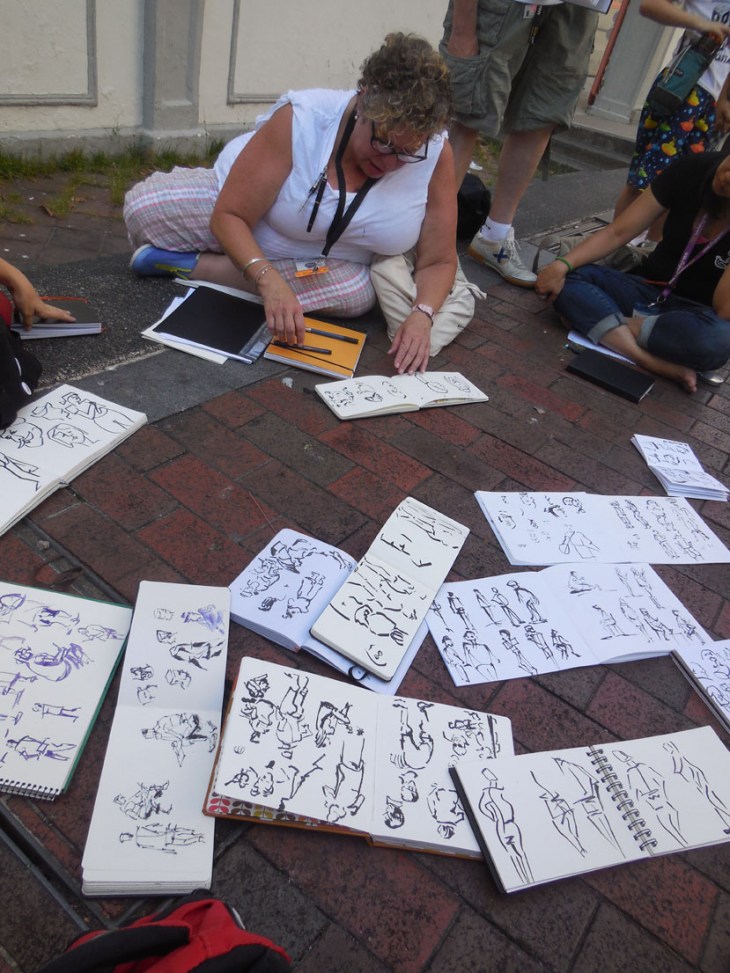
Melanie, providing an on the ground crit session in the Albert Mall

Melanie, providing an on the ground crit session in the Albert Mall

Our second exercise was to draw a scene using calligraphic marks and incorporating figures in the scene. One tip that Melanie gave us was to place an interesting figure in the foreground to help draw the viewer into the image. Just when I was asking myself “will I see someone take an ‘interesting’ stance?”, that person materialised in front of me. In my case a young man walked by with a bag held up on his shoulder – perfect! I was positioned outside the Chinese temple so I had lots of colour and movement to include in the drawing. I also, usefully, had the view-finder that Virginia gave us the day before to help focus in on my subject.
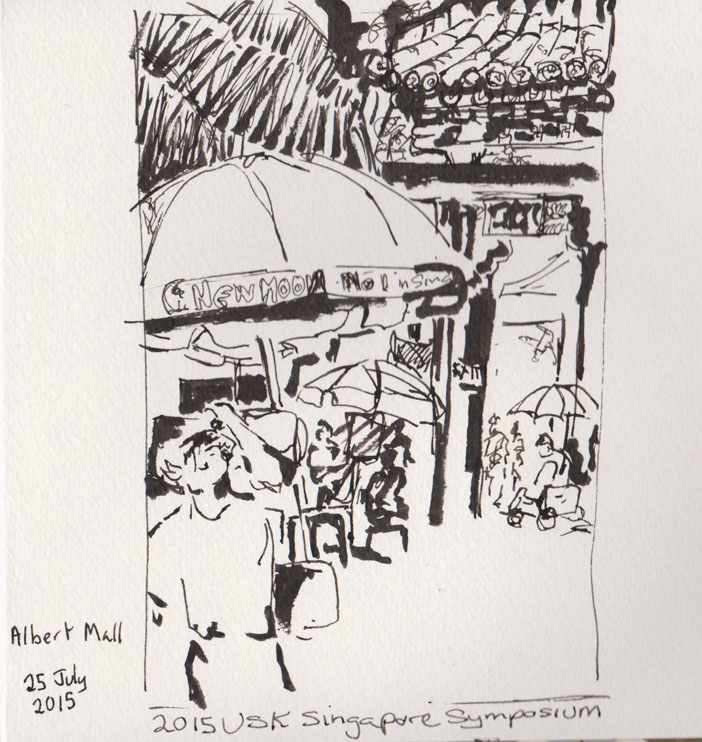
Outside the temple, brush pen, pen and ink, 25 July 2015.

Outside the temple, brush pen, pen and ink, 25 July 2015.

I liked how Melanie’s calligraphic figurative style worked so well with Virginia’s teaching from the day before on using light and darks. I was really pleased with the resulting drawing.

The next day we found ourselves in a local food court where we could sit and sketch while eating our Bandung bean curd, (a rose-flavoured dessert rather like a junket). Again Marc Taro Holmes’ lessons and Melanie’s gestural lines proved to be a good fit.
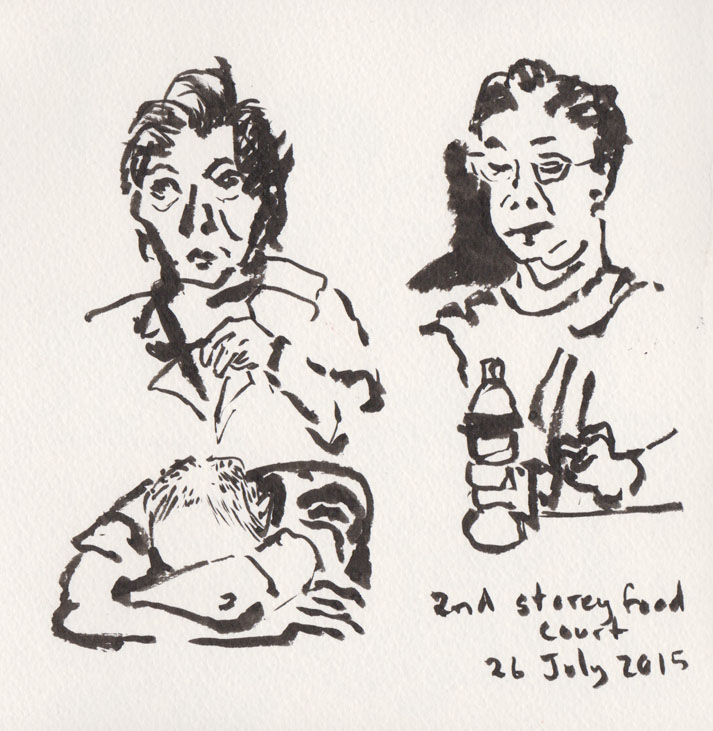
At the food court, some of our fellow diners, brush pen, 26 July 2015

At the food court, some of our fellow diners, brush pen, 26 July 2015