Collage at cruising altitude

Hi, long time no see. I’ve been away in Singapore (more of that another time) and of course came down with the dreaded lurgy only days after returning home. So I am slowly catching up as my recovery allows.

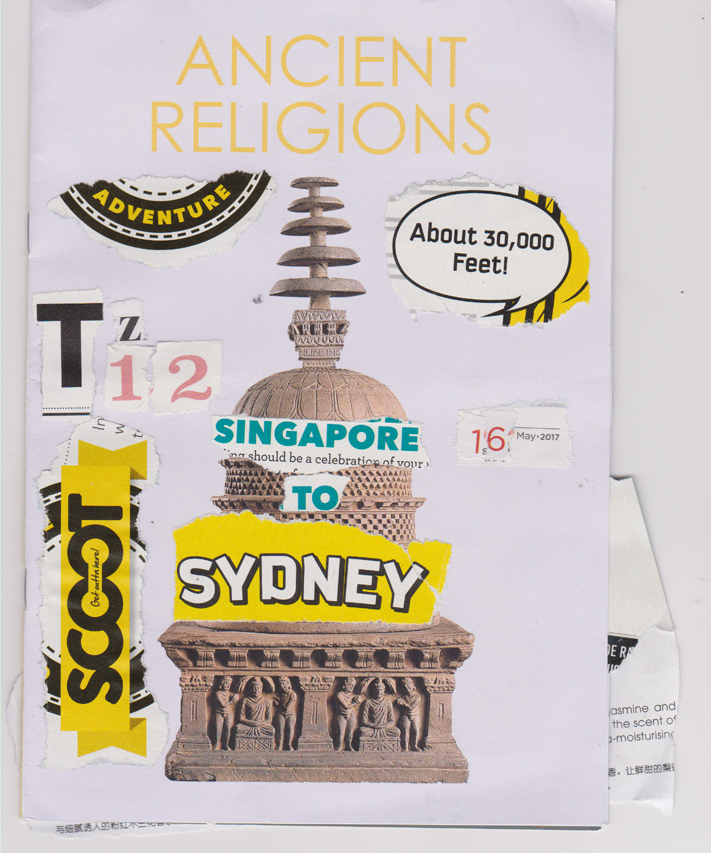
One thing I have been looking forward to showing you is what I got up to on my return flight from Singapore to Oz. Not particularly long-haul as flights go, but with enough time to want to fill it in with something. Thankfully I remembered Nina Katchadourian’s wonderful work ‘Seat Assignment’, where she uses any means possible to create art while travelling by plane.

Checking my resources I discovered I had plenty of printed material, airline magazines, a freebie copy of Readers Digest Asian edition and thankfully a glue stick in the pocket of my day pack. No scissors of course. But I did have some inspiration – a set of room notes from the Ancient Religions room of the Asian Civilisations Museum in Singapore.

So here it is:

TZ12 Collage coverlr

Booklet Cover


Ancient Religionslr


Miraclelr


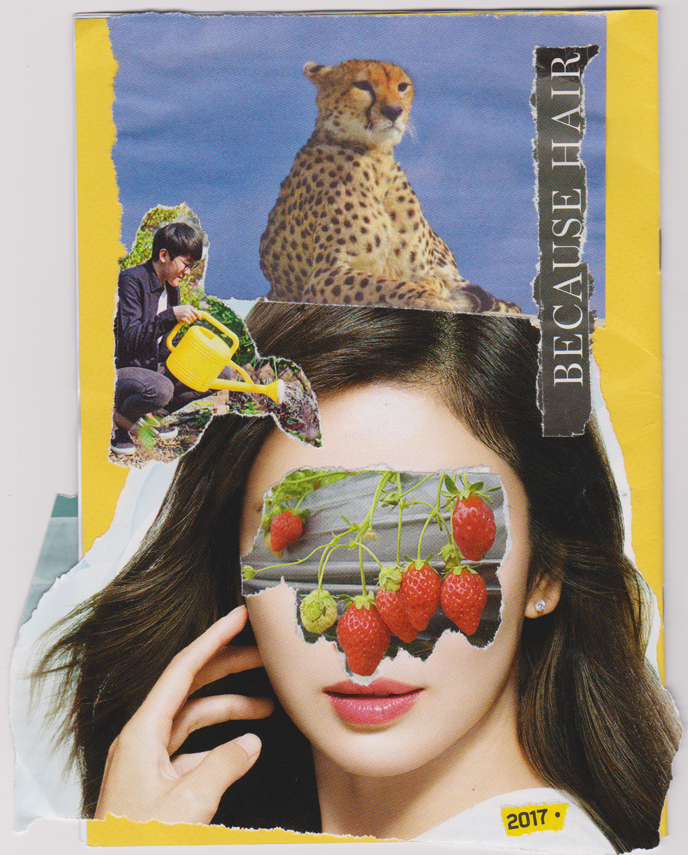
Because hairlr

Back cover


‘Good Bones’ with Stephanie Bowers

We recently took off to Melbourne for a few days with friends to take a workshop called ‘Good Bones’, with architectural illustrator and urban sketcher Stephanie Bowers. Obviously the desire to learn how to handle perspective and use of water colour for illustration appealed as folks came from as far afield as Brisbane and even Perth to attend the workshop. I’ll spare you the blow by blow description of the workshop because Stephanie teaches these techniques in her online classes.

Our base for the two days of the workshop was the ‘Old Quad’ at Melbourne University. The university was founded in 1853 and sought to impress with buildings based on the cloisters and quadrangles of older European institutions. The Quad, with its arcades and arched cloisters certainly was a challenge.

Day one focused on basic instruction and demonstration on single point perspective. Sketches were in pencil with watercolour to follow on Day 2.
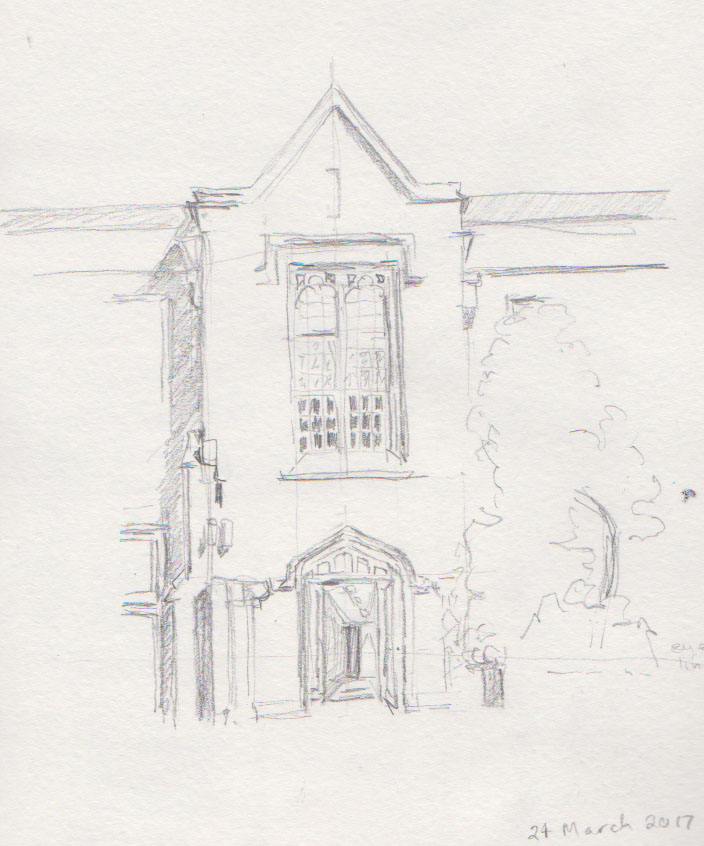
24Mar2017a

The Old Arts Building, Cussonia Court, University of Melbourne

Sketching in this much detail in pencil is definitely not my usual approach!
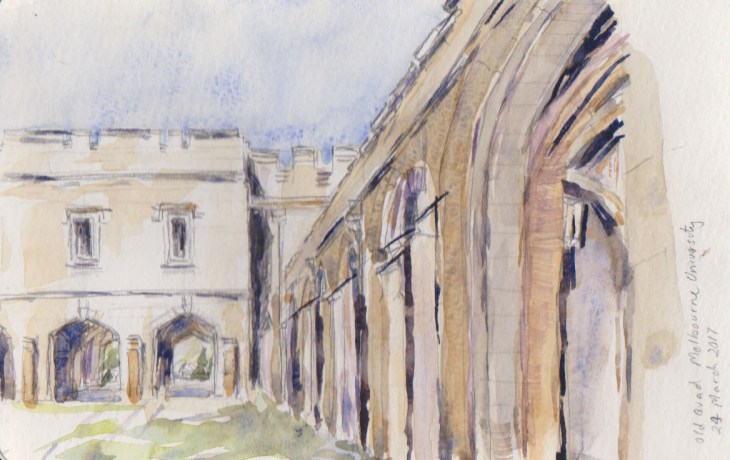
24-25Mar2017b

My second sketch with watercolour added on the following day, the Old Quad, University of Melbourne

Focused practice is always difficult. Another study in pencil.
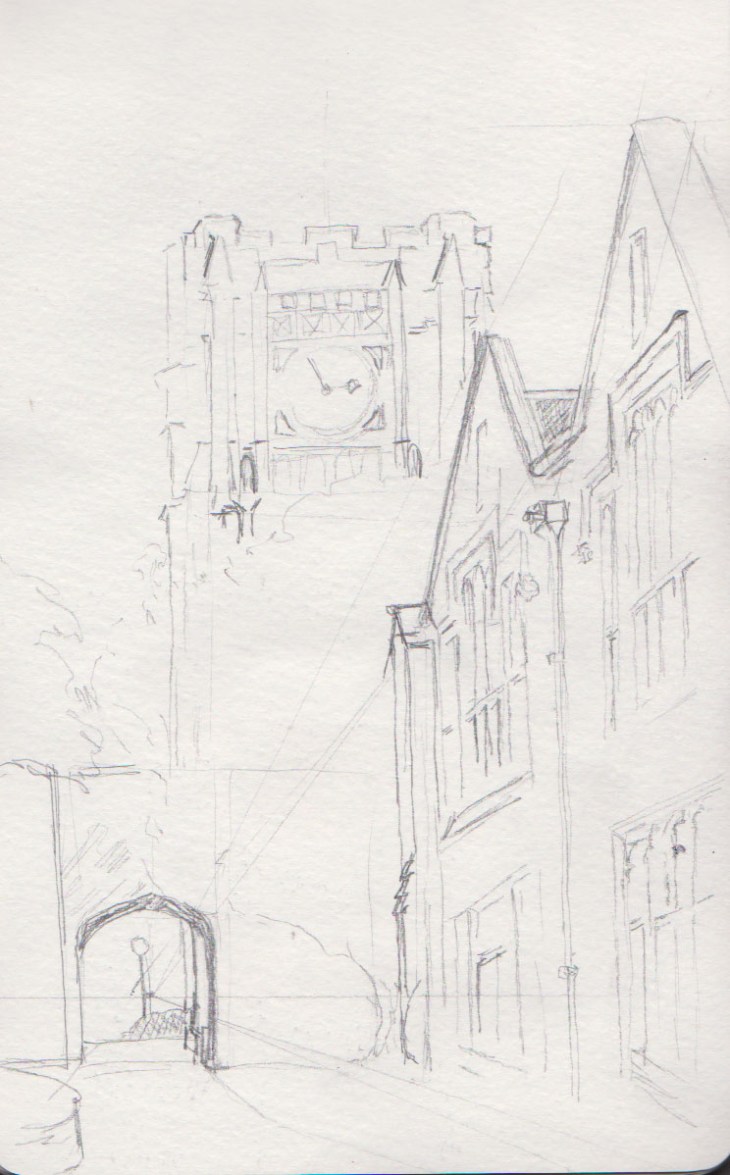
24Mar2017b

Finding the perspective lines was challenging and I doubt I would have gotten this far without Stephanie’s expert tuition

After a day of concentration Stephanie had us make two quick 10 minute sketches.

Day 2 was spent trying out colour combinations and practicing our watercolour technique.

Following the workshop we spent a final half day with Urban Sketchers Melbourne. We had the advantage as we stayed at the University. Without the previous two days tuition I would not have had the skills to successfully tackle the design buildings at the university.

26Mar2017

The dramatic extension of the Design Building with the Elisabeth Murdoch Building in the background

I would recommend taking a class with Stephanie, either on-line or in person.
Stitching with my eyes closed 

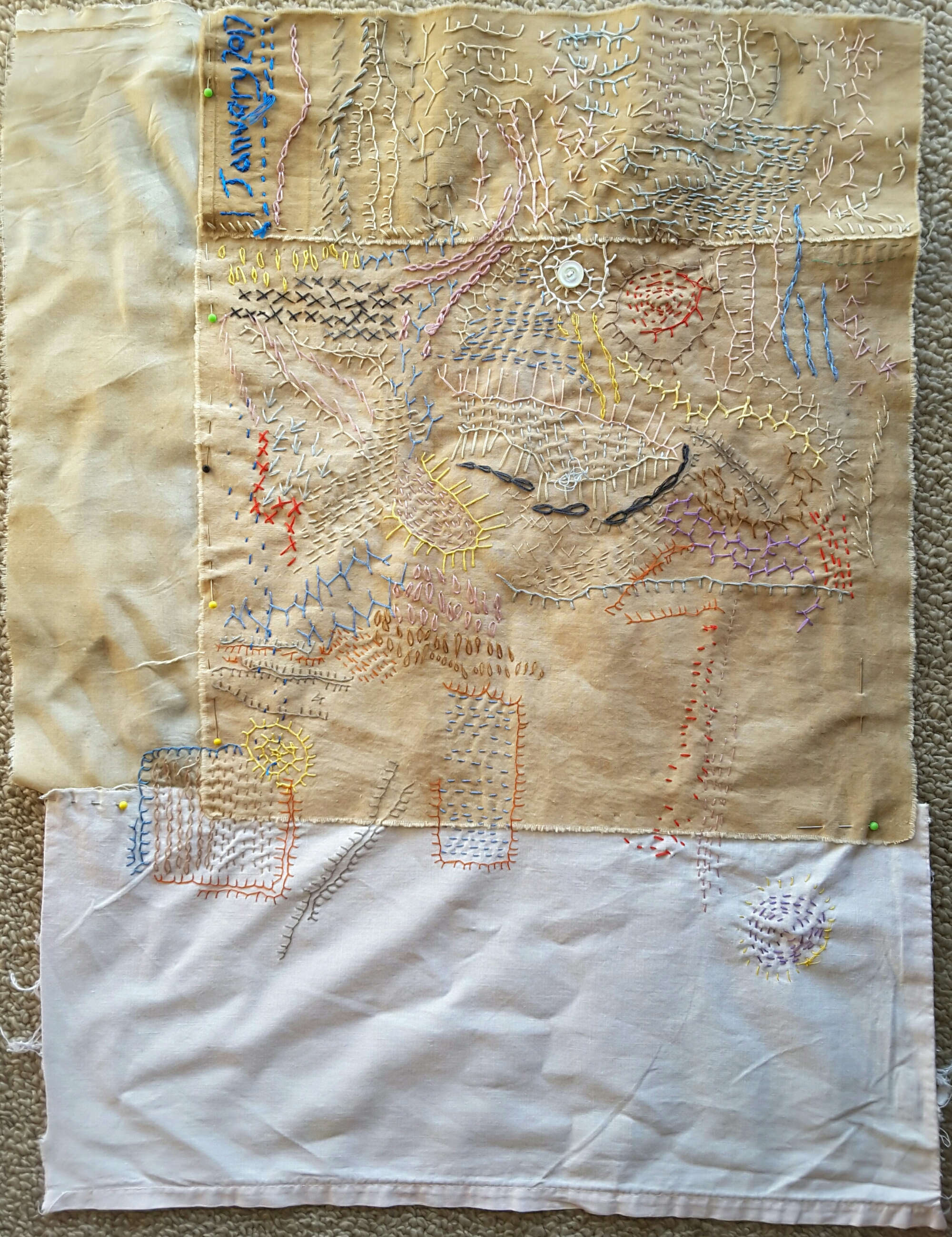
Some of you will know that I have been participating in the #365handstitch2017 challenge where people are asked to stitch a minimum of a thread a day for a year. I thought it was time to show you the progress so far.

The ‘front’ of the piece 

As you can see I’ve already added several pieces of cloth together and am working on melding them together.  I made the decision up front to ‘stitch with my eyes closed’, (a process I have been using since I first started this blog). Working this way has meant that I do not visually self-censor. This choice has removed from me the necessity of neatness. I also find the process of leaving the decision about which thread and which stitch to use, until the moment I pick up the work, really freeing.  

Other people online have asked some very pertinent questions about the direction the work is taking. This has made me think about a number of issues, in particular whether I have a specific end in sight – no; and how much bigger the piece might become. 

So I have decided that the current size is where I will leave it (at present). The obvious question of what to do when I run out of space to stitch, was equally quickly answered -work on ‘the back’. I have started this process and not looking while I stitch has helped a lot. It is so hard not to be precious with my work.

The ‘back’, with two new areas of work in cretan stitch and herringbone stitch.

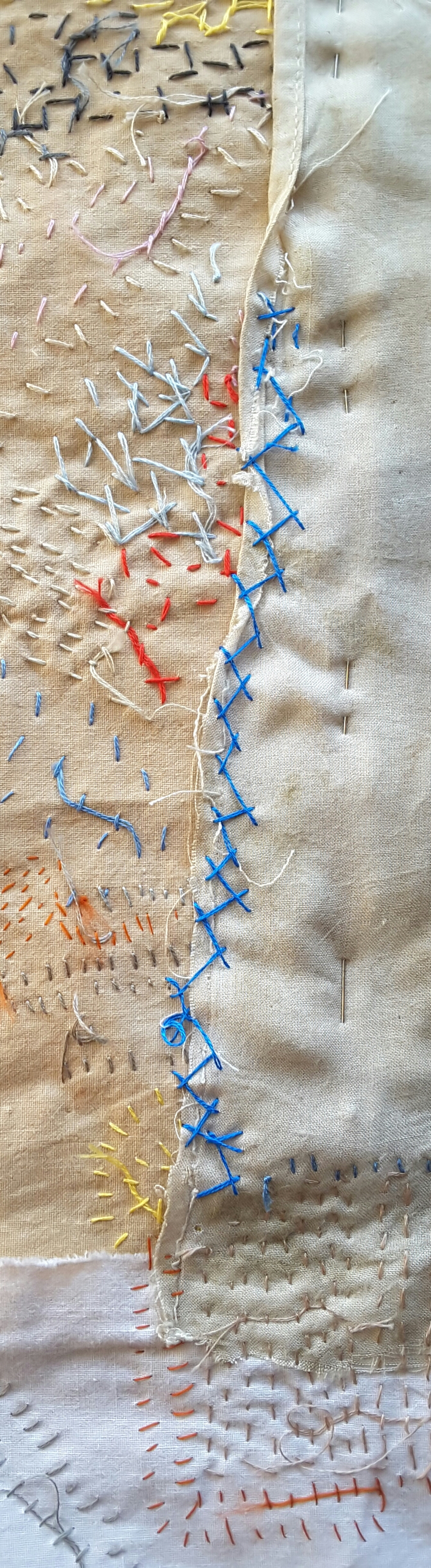
You can see from the photo above that the reverse side of the stitches predominantly resembles small running stitches. That’s why I’m currently adding some strongly coloured lines of stitching. You can see from the following photos that the reverse of even strong colours is not very intrusive. 

Blue herringbone stitch is quite strong when looking at the face of the stitch

The reverse of the stitch is quite unobtrusive

The ongoing challenge will be to stick with the process. It may be difficult to ‘spoil’ this work, but working against an established aesthetic is hard.