After Japan 

I didn’t realise how coming back home from my art residency only a few weeks before Christmas would impact on my work flow. At the time there was a real lag in my energy levels, not surprising given that day to day life and concerns were back in my face again. 

With the new year comes the need to get moving on making new work. I aim to pick up some of those ideas that came, as always, in the final days of my residency. In particular I am working on having a more direct interaction between the photographs I have taken, or have found in old books and my stitching. 

Stitch experiments on old photographs

This process has been assisted by another activity I am currently participating in, the 365 day handstitch challenge (on Facebook and Instagram), where participants undertake to stitch one thread every day of 2017. I’ve chosen to work with fabric and thread that I took to Japan,  but didn’t use. To make sure that my work stays loose I’m working with a favourite technique ‘stitching with my eyes closed‘. As you can see the challenge is having an impact on my other work.

Sunday with the sketchers

Today the Urban Sketchers Canberra group met for its first outing of 2017 at the Mt Stromlo Observatory. I wasn’t sure how many people would come along as the forecast was for 34°C, thankfully it didn’t get that hot while we were there and we had a breeze for a fair part of the morning.

While we were gathering I spotted my first choice for sketching. This fire hydrant is a rather folorn reminder of the devastating firestorm that swept across Mt Stromlo and down into the suburbs of Canberra in 2003.

Fire hydrant remains at Mt Stromlo, watercolour, 8 January 2017

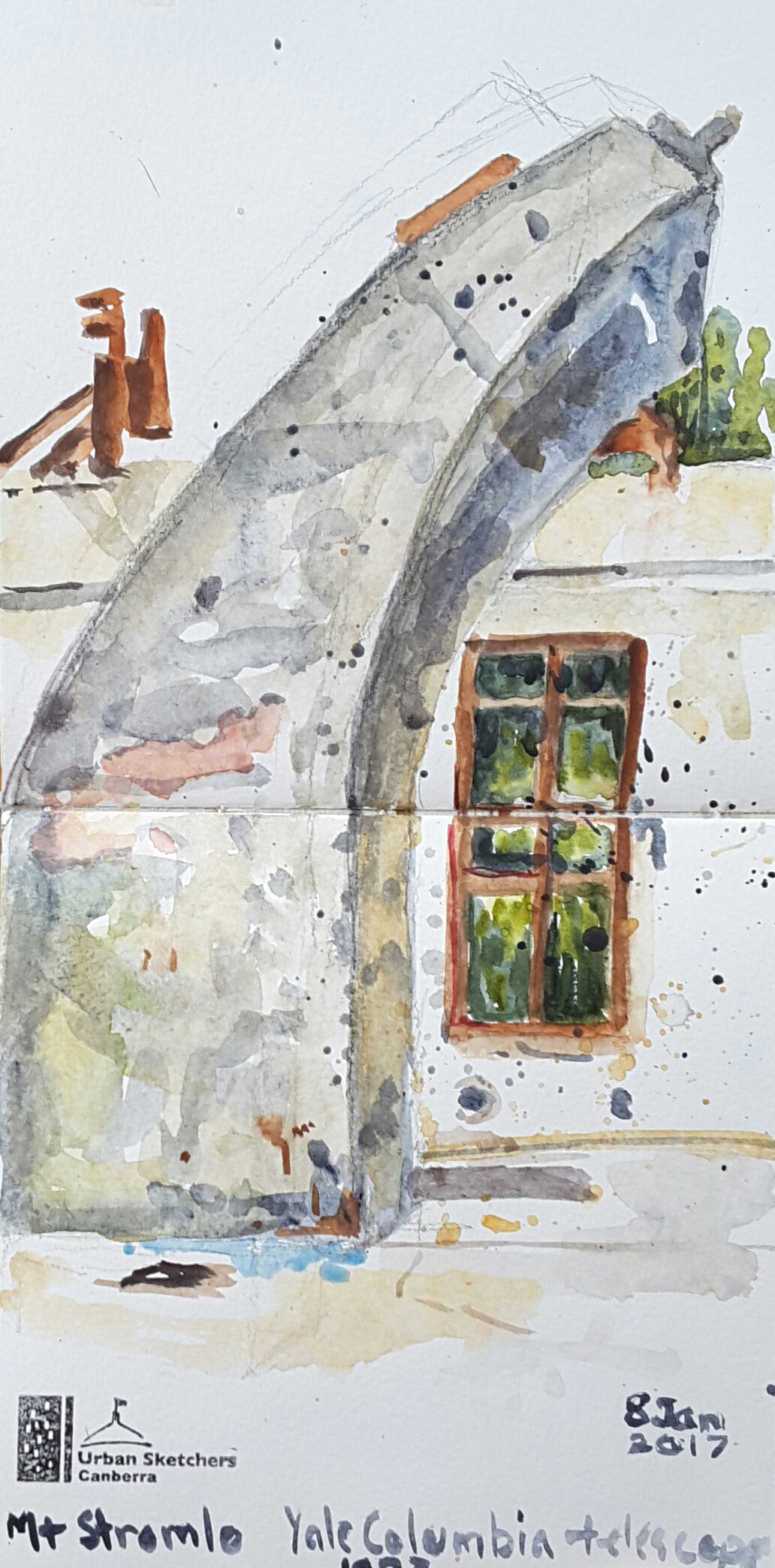
As the morning hotted up and the ants started biting I decided to retreat to another location. I joined one of our other sketchers in the cool shade of the remains of the Yale Columbia telescope (built in 1923).

The ruined mounts for the telescope now make for very dramatic sculptures inside the shell of the building. 

Inside the ruins of the Yale Columbia telescope, Mt Stromlo Observatory, watercolour and graphite pencil, 8 January 2017

The other mount reminded me somewhat of a Dalek, must be that squat shape.

Mount for the Yale Columbia telescope at Mt Stromlo Observatory, watercolour and graphite pencil, 8 January 2017

We were happy to retreat inside to the cafe for our sketchbook ‘throw down’ and compare notes after several hours of sketching.

You can see more sketches from this morning  on the USk Canberra  Facebook page and on this blog by fellow sketcher Michelle.

My previous visit to the observatory can be found here.

Looking for a life model

I’m in a watercolour sketching phase at the moment, sketching people in general and portraits in particular. Mostly I work in coffee shops trying to get a quick sketch done before the subject inevitably leaves at the critical artistic moment. However I am also really ‘over’ drawing people with cups or mobile phones in their hands. Given that I don’t attend regular life drawing classes I need a way to find some interesting models. 

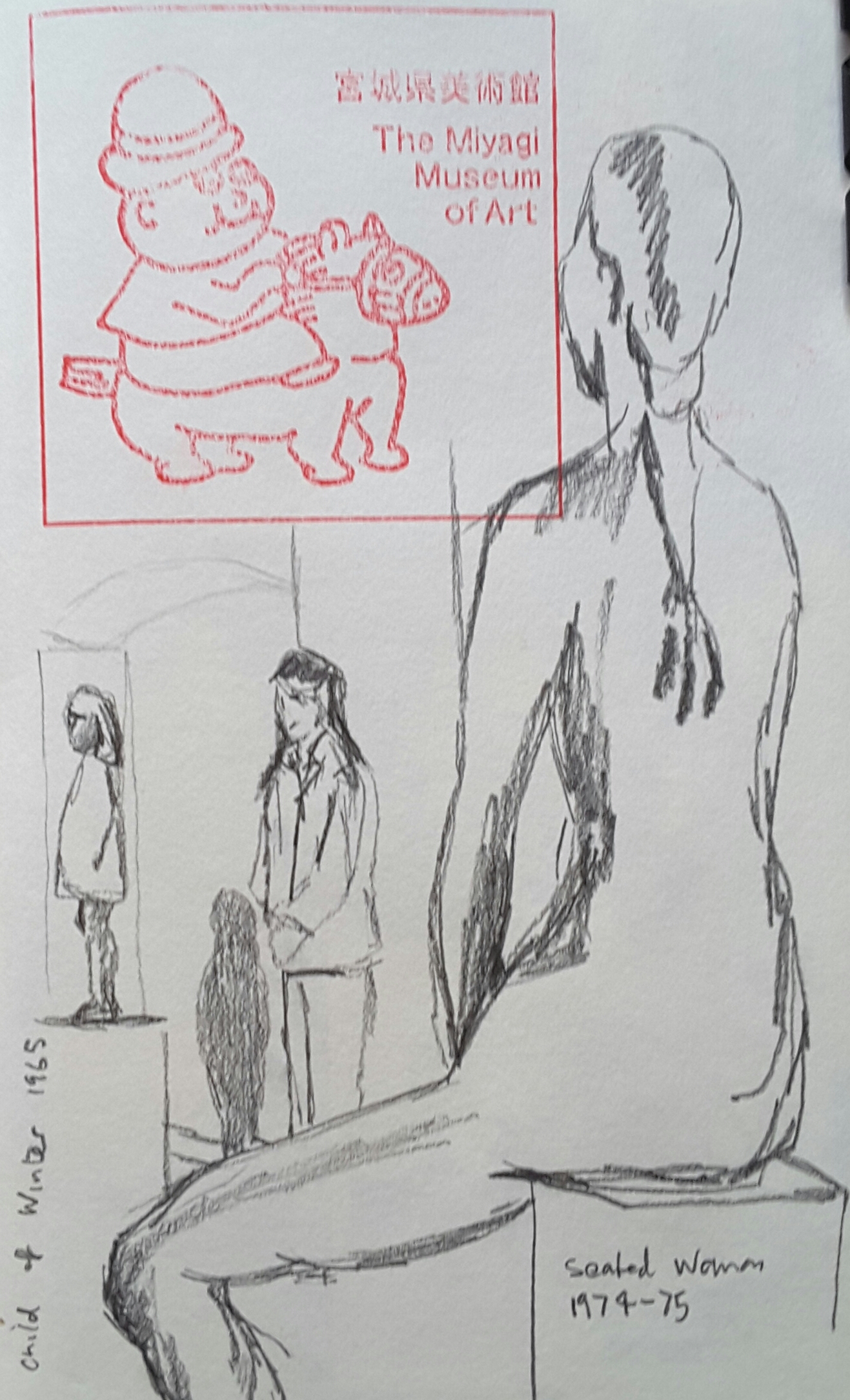
So what to do? ‘Cheat’ I happily reply. I notice that I am not alone in drawing sculptures, by way of a substitute for a live model. Art galleries or even local parks can be good places to find interesting subjects.Here are some sculptures I drew while I was in Japan.

Two sculptures and an attendant in the Churyo Sato wing of the Miyagi Museum of Art in Sendai

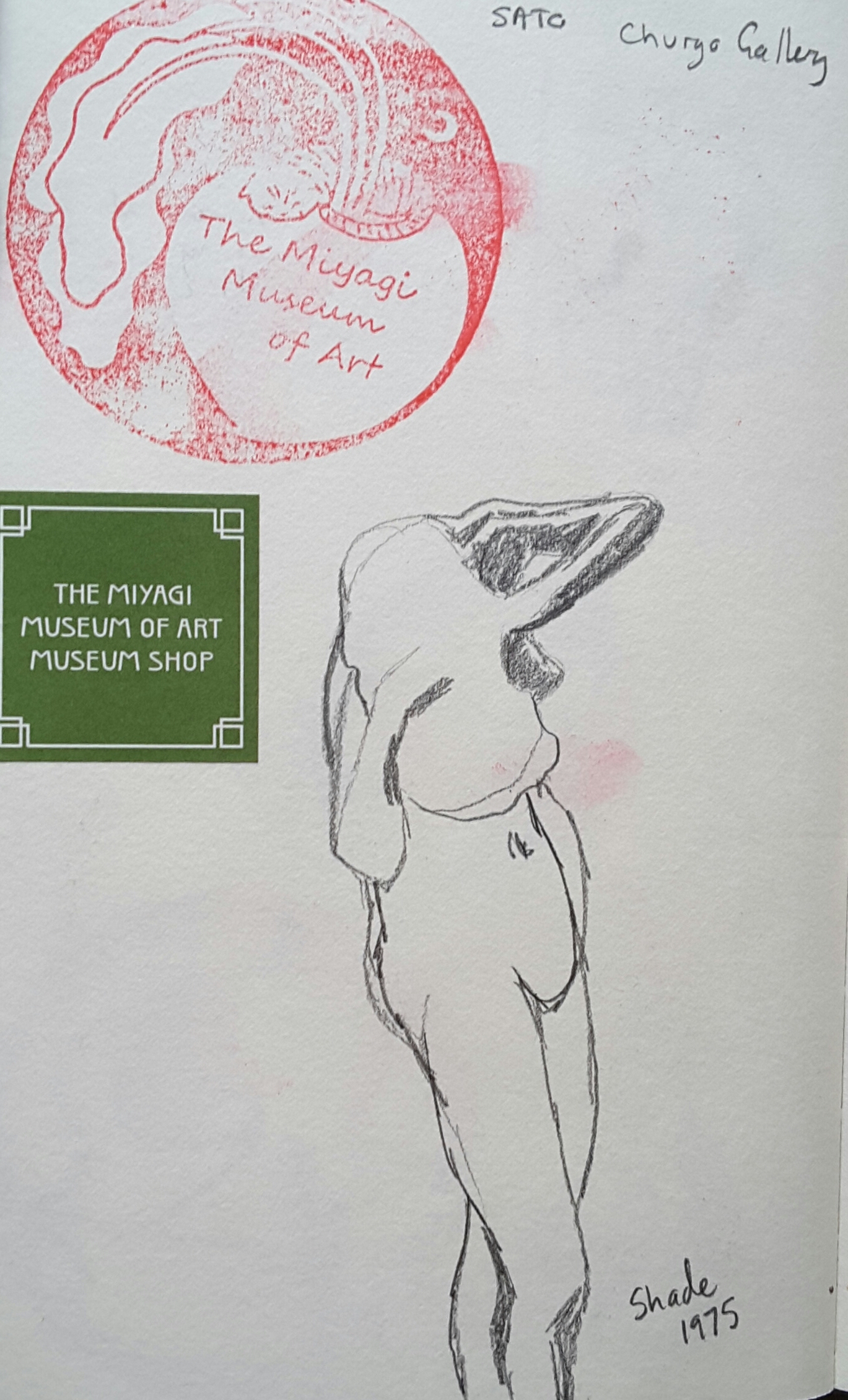
Here’s another.

Shade, Churyo Sato, Miyagi Museum of Art, Sendai

When even the sculptures are lacking I turn to another source, photographs. The Boss, belting out a number (original photo Getty Images)

I find that newspaper photographers are particularly talented at capturing interesting positions of sportspeople or dancers. 

Aussie swimmers, Kyle Chalmers and James McEvoy (original photo AP)

The hard part, is to spend only the same amount of time sketching from the photo as you would if they were really in front of you. Just remember this is a way to practise making a quick sketch, not a photo-realist masterpiece. 

Drawing the exhibition – Venetian Renaissance Paintings 

OK I haven’t tallied up just how many exhibitions I saw in my two months in Tokyo, but it was quite a lot. I did try and sketch, where possible, various bits and pieces of works that caught my attention.  

The first exhibition I saw was of Venetian Renaissance paintings from the Gallerie Dell’Accademia in Venice. If nothing else visiting this exhibition made me realise that there is much to learn from any period, and it can be relevant to a contemporary art practice. I suppose the most important thing is to have an open mind. 

The first thing that struck me was realising just how I often make ‘realism’ the compositional basis of my work. In the early rooms I encountered Bellini’s Virgin and Child (Madonna of the Red Cherubs) a piece of Surrealism if ever there was one! What was this man doing? Chanelling more of the medieval approach to compositio than I anticipated, yet painting with a Renaissance appreciation for portraying realistic people and a depth of field.
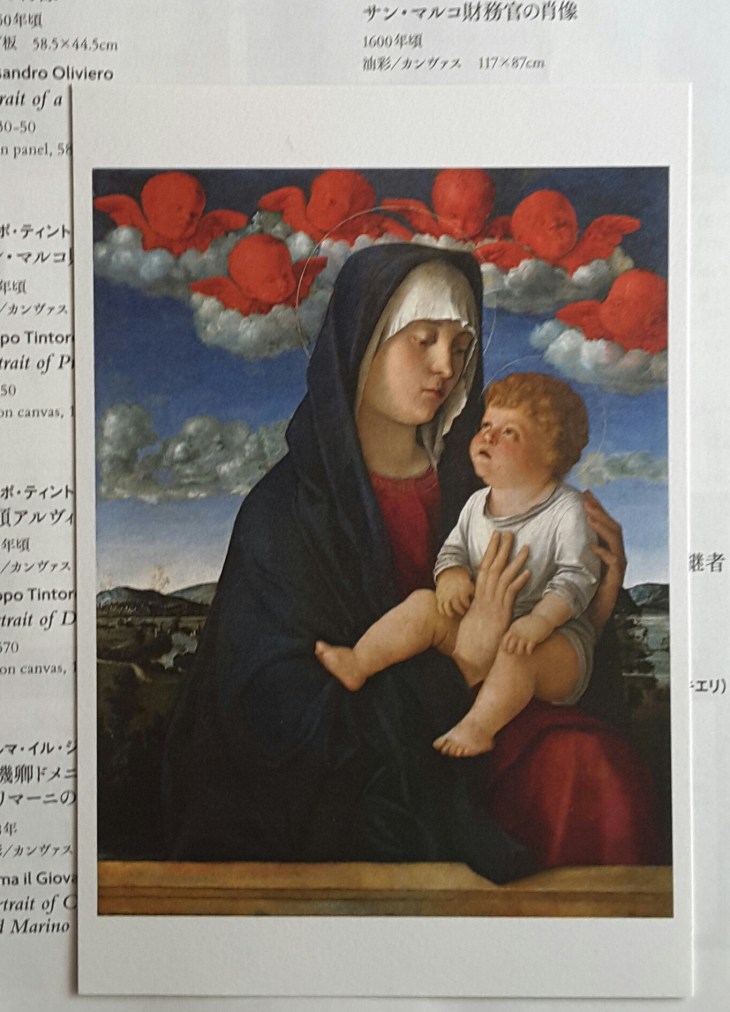
Giovanni Bellini, Virgin and Child (Madonna of the Red Cherubs), 1485-90, oil on panel

Want to get more of the story into your picture, but don’t have enough space on the canvas? Easy stick God and the Holy Spirit framed in a window. Well that what Giovanni Savoldo did with his Annunciation. 

Giovanni Savoldo, Annunciation, c. 1538, oil on canvas
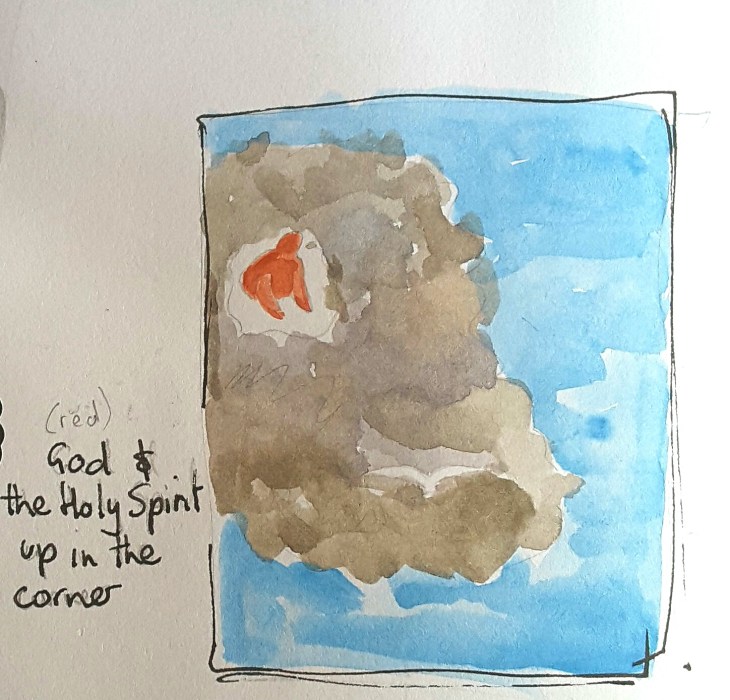
Detail of Savoldo’s Annunciation, c.1538. Pencil sketch in the gallery, with watercolour added later.

This approach might seem a bit old-fashioned, then what did I see today, at The National  Portrait  Gallery (Canberra), but William Robinson’s double self portrait, Town and Country, 1990, where he uses the just the same device to portray different aspects of his life.

In contrast to the dramatic gestures of many works, intended to evoke and reflect religious devotion, one of the strongest works I saw was a painting based on the simplest formats. Attributed to  Francesco Bissolo, The Redeemer’s Head, 1500-10, is a symetrical, frontal portrait painted in an very limited palette.
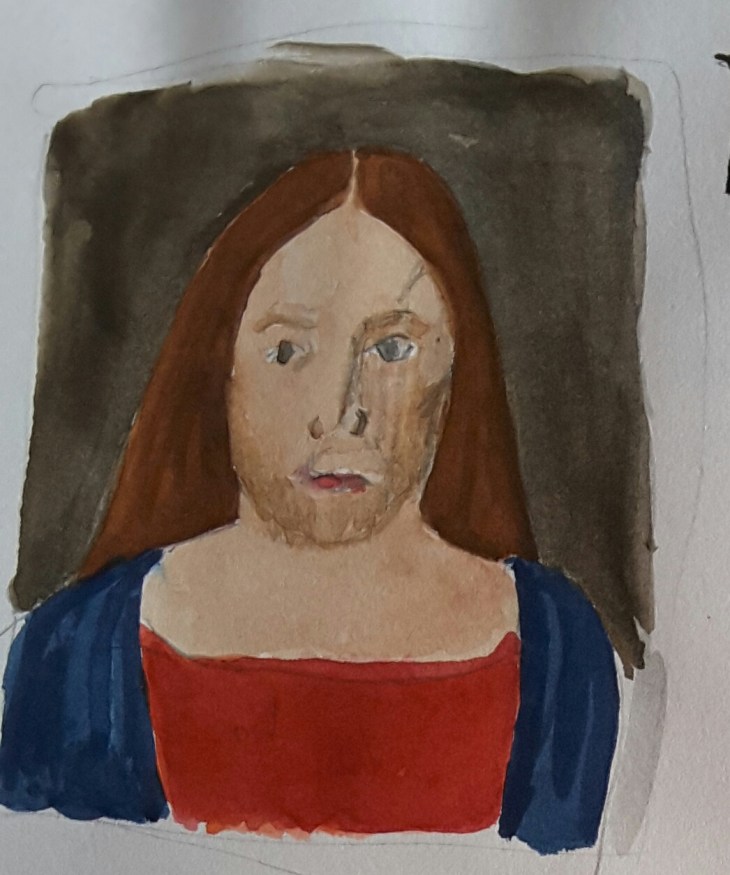
The Redeemer’s Head, 1500-10, attributed to Francesco Bissolo, original tempera on panel. My version pencil with added watercolour.

The highlight of the exhibition was Titian’s Annunciation, from the Church of San Salvador,  1563-65. The large 4 metre plus high oil on canvas was full of interesting details, sure to keep the easily distracted occupied during mass. I sketched two details, firstly the key subject the painting, the angel visiting the Virgin Mary (who has coyly raised her veil to hide herself).

Detail, The Annunciation, 1563-65, Titian, original oil on canvas. My sketch a ‘blind’ drawing in pencil trying to capture the dramatic posture of the angel’s wing.

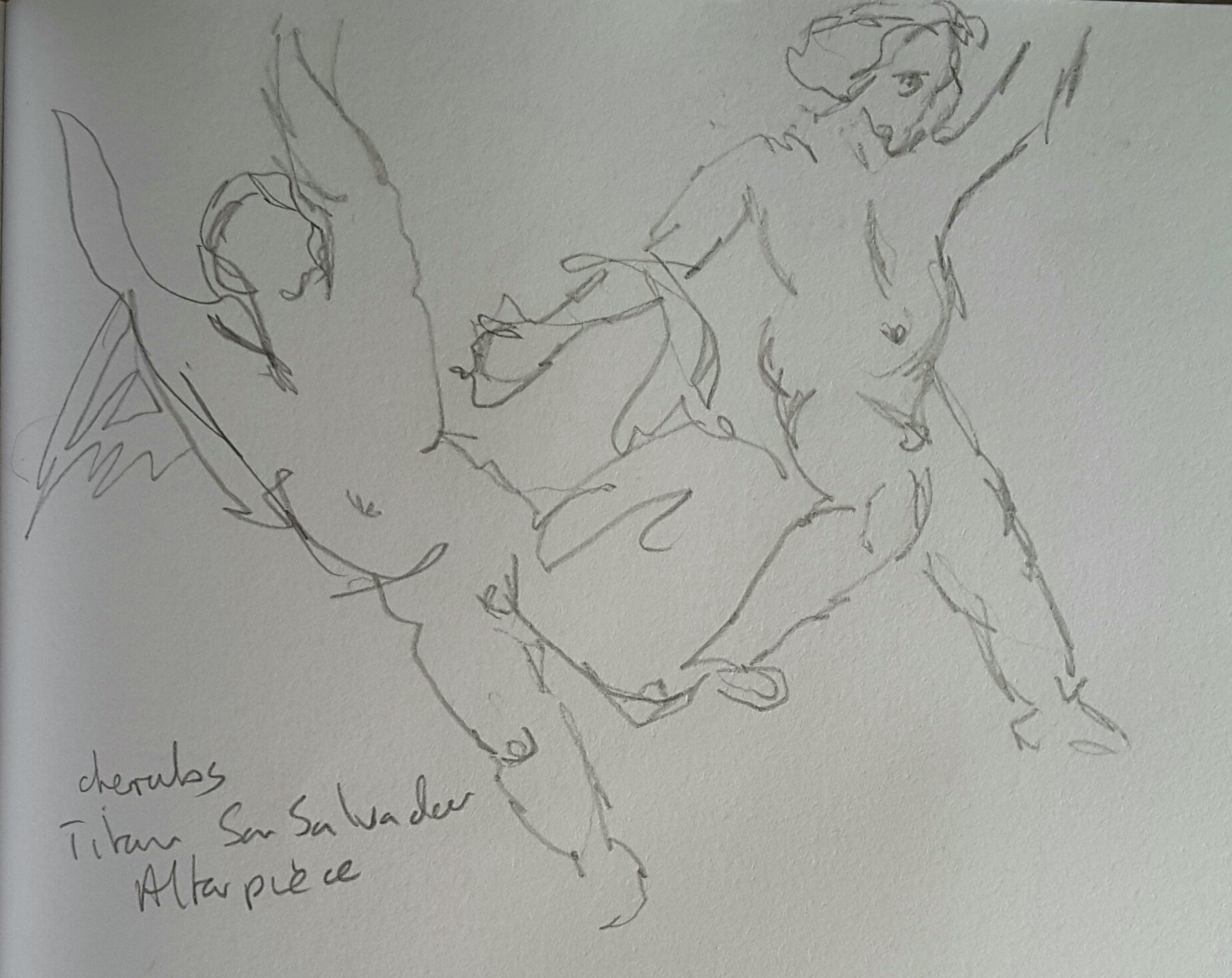
But I  couldn’t resist the  cherubs skittering around in the upper portion of the painting. 

Detail, The Annunciation, Titian, 1563-65, cherubs. My sketch pencil

Imay have seen just one too many Virgin and Child’s in this exhibition, but I did learn a thing or two.

Away

There has been a distinct absence of posts lately as I have been caught up in all sorts of artistic goings on.

Just after my last post we headed off to Setouchi, or the Japanese Inland Sea, to experience some of the Setouchi Triennial.  A truly amazing collection of art installations, performances and exhibitions held across the small islands and nearby port cities of central Japan.​

Sea Vine, Haruki Takehashi, porcelain vines suspended by fine threads, installation on Ogijima

Like the local fishermen we set out from the port of Takamatsu each day to catch the art.

Straw baboons made by the Straw Art Team of Musashino University

The Triennial is an amazing experience, due in no small part to the army of staff who manage the sites across the islands. I would highly recommend this experience to any art lover. Apart from which we saw beautiful scenery every day. 

Sunset over Ozuchi island, with the Great Seto Bridge in the background

We dragged ourselves away after four and a half days, but decided to stop in Kyoto on the way back, in order to visit the nearby Miho Museum. ​The Miho is a private museum that presents it’s own collection of ancient artefacts as well as special exhibitions.

The entrance to the Miho Museum. The museum was designed by I M Pei

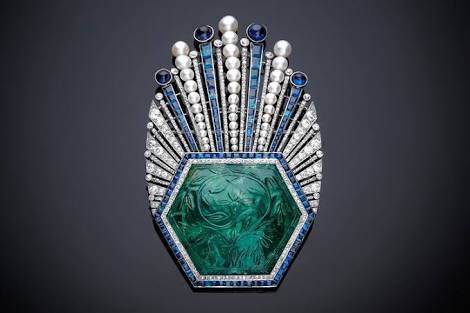
At the Miho we saw an awesome display of the wealth of the Mughal emperors and various Indian royal families since that time. These now form part of The Al Thani collection


Also on display were the  Miho’s own collection of ceramics  by Ogata Kenzan, beauties of an entirely different order. 

Side dishes with Tatsuta River design, from the Miho collection

After a very relaxing week away it was time to get back to the studio and turning some my ideas into reality.