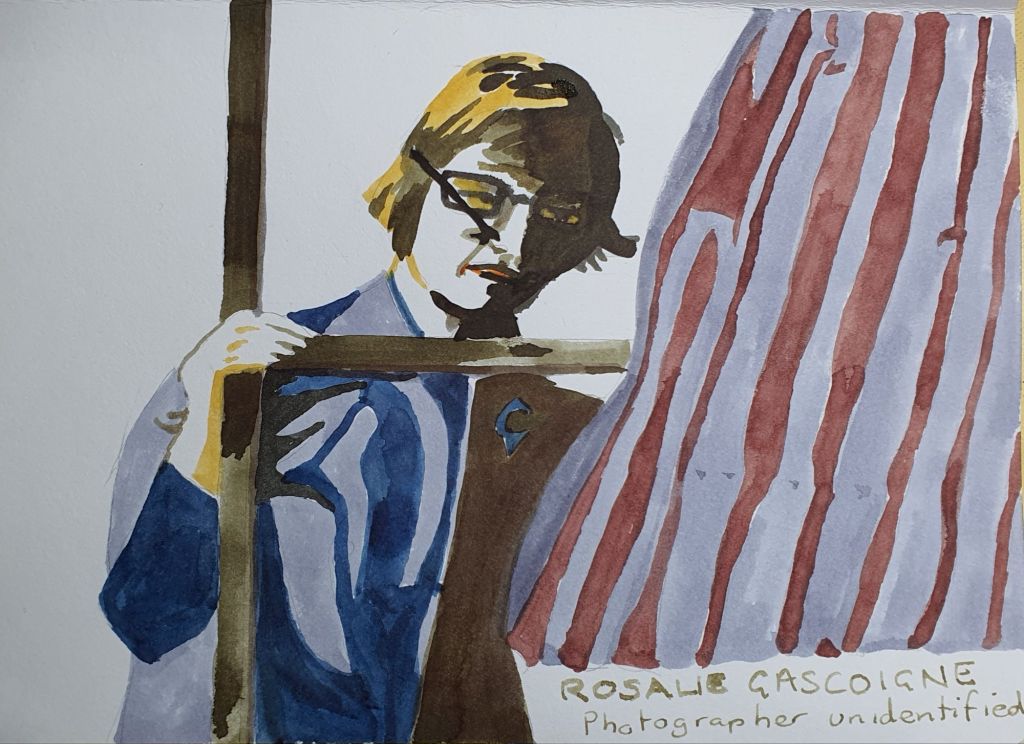
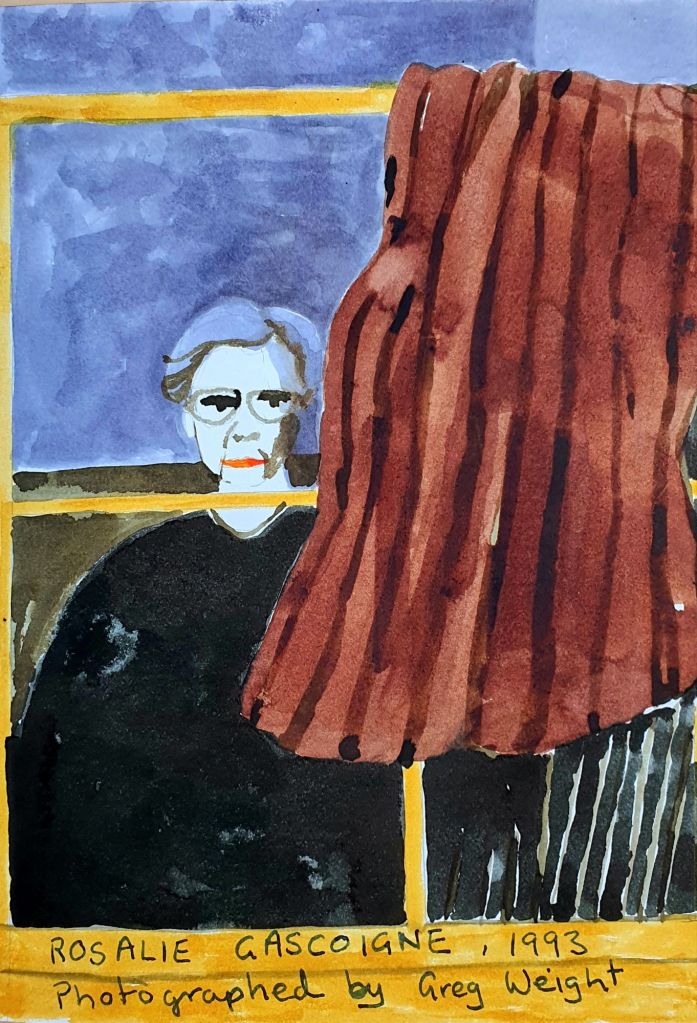
For those of you who’ve read this blog for a while the name Rosalie Gascoigne might be familiar. I have written about her work here previously.
Gascoigne was born in New Zealand 1917 and died in Australia in 1999, (she lived in Australia from 1943). Gascoigne is, arguably, the greatest Australian landscape artist of the late 20th century. The earliest part of her time in Australia was spent at Mt Stromlo Observatory, where her husband Ben, worked as an astronomer. It was an isolated place at the time, just outside Canberra, the capital of Australia (now on the suburban edge of the city).

Originally Gascoigne found expression through collecting and arranging pieces of wood and feathers as she walked around the mountain. Most memorably, at a talk of hers I went to at the National Gallery of Australia, she showed a photo of an early work made, quite literally of rabbit droppings glued to a piece of cardboard!
Later she undertook the practice of Sogetsu Ikebana, but found it ultimately limiting. She turned to using found materials, that she often collected from country rubbish tips around Canberra, as material for her constructions.
Major works of hers are now held by the National Gallery of Australia and other state and regional institutions.
I recently visited the Art Gallery of New South Wales, where I saw Gascoigne’s installation of found domestic enamel ware. This sketch is the top section of that work (in reality the cup and long handle are suspended from the top of the work’s frame).

Enamel Ware, 1976
 leonieandrews