Cafe Wednesday, construction continues

The renovation work is continuing at our local shops, but that doesn’t seem to be stopping anyone from dropping by for a coffee.

The last two weeks I’ve been drawing the machinery on site. Unfortunately no good figure sketching opportunities have arisen since my previous post on this subject. Two weeks ago I drew the bobcat, which was parked up at a pretty uninteresting angle to where we were sitting.

The bobcat, 16 march 2016, coloured pencil and graphite on gray toned paper

The bobcat, 16 march 2016, coloured pencil and graphite on gray toned paper

I’m not very excited by this drawing, I could have used the coloured pencils more effectively, rather than just ‘colouring in’.

Last week we found a better seat to observe what was going on. Thankfully the small digger that was being used to work on the replacement of the drainage system was parked at a good angle to our table.
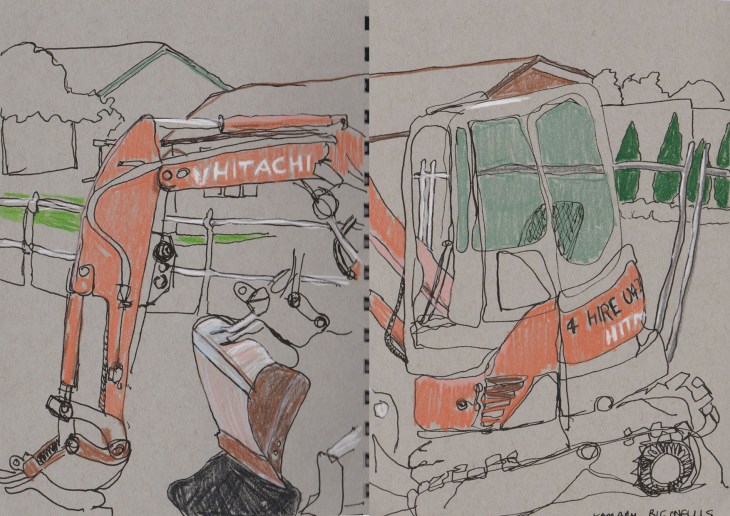
Small digger, 23 March 2016, coloured pencil, ink and white chalk on gray toned paper

Small digger, 23 March 2016, coloured pencil, ink and white chalk on gray toned paper

This time I thought a lot more about how I was going to use my colour, which was probably helped by using the pen for the initial drawing. I kept my drawing loose, which is how I prefer to work. However there was one glaring mistake. I didn’t look carefully enough at the angle of the digger before I started. Had I done so I would have seen that the bucket was actually well below the level of the tractor treads. So now I have a more interesting composition instead, with the bucket tucked in the middle of the sketch.

Concrete Cafe

In my first post knee-surgery outing (as opposed to doctor’s visits) we went to our local cafe. Changes, by way of a major upgrade of the pavement and landscaping of the shops, are well underway and the dinosaur is on a leave of absence. Instead there was a concreting crew waiting to pour several large slabs which will form the new, level area for seating.

Don't forget to check your pens!

Don’t forget to check your pens!

You can tell I’m a bit rusty because I made a real beginner mistake – I forgot to check my pens before I left. One was completely out of ink and the other has a dodgy nib that really needs changing.

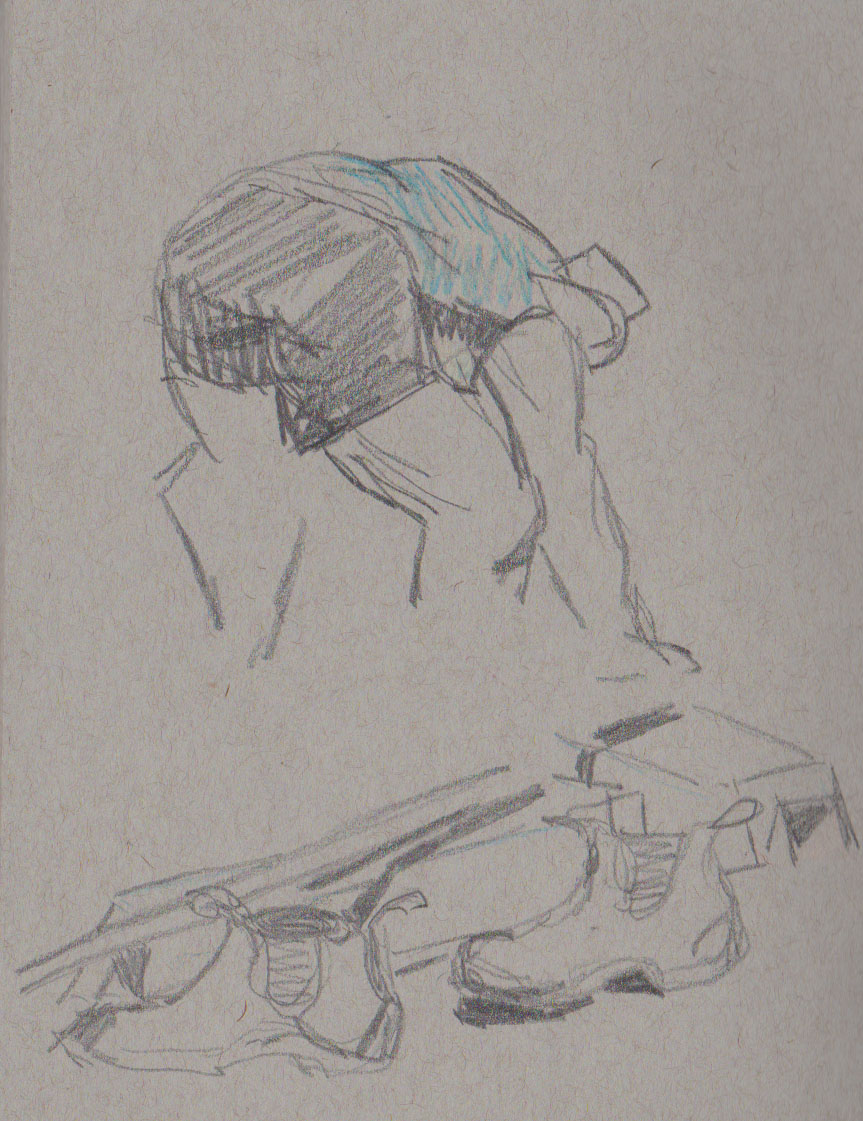
It took a while to get going with the sketches as I fiddled around finding a pencil and approach that I was happy with. In the end I began by focusing in some of the boots that were sitting ready to be used.

image

Gumboots and smoothing the edge, graphite, white chalk and coloured pencil

Then the concrete truck arrived and before I knew it I had sketched a group of labourers that Kazimir Malevich would have been proud of.

image

Quick movement as the man spread the concrete.

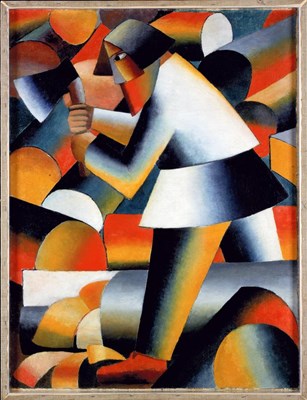
By way of comparison here is one of Kazimir’s.

image

Kazimir Malevich, The woodcutter, 1912, Collection Stedelijk Museum Amsterdam

There were several slabs to be poured so I managed to capture the action by loking for the repetitive movements.

image

Edge detailing and more work boots, graphite and magic pencil

I really enjoyed trying to capture the way the men moved, although clearly bad backs are an outcome of such work.

image

Spreading the concrete, graphite, magic pencil and white chalk

Getting the ‘lead’ out

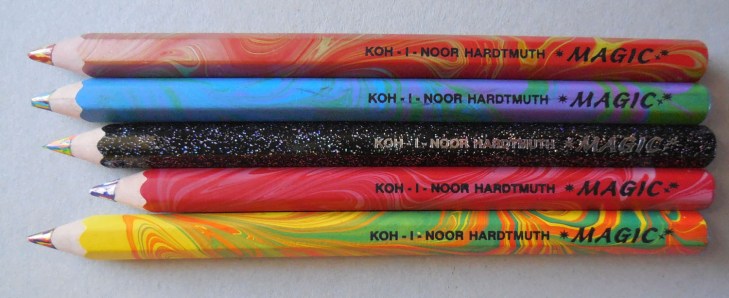
I’ve been using my Koh-i-noor Magic Pencils as my main sketching material for a few weeks now. Apart from being caught up in the sheer fun of multicoloured pencils that would be the envy of any pencil case, I find that they are ‘magic’ in other ways as well.

Koh-i-noor Magic coloured pencils

Koh-i-noor Magic coloured pencils


Koh-i-noor Magic Pencils

Koh-i-noor Magic Pencils

They are ‘magic’ because you can’t quite control where the colour will turn up.

Cafe drawings, Magic Pencils (America), with white chalk on the right hand side, on grey-toned Strathmore paper, 30 January 2016

Cafe drawings, Magic Pencils (America), with white chalk on the right hand side, on grey-toned Strathmore paper, 30 January 2016

They are ‘magic’ because they encourage me to play.

Two men, with multiple arms, Magic Pencils (Original, Fire and America), on grey-toned Strathmore paper, 13 February 2016

Two men, with multiple arms, Magic Pencils (Original and Fire, left; Original and America, right), on grey-toned Strathmore paper, 13 February 2016

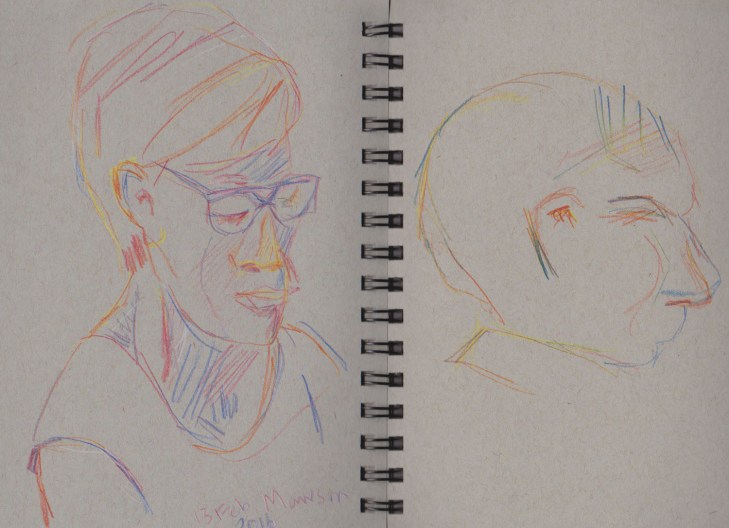
They are ‘magic’ because they remind me to focus on the structure of my drawing – where is the light coming from? – not what colour is her t-shirt?

Woman and unfinished man, Magic Pencils (Fire and America, left; and Original, right), 13 February 2016

Woman and unfinished man, Magic Pencils (Fire and America, left; and Original, right), 13 February 2016

They are ‘magic’ because paying attention to the key elements of a subject is more important than ‘completing’ the picture.

Tatooed man, Magic Pencils (America, Fire and Tropical, 13 February 2016

Tatooed man, Magic Pencils (America, Fire and Tropical, 13 February 2016

They are ‘magic’ because they show me that drawing can be much so much more interesting than straightforward representation.


Material concerns

Sketching materials often cause me a dilemma. Like many sketchers I run the risk of paralysis from too much choice. When I made my trip to Brisbane last week I decided on one sketchbook – a grey-tone Strathmore and a limited selection of pens/pencils. My main pencils were Koh-i-noor Magic pencils, so I couldn’t ‘control’ to any extent  the colours that came out. I didn’t know whether I could do it! Indeed I did resort to one digital drawing.

Brisbane River Bridges, digital drawing on PS Touch app (for Android)

Brisbane River Bridges, digital drawing on PS Touch app (for Android)

Despite this small detour I did get back on track.This sketch uses only coloured pencil and white chalk. I used several types of the Magic pencils: Original, Fire and America.

Late afternoon sun on the Storey Bridge Brisbane, coloured pencil, white chalk, 20 January 2016

Late afternoon sun on the Storey Bridge Brisbane, coloured pencil, white chalk, 20 January 2016

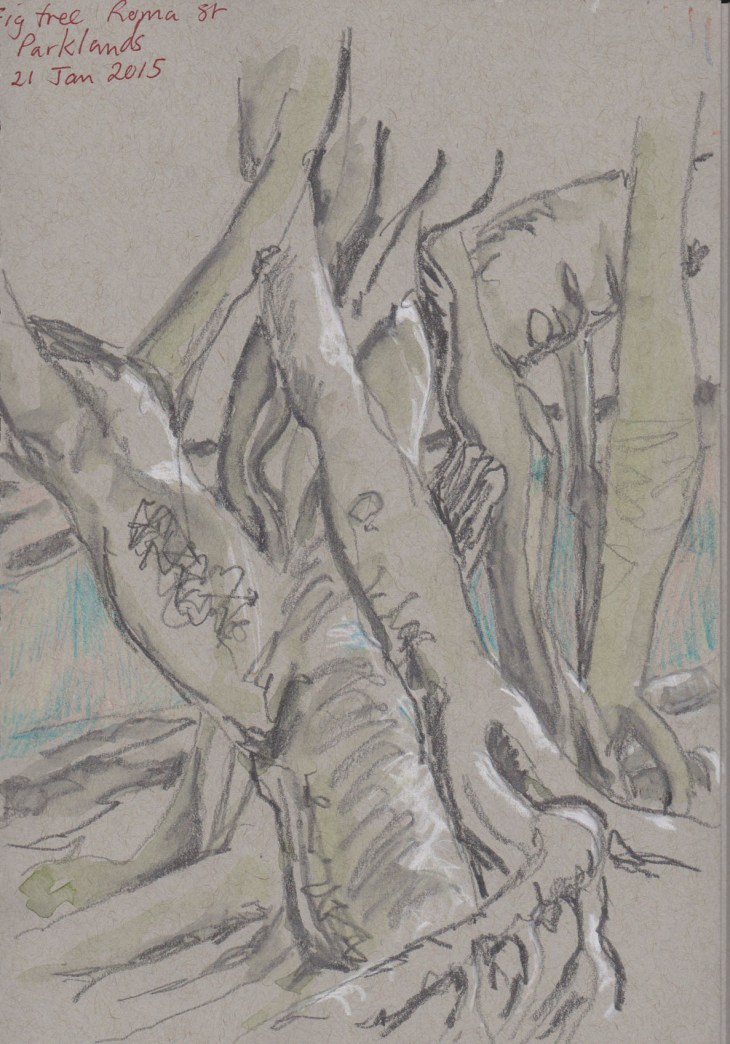
The next day we took our sketch books up to the Roma St Parklands where the twisting shapes of the Moreton Bay figs captured my attention.

Fig tree, Roma Street Parklands, white chalk, graphite and coloured pencil, 21 January 2016

Fig tree, Roma Street Parklands, white chalk, graphite and coloured pencil, 21 January 2016

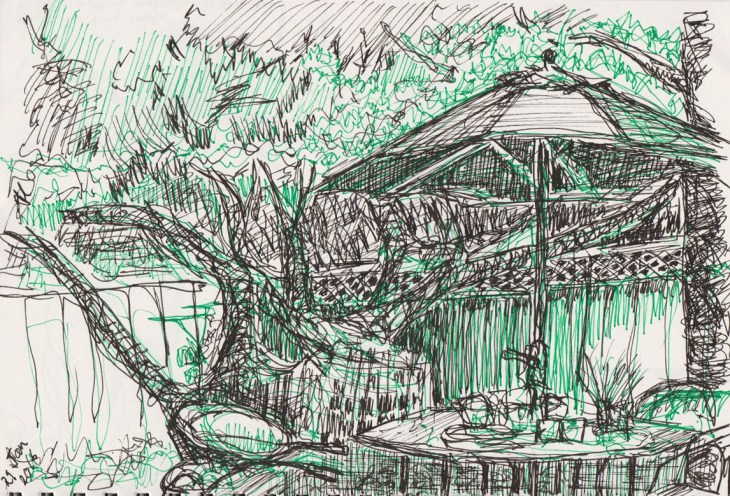
Back home I realised that I hadn’t picked up a pencil in days so I grabbed what was to hand, a green Artline fibre pen and my black ink pen and got down to it.

Backyard, green fineline pen and ink, 29 January 2016

Backyard, green fine line pen and ink, 29 January 2016

It can be a challenge just getting past that ‘perfection’ monkey, but it’s always worth getting out and just drawing.

Re-thinking

Unlike some people I was too overwhelmed to find, let alone review my sketchbooks from 2015, so I took the easy way out and reviewed my Flickr posts instead.

I think that while exploring new ideas and techniques I lost my way. I started out with some drawing exercises to expand my techniques and also had classes with some great teachers at the Urban Sketchers Singapore symposium mid-year. But I didn’t integrate what I’d learned with my own style. So while individual results may have been good, I often found the quality of the drawing disappointing.

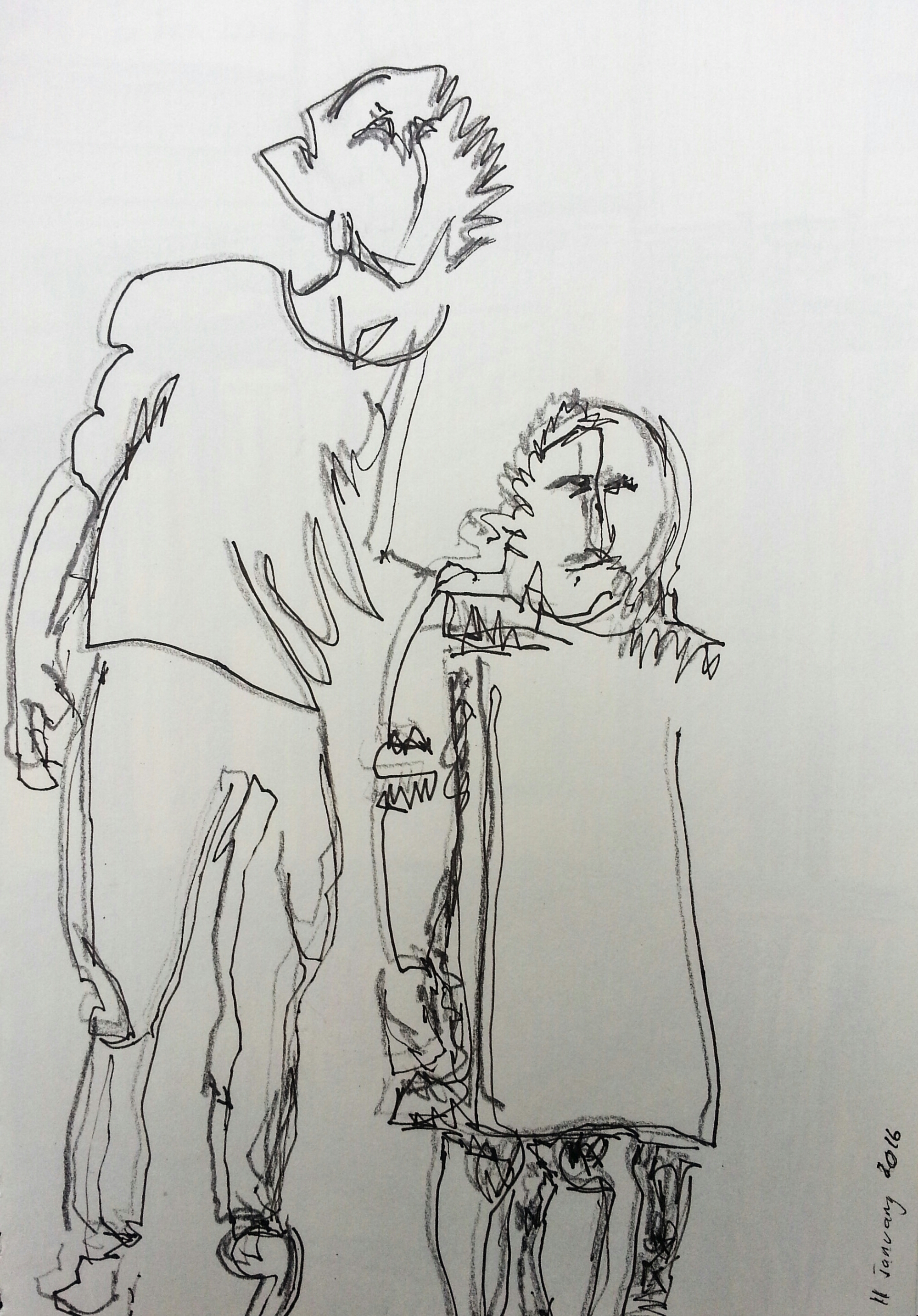
So it’s back to exploring and applying some previous exercises and being conscious about using all the techniques I’ve learn to express my own style. To avoid getting stuck on what to draw I’ve been working from photographs taken by Nic Walker , of the Sydney Dance Company, (published in the Sydney Morning Herald of 21 November 2015).

image

Pen and graphite used together, drawing from photograph by Nic Walker

The first step is to return to ‘blind drawing’, focusing on keeping my eyes on the subject and not looking at the page while drawing. Then applying some loosening techniques by drawing with two pens or pencils or a combination of both.
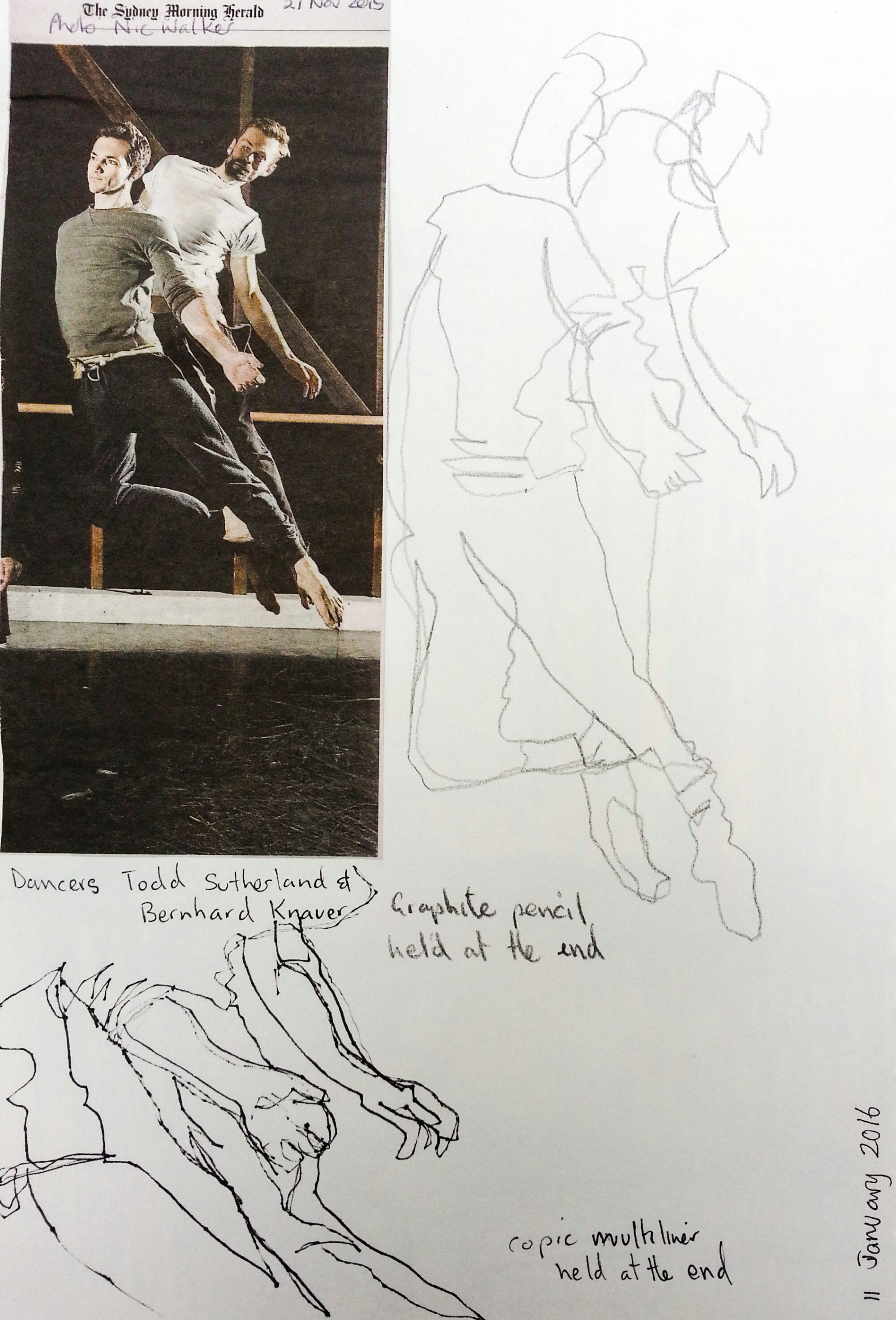
I also tried another loosening technique, drawing while holding the pen or pencil at the very end.

image

Right: graphite held at the end; Lower left: Copic Multiliner held at the end, drawings based on photographs by Nic Walker


It was interesting to see how the quality of the line varied between the graphite and the Copic Multiliner. Where the graphite flowed easily across the page, the Copic stuttered and hesitated, bringing a quite different quality to the line.
These simple exercises have already produced encouraging results and things like line quality to keep in mind for future drawings.