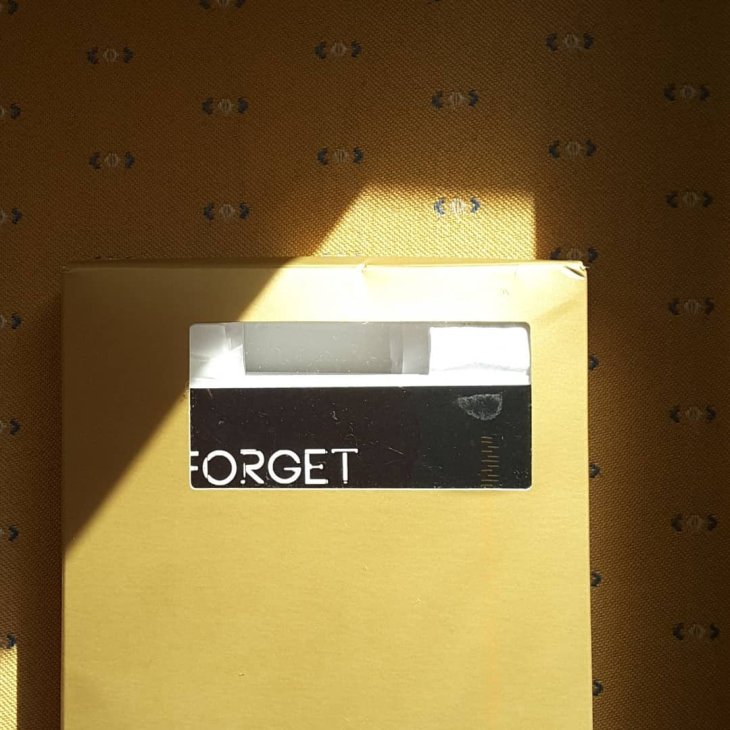
A Loungeroom Residency

Over the next week I will be undertaking an artist residency in my lounge room. It wasn’t planned, but an unexpected injury to my back has made it otherwise. The toughest call was having to withdraw from the formal residency I was about to start under the auspices of the Craft ACT Spring Residency. But then, I realised that I could undertake an artist residency in my own home.

Day 1 shadow photograph.

At this point I have to acknowledge that before I became concerned over my own temporary setbacks, I failed to acknowledge that many artists deal with such problems on a daily basis due to a whole range of physical, social or psychological reasons. I apologise.

A model, a theme

For my residency I have used the model proposed by Lenka Clayton for A Residency in Motherhood. Her model provides both a format and concrete examples of ways to work under constrained circumstances. This excellent resource was drawn to my attention by the fabulous Dr Ruth Hadlow whose master classes have been a major and ongoing inspiration in my work .

At this stage my daily exploration of shadows has become my default theme. I support this proposition by a quote from Ellsworth Kelly who said:

I realized I didn’t want to compose pictures, I wanted to find them. I felt that my vision was choosing things out there in the world and presenting them.

Resources

I have all the resources of my extensive library to select from and all my materials to use. I didn’t have to pack anything to take to this residency. If anything the greatest danger is paralysis from too much choice.

Day 2 shadow photograph.

Limitations

The biggest limitation I have at present is my physical ability to sit up for only limited periods of time and having to be careful not to overuse my dominant arm. I have finally discovered using the microphone on my tablet in order to reduce additional stress through typing. It works! Sometimes.

Interruptions are another cause of problems I would unlikely to experience in a formal residency. Social media management is also a major issue for me.

Work so far

Yesterday I made some collages inspired by one of the photos I took earlier this week. I used a clothing catalogue, which I am inordinately fond of making collages with. I will show you these in a separate post.

Enough for now I need to rest up. I plan to attend a screening of a documentary on Rembrandt this afternoon. Hopefully rest and medication and my wheat bag will get me there.

I would be really interested to hear of your own experiences of working with limitations and constraints in making art.

D3 shadow photograph

PS

I just wanted to say that I’m in good hands and my back issues seem to be slowly resolving so no need for anyone to worry about my condition.

After Porto

This post was originally written in August of 2018, shortly after I had returned from three months of travel in Europe (France, Spain and Portugal). I have no idea why I didn’t post it at the time, however I am interested to see how I wrote about aspects of watercolour painting, that are now part of my regular ‘style’. I have also included my latest cafe sketch at the end to show what I am doing now. Enjoy!

Reading the social media sites, post the Urban Sketchers Symposium held at the end of July 2018 in Porto, I was intrigued to see the number of people,who are reviewing their sketching practices. They have been inspired by the various styles and techniques of other people that they met at the event.

I too have found the approach of a number of other artists has made me re-consider my use of watercolour.

In May 2018 I briefly met Marion Rivolier at a USk (Urban Sketchers) Paris event at the Rodin Museum, (I can even be seen lurking in the photo taken of the event). Subsequently I have been inspired by her loose expressive watercolours. I went to her painting demonstration at the Porto Symposium to see if I could better understand how she was achieving her results. Marion’s advice included both the practical and the personal:

  • ‘know your colours so you can sketch fast’ – obvious in one way, but by using a limited number of colours and knowing in advance how they mix, you will speed up your process.
  • ‘You don’t have to draw everything you see – select like a stage director’
  • ‘[pencil] drawing at the beginning is like creating a prison for colour’. (Not in a good way).

Marion is especially good at capturing people and movement, so that will be an extra challenge for me.

People practice, sketching figures from photos in the weekend newspapers

Another teacher at the Symposium who was gaining a lot of attention was Maru Godas, with her ‘gouache like a child’ workshop. Maru’s advice to simplify and compress, rather than allowing yourself to be lost in detail. This is something I often need reminding about.

I fully appreciate that both these artist’s style has developed over year’s of practice. So, like I am always saying to new sketchers, you need to get “the brush-miles in” to get the result. I have taken out my bigger brushes to work with (makes painting fiddly detail difficult) and I’m on my way with lots of practice.

View into the front garden, with the Ibis sculpture ‘Gordon’ (found at a secondhand shop)

People drinking coffee.
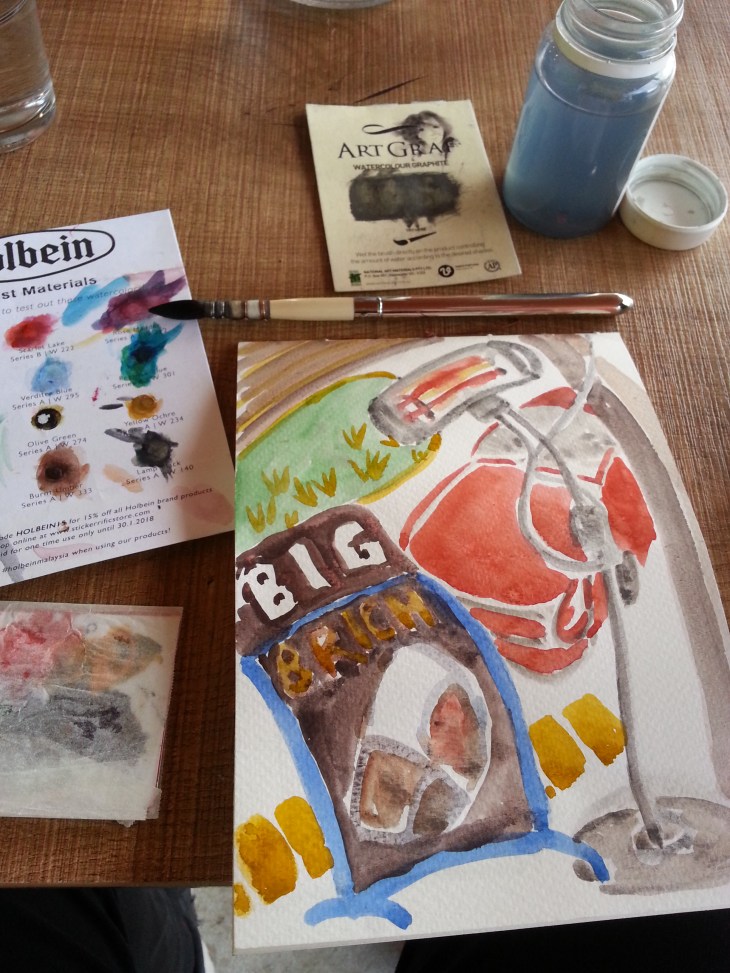
Sketching the scene at the coffee shop.

My latest cafe sketch from June 2021 is here.

Friends chatting over coffee in the winter sunlight. Watercolour, 11 June 2021