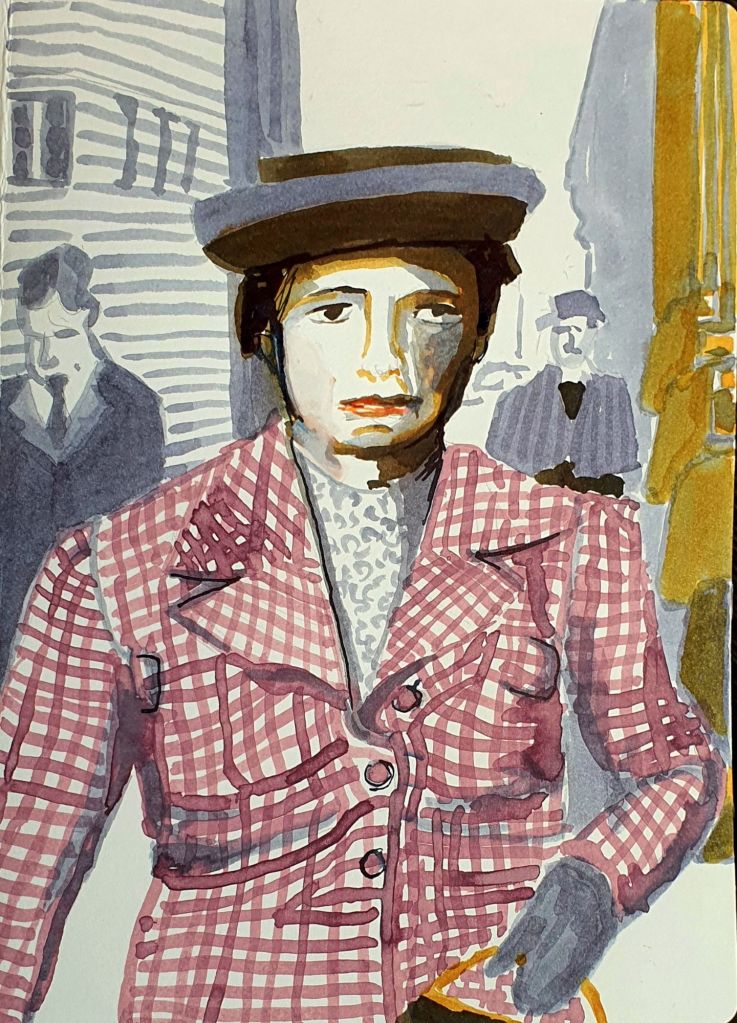
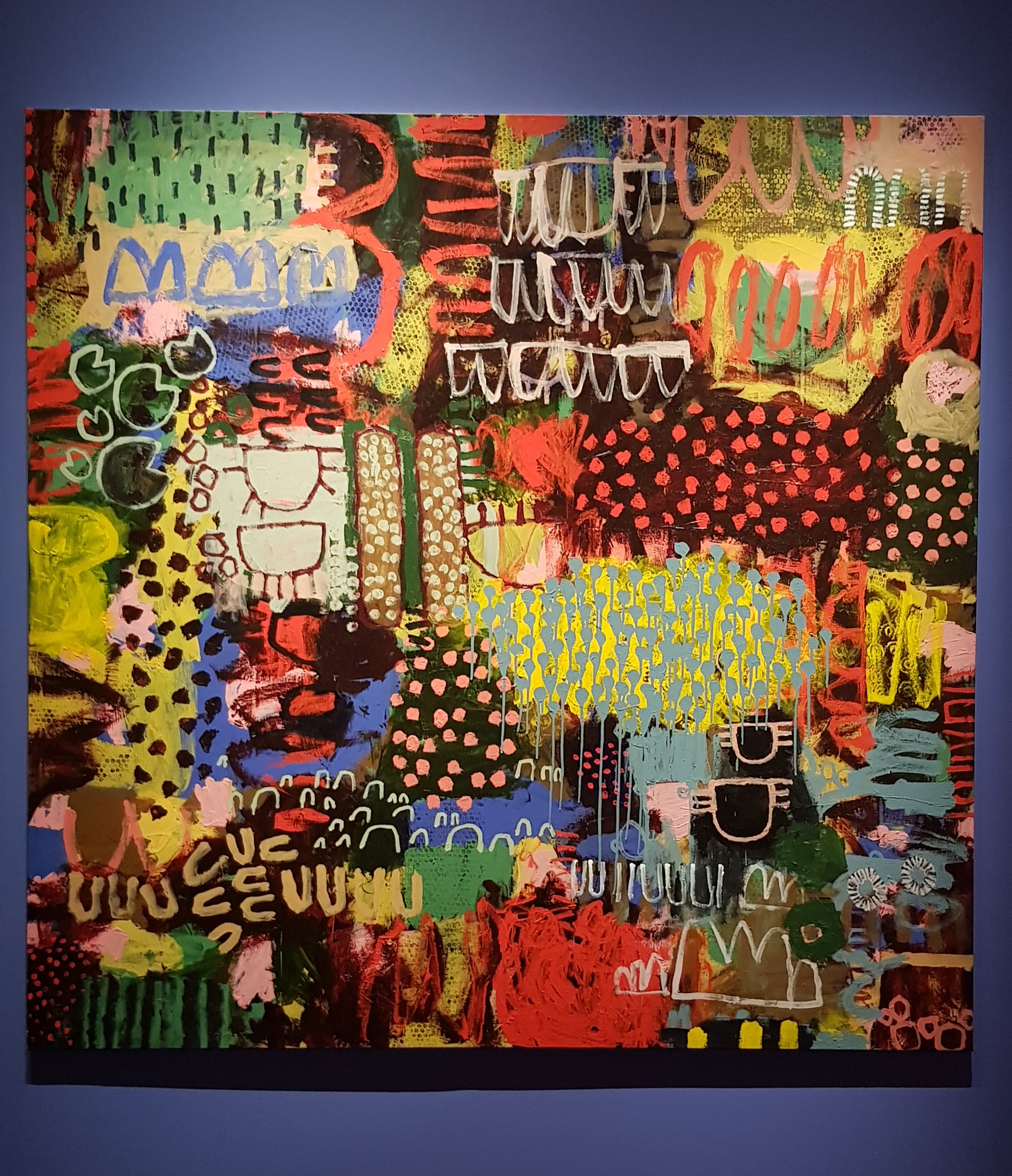
Nora Heysen, “Girl Painter”

Nora Heysen (1911-2003), was the first Australian woman to win the prestigious Archibald Prize for portraiture in 1938, for her portrait of Mme Elink Schuurman. At age 27 she was and remains, the youngest ever winner of the Archibald Prize. The Australian Women’s Weekly subsequently summarised this landmark achievement with an article entitled “Girl Painter Who Won Art Prize is also Good Cook”.
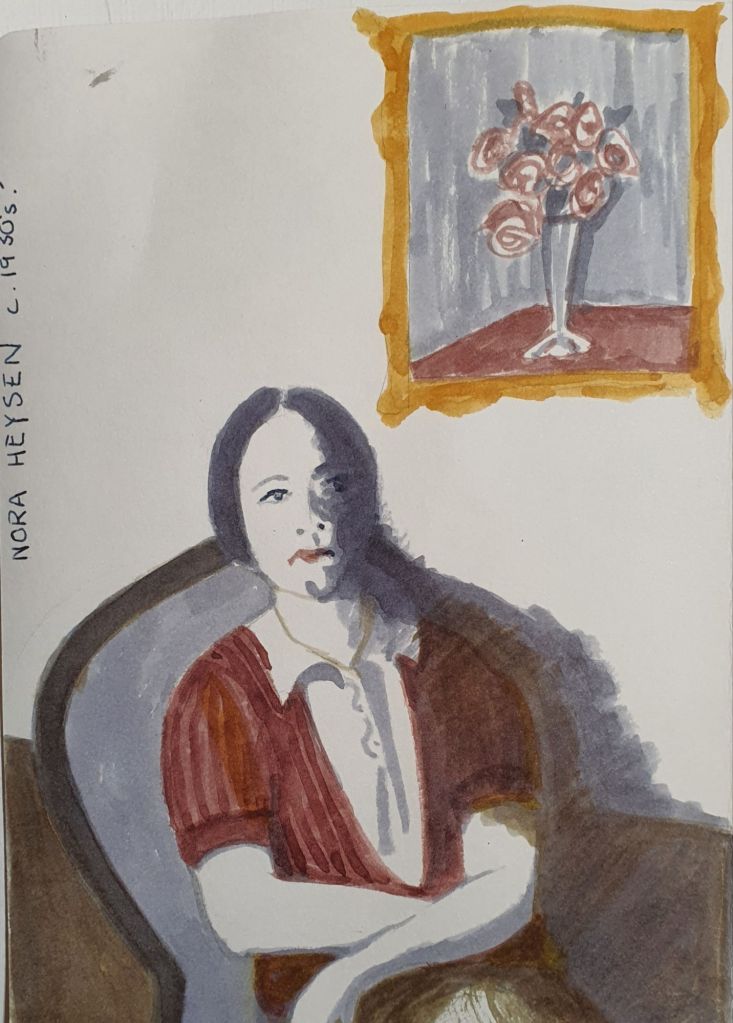
Nora Heysen, c. 1930s

Despite underwhelming assessments like that, Heysen was more than capable of holding her own when it came to making art. The daughter of one of Australia’s most popular landscape artists, Hans Heysen, she began her formal art training at the age of 15 and by the age of 20 had her work in the collection of three State galleries. 

Sales from her first solo exhibition in 1933 funded further study in London (1934-37).

In 1944 Heysen made another breakthrough when she became the first Australian woman appointed as an Official War Artist*. In addition to her honorary rank as Captain, she was, with persistence and backing,  even paid the same rate as male war artists!
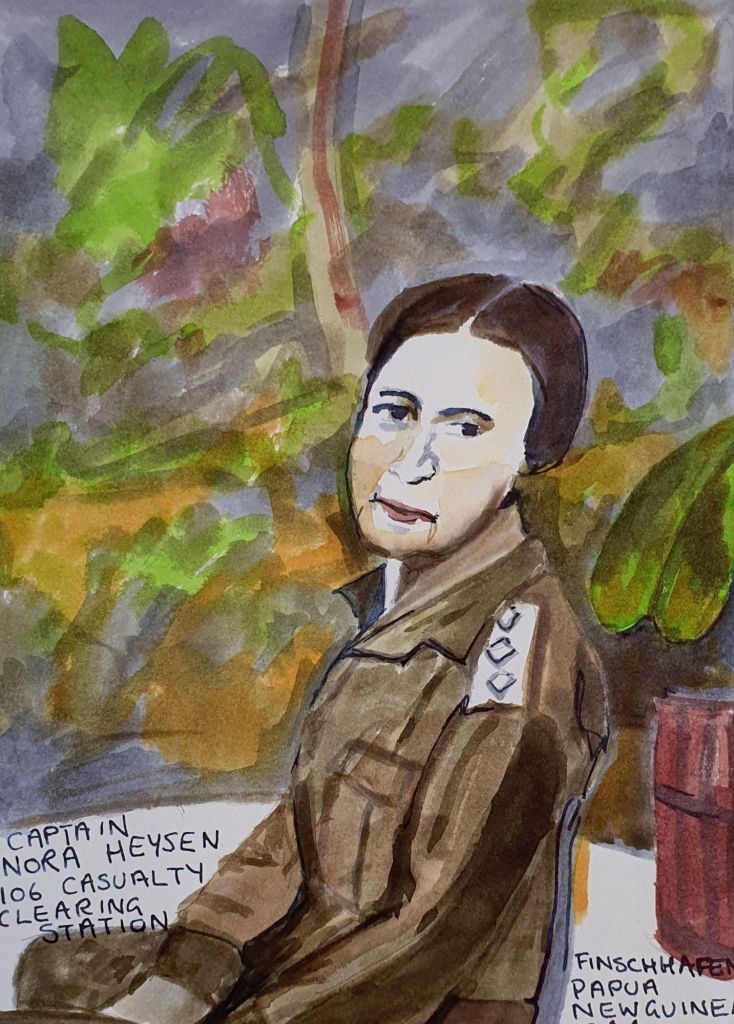
Captain Nora Heysen in Papua New Guinea in 1944. Collection of the Australian War Memorial

One of my favourite portraits of her war service is of WAAAF cook, Corporal Joan Whipp.

Heysen married in 1953, but found her practice was disrupted. She and her husband divorced in 1976. By then her portraits and still life subjects had fallen out of fashion and her work was not recognised.

Later, while researching work on some of her father’s paintings, curator Lou Klepac saw her work, and recognised it’s quality. He mounted a major exhibition of Nora’s work in 1989. In conjunction with the National Library of Australia, Klepac held another successful exhibition of her work in 2000.

Heysen at age 92, at the Art Gallery of South Australia,  standing in front of one of her father’s paintings.

Unlike so many other female artists Heysen did live to see her work regain it’s prominence. She died after a short illness in 2003.

*Both Iso Rae and Jessie Traill documented the First World War in France, but neither were given official status as Government appointed war artists.
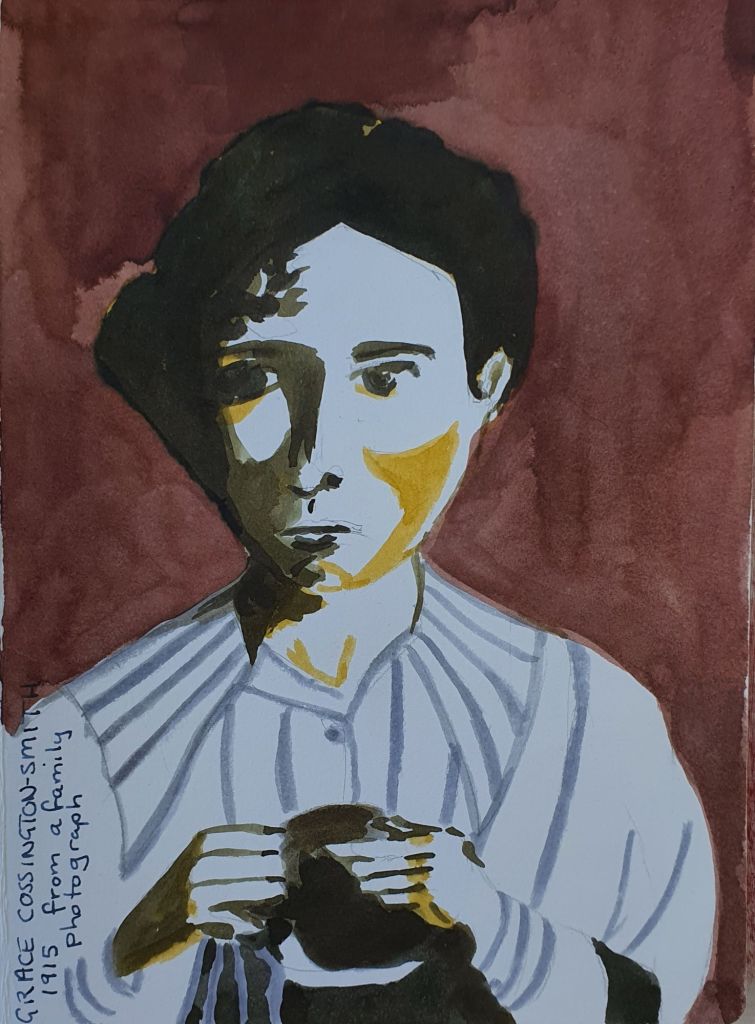
Amazing Grace

Next up is Australian artist Grace Cossington-Smith, (1892-1984), whose early works showing the domestic life of Australia during the first World War brought her to prominence.

From a family photograph taken in 1915

Post WWI her bold use of colour shone in such works as The Laquer Room, 1936.

Cossington Smith is remembered for her light filled domestic interiors that became a feature of her later years.

Grace Cossington Smith, 1937 detail from a family photo, Art Gallery of New South Wales collection.

She had a major retrospective at the Art Gallery of New South Wales in the early 1970’s, then ceased painting. She died in 1984.

Cossington Smith captured by a street photographer, c. 1930-40. Collection of the Australian War Memorial.

.

Clarice Beckett

It is an all too common trope, that women in the arts are neglected in their lifetime,  forgotten when they die, only to have their work resurrected decades after their death. Clarice Becket is the “poster child” for this worn out story.

The daughter of a Bank Manager,  you can imagine, looking at her at age 18, the expectations for a young woman of her social class.

She studied art with leading Australian artist Frederick McCubbin from 1914-16 and later with ‘Tonalist’ painter Max Meldrum. By 1926, she was creating landscapes unprecedented in Australian art for their “radical simplicity”, and from 1930, she experimented further with a broader colour palette and more challenging compositions.

Clarice in 1931

In 1935, while painting the sea off Beaumaris during a winter storm, Beckett contracted pneumonia and died four days later, aged 48. (Wikipedia)

You can read and see more about her work in an earlier post of mine here.

Clarice painting at Beaumaris

I didn’t have much luck finding photos of Clarice to work from. This one, which I’m guessing is from the late 1920’s early 1930’s, at least shows her in her preferred occupation,  painting at Beaumaris, where so much of her work was made.

Artists – Women, Art Gallery of South Australia

It’s a big year for women artists with the National Gallery of Australia showing, rather belatedly, a program featuring women artists called Know My Name. Works have been borrowed from around the country for the exhibition.

National Gallery of Australia
25.48% women represented (down from 27.12%)
72.97% men (up from 68.68%)
No data on non-binary artists recorded

The Countess Report 2019*

Meanwhile in other parts of the country State galleries are also turning their collective eyes to the work of female artists both within and outside of their collections. During a recent visit to Adelaide I took a look at the Art Gallery of South Australia’s offerings.

State galleries and museums continue to significantly under-represent
women in their collections and exhibitions.

In State galleries and museums the representation of women decreased
from 36.9% to 33.9% from 2016 to today.

The Countess Report 2019*


Leading the way in S.A. is this year’s Tarnanthi 2020: Open Hands exhibition, which is all by women artists


1. Warwiriya Burton, (born 1925), Pitjantjatjara people, Ngayuku ngura (My Country), 2018 synthetic polymer pigment on linen.
2. Warwiriya Burton, detail of No. 1

Warwiriya Burton, (born 1925), Pitjantjatjara people, Ngayuku ngura (My Country), 2018 synthetic polymer pigment on linen.
Detail of above.


3. Iluwanti Ken, (born c.1944) Pitjantjatjara people, 2030, Walawulu ngunytju kukaku ananyi (Mother eagles going hunting), pigmented ink on paper.

4. Iluwanti Ken, detail of No. 3

In the Chromotopia exhibition:


5. Naomi Hobson, (born 1978), Southern Kaantju/Umpila people, Touch the River Floor, 2019, synthetic polymer on linen.

Naomi Hobson


6. Virginia Cuppaidge, (born 1943), Second Transition, 1974

Virginia Cuppaidge


7. Annabelle Follett, (1955-2019), UN Knitted Forms, 2000, wool and plastic knitting needles

Annabelle Follett

Elsewhere in the gallery:

8. Dora Chapman (1912-1995), Head Studies, partial image, 1969 and 1970, gouache and polymer paint on board

Dora Chapman


9. Top, Grace Crowley (1890-1979), Abstract Painting, 1953, oil on hardboard;
Below, Dora Chapman (1912-1995), Abstract, 1943, synthetic polymer paint on board.

Grace Crowley
Dora Chapman


10. Bessie Davidson, (1879-1965), Artist’s paintbox with French coastal landscape, c. 1930 Guéthary, France, oil on wood panel in wooden artist box

Bessie Davidson

My completely subjective view is that the work of women artists is definitely more visible in the galleries that I have visited this year. But 25% National Gallery of Australia???

* The Countess Report

The Countess Report is Amy Prcevich, Elvis Richardson and Miranda Samuels.

They are an independent artist run initiative that publishes data on gender representation in the Australian contemporary art world. They believe a focus on gender is a focus on power.
Countess works in the legacy of institutional critique and research based conceptual art practices. Their goal is to inform and influence systemic change through data collection and analysis.
While their evidence is often cited, they are not data analysts. They are artists and activists who are interested in investigating dynamics of power, value, labour, and collecting through the lens of gender.
The work of Countess is both art and advocacy.