What a day. Today we have seen some of the greatest works of early Christian art, in the form of mosaics, in the city of Ravenna, where there are 8 UNESCO world heritage sites.
The city was the capital of the Western Roman Empire for most of the 5th century AD.
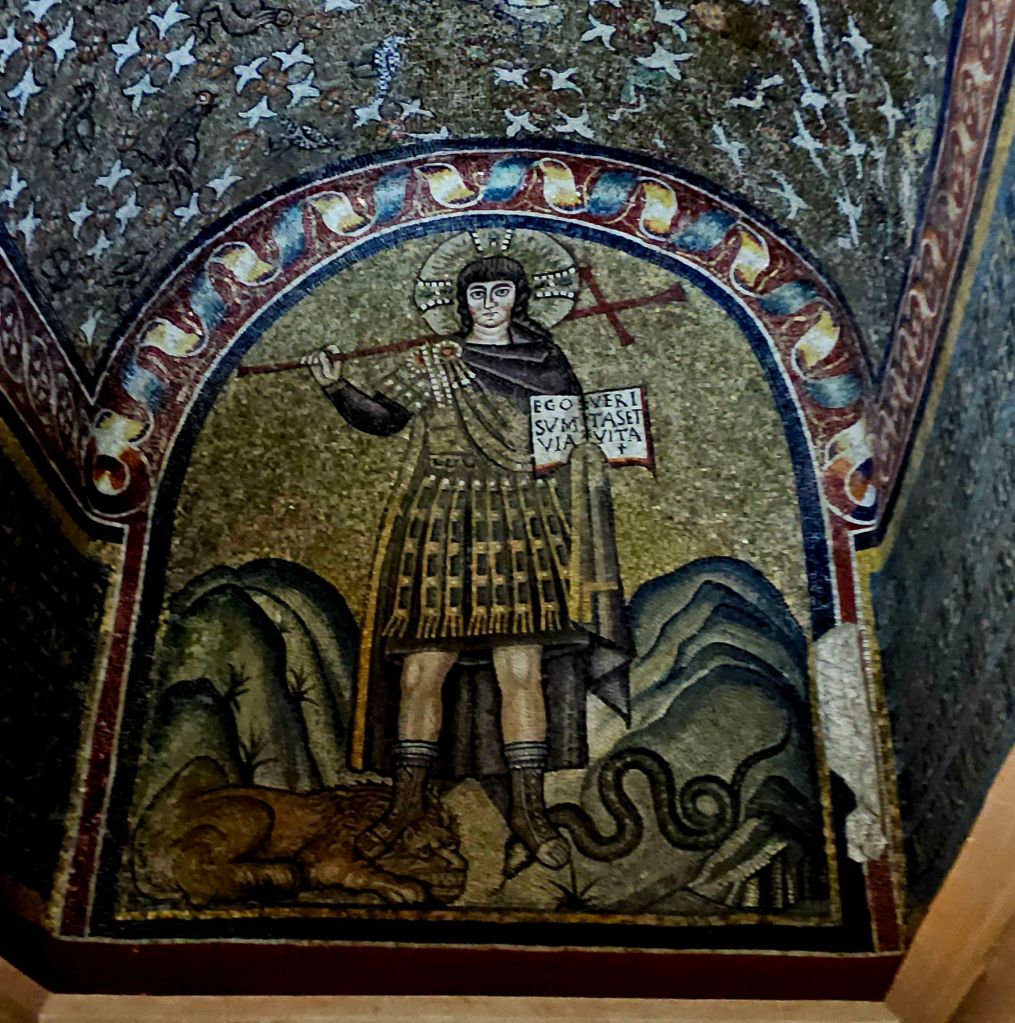
The two photos that follow were taken in the Chapel of Sant’ Andrea, but more accurately known as the private chapel of the Bishops of Ravenna.
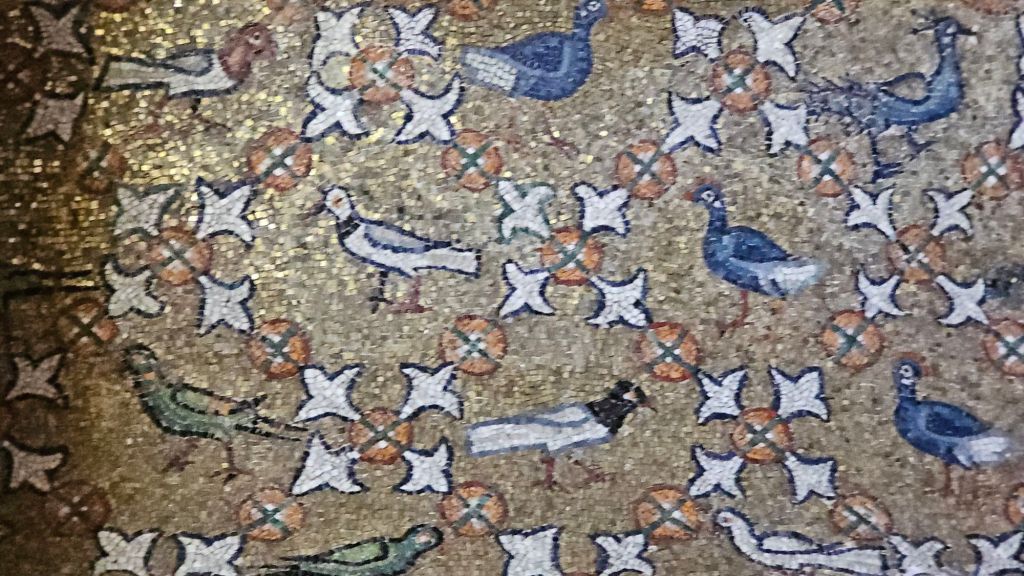
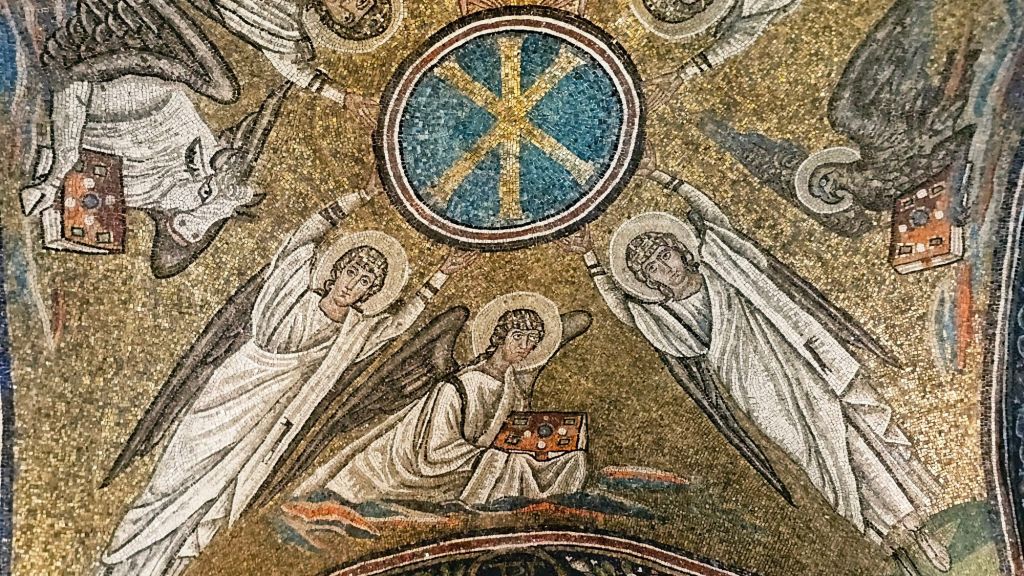
The colours of these mosaics glow – because in large part they are made from coloured glass rather than natural stone. I was struck by the youthful appearance of Christ, in the Chapel of Sant’ Andrea, where he is depicted in quite a militant position, standing on a lion and a snake, that symbolises him destroying evil.
In the Basilica of San Vitale, the mild young Christ, is no match for the tough and worldly figures of the Emperor Justinian I and his wife, the Empress Theodora.
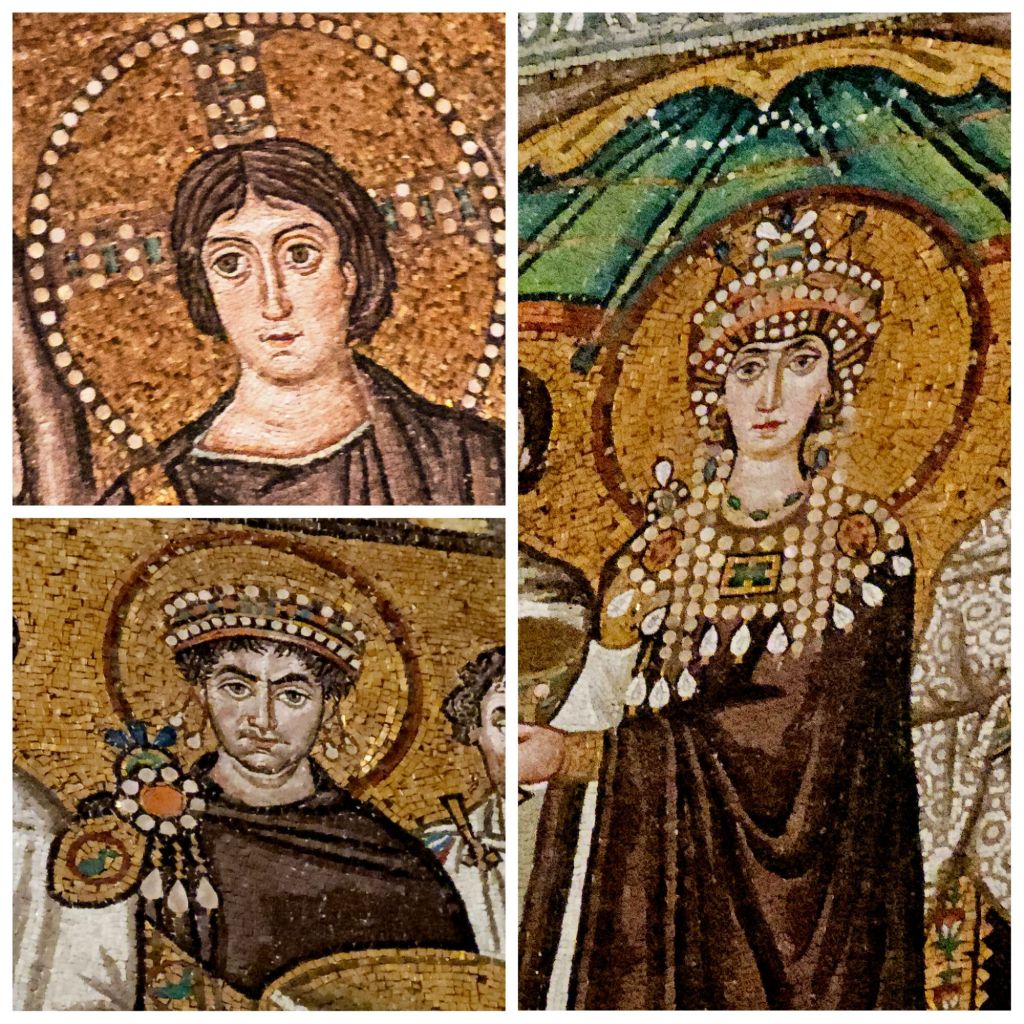
It was interesting to see that both these depictions of Christ show him wearing garments of the same colour purple as that worn by the imperial family. I found the mosaics of Justinian and Theodora totally compelling.
I did getting to sketch in San Vitale, both the Christ,
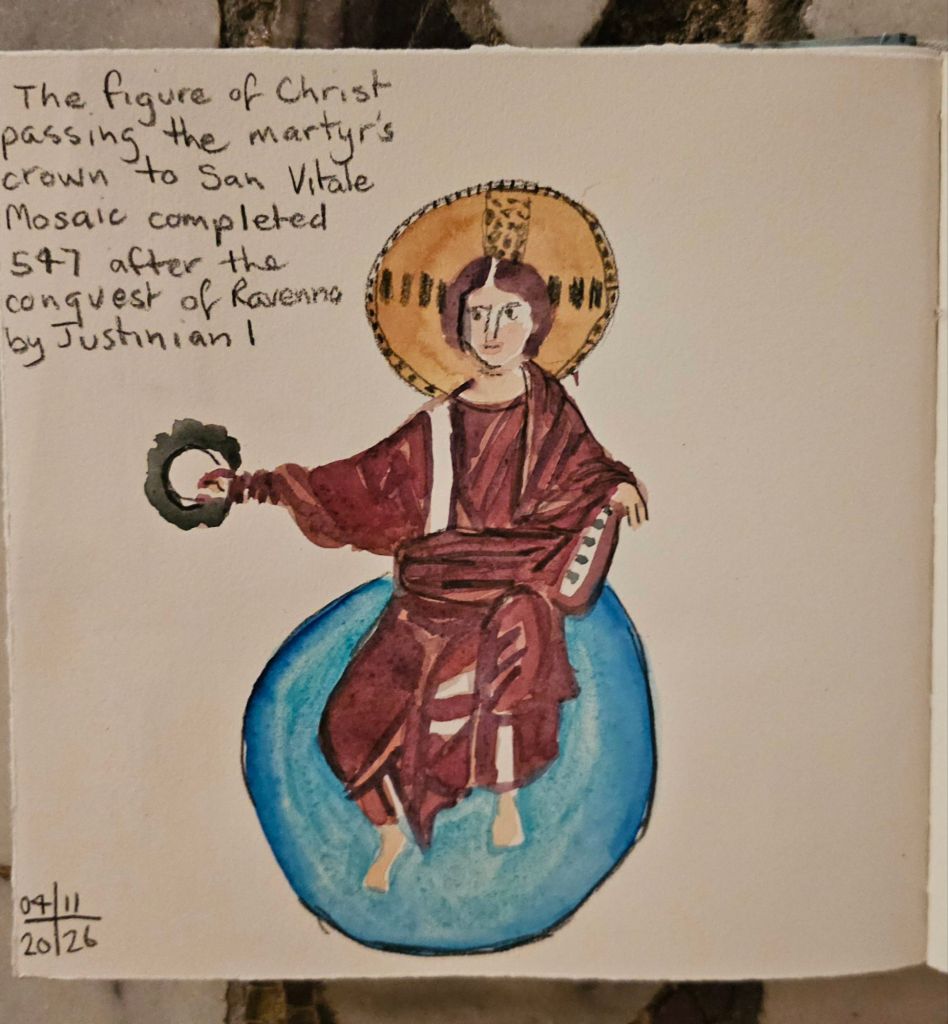
(yep, I left that bit out).
and also part of the church interior.
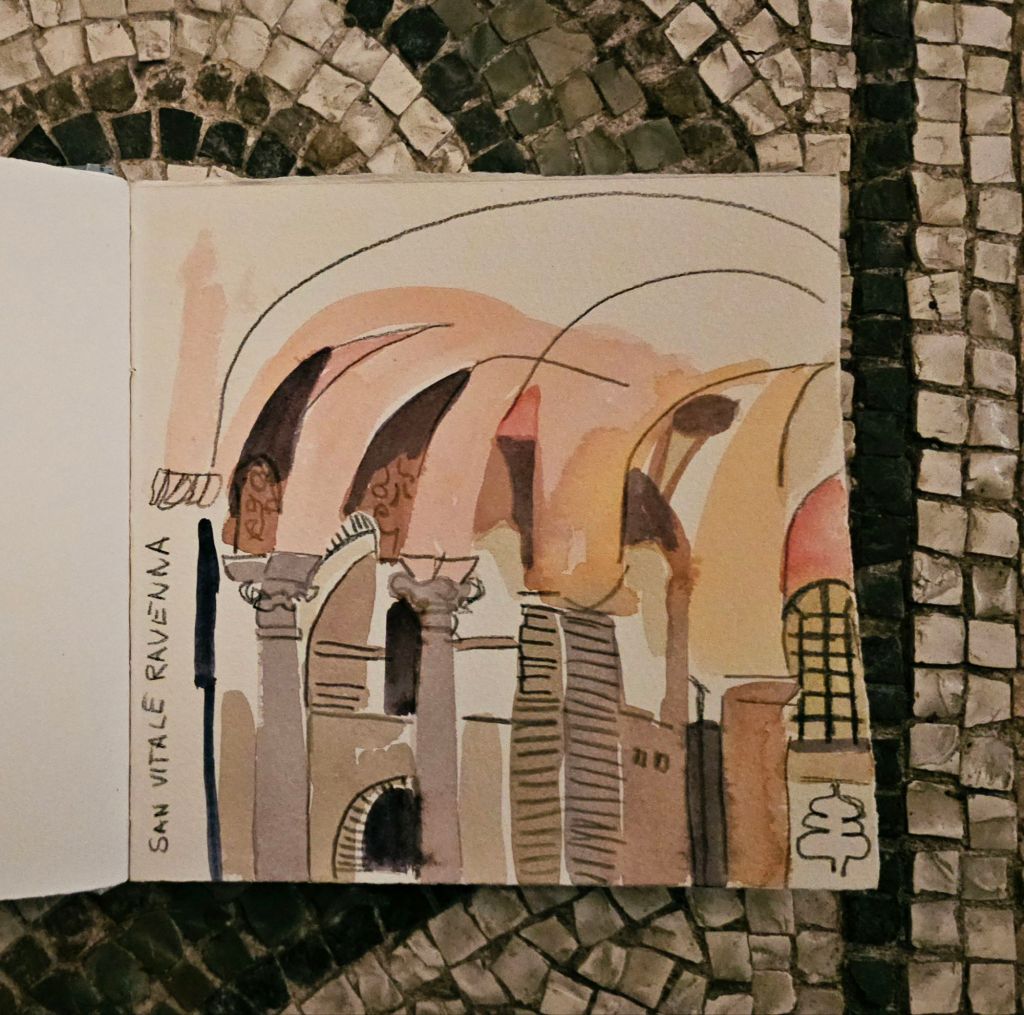
Sadly sketching inside most of the other monuments wasn’t possible. Most are quite small and due to visitor numbers, have time limits on how long you can view the mosaics. That said the staff were flexible with time allowances when it was a bit quieter.
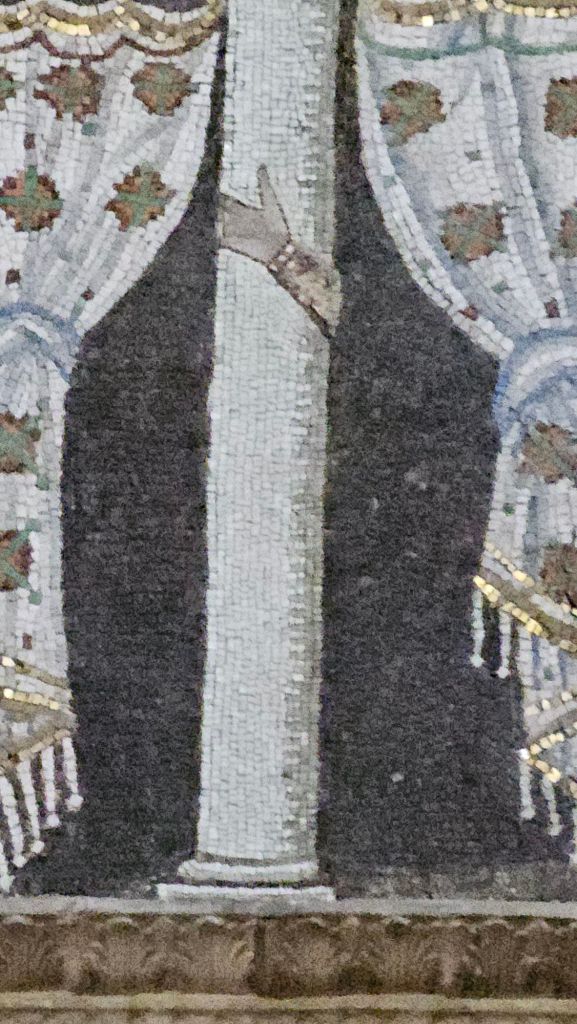
I loved the ‘fugitive hands’ that were visible on several columns in this mosaic in Sant’ Apollinare Nuovo.
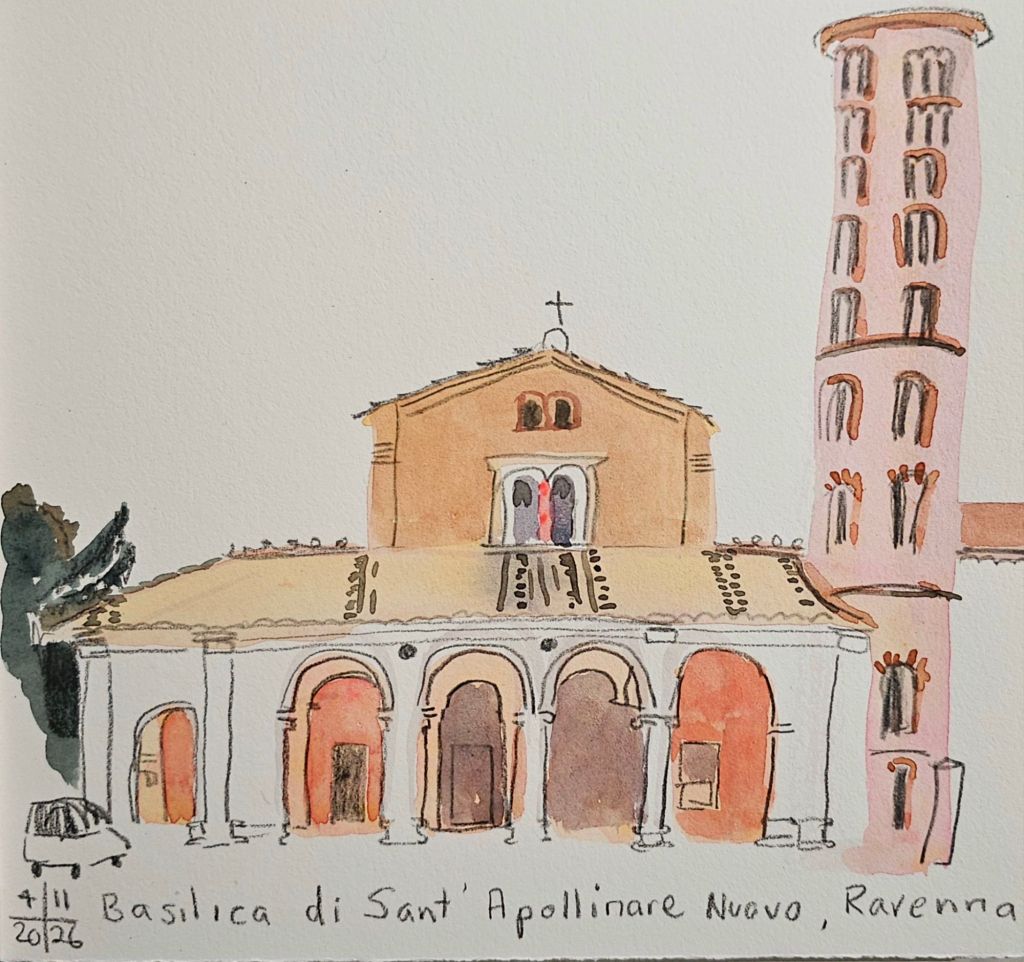
So we sketched outside and really struggled with the cold, dank weather. Not friendly to my regular watercolour at all.
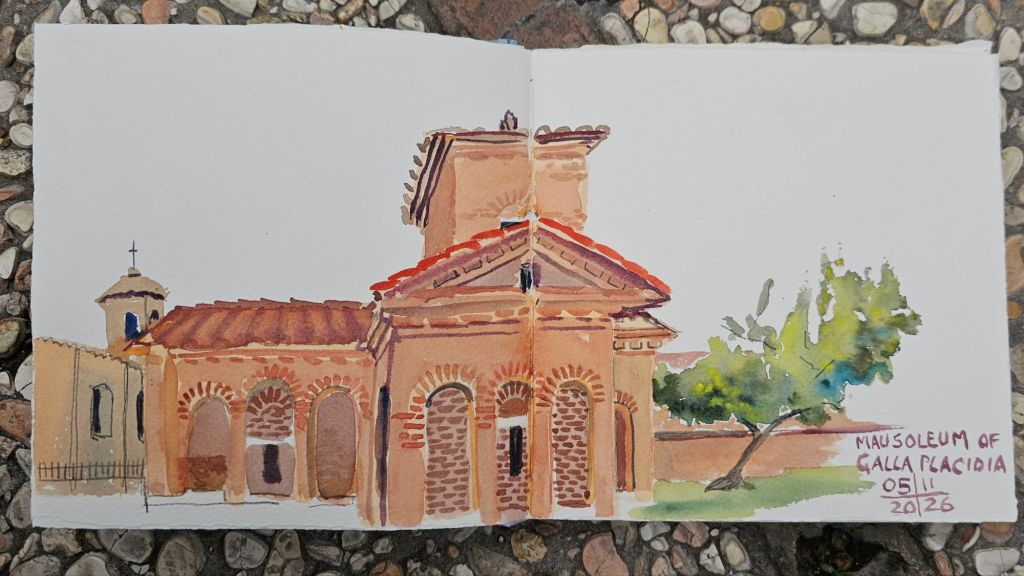
I’ve been using a ‘quicker’ approach in the outdoor sketches of flat blocks of colour, adding detail with my Cretacolor Nero pencil.
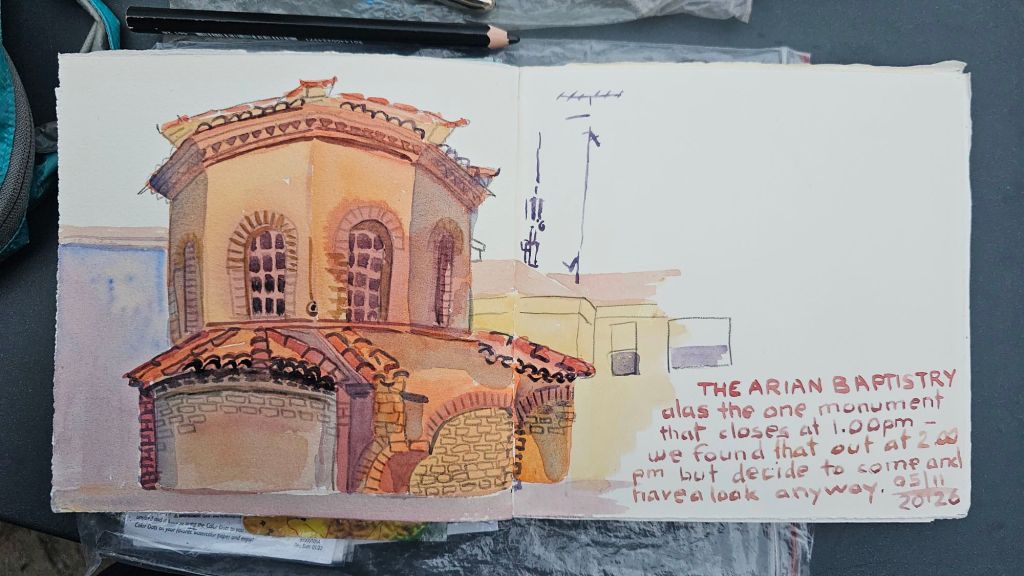
This is a pretty straightforward approach which I’ve seen several artists use. I’ll put a link to a helpful video on this technique by Koosje Koene below.

