Portraits of the Famous and Infamous

What a great title for a book – it was used by Rex Nan Kivell (1898-1977), for his self-published encyclopaedia of portraits of those people from the 15th to the 20th century, who had links with Australasia and the Pacific.  A colourful character himself, Nan Kivell collected the portraits that went into the book. He was a major contributor to the collections of the National Library of Australia. At present an exhibition of works related to Nan Kivell’s book is on display in the NLA’s  ‘Treasures’ Gallery.

I took the time while attending a lunchtime talk on the exhibition to practice a bit of portraiture myself, along with capturing some of the faces that appeared on the screen during the talk.

Faces real and projected, pen and ink, 4 November 2015

Faces real and projected, pen and ink, 4 November 2015

Up in the top right-hand corner is Nat Williams, the curator of the exhibition. Below him are Abraham Ortelius, the map maker; Betsey Broughton, survivor of a Maori revenge attack, who lived into her 80’s and is buried about an hour and a half’s drive from Canberra at the charmingly named Bong Bong cemetery. Sydney Spence a close friend of Nan Kivell’s and co-producer of the book and a partially finished sketch of Kalaimanokaho’owaha, a Hawaiian Chief.

Among the anecdotes that Nat shared was, that on being shown a map of Melbourne, Robert-Louis Stevenson said “When I think of Melbourne I vomit”. I can only hope for Melbournians sake that this may be inaccurate. I’ve only just been disabused of the idea that the quote, long attributed to Mark Twain, that “Newcastle [in New South Wales] consists of a long street with a graveyard at one end with no bodies in it, and a gentleman’s club at the other with no gentlemen in it” has neither primary or early secondary sources to attribute it to Twain.

Unfortunately I ran out of time and couldn’t make it to see the exhibition, but it’s on for another month so it will go on the ‘must see’ list.

Urban Sketchers Canberra at the National Library of Australia

On Sunday we had our first official outing as Urban Sketchers Canberra, a goal we have been working towards since our sketching group started meeting in February this year. We had 15 people come along, including two people joining us for the first time.

With a bad weather forecast we had to do a last minute change from our planned outside venue to one that offered indoor drawing opportunities. So it was off to the National Library of Australia (NLA). As luck would have it the rain held off for a bit so many of us took the opportunity to draw outside the building.

Spot the non-sketcher, USk Canberra takes to the National Library of Australia

Spot the non-sketcher, USk Canberra takes to the National Library of Australia

I decided to tackle a part of the building that I must say I haven’t paid much attention to before, the large sculpture above the entrance to the library. The work is called Knowledge and was designed by Tom Bass, who is probably better known to most Canberrans as the designer of the sculpture of Ethos in Civic Square. Commissioned in 1966 the work was installed on the building in 1968. At just over 21 metres in length, 2 metres in height and projecting nearly 2 metres from the wall this is a complex piece of work. Indeed I didn’t really consider how complex until I tried to sketch the projecting elements of the work.

Part of the sculpture, Knowledge, at the National Library of Australia, watercolour and brush pen, 1 November 2015

Part of the sculpture, Knowledge, at the National Library of Australia, watercolour and brush pen, 1 November 2015

I managed to get through to the start of the watercolour when it began to rain. I retreated to the portico along with most of the other sketchers to complete adding the colour to my sketch.

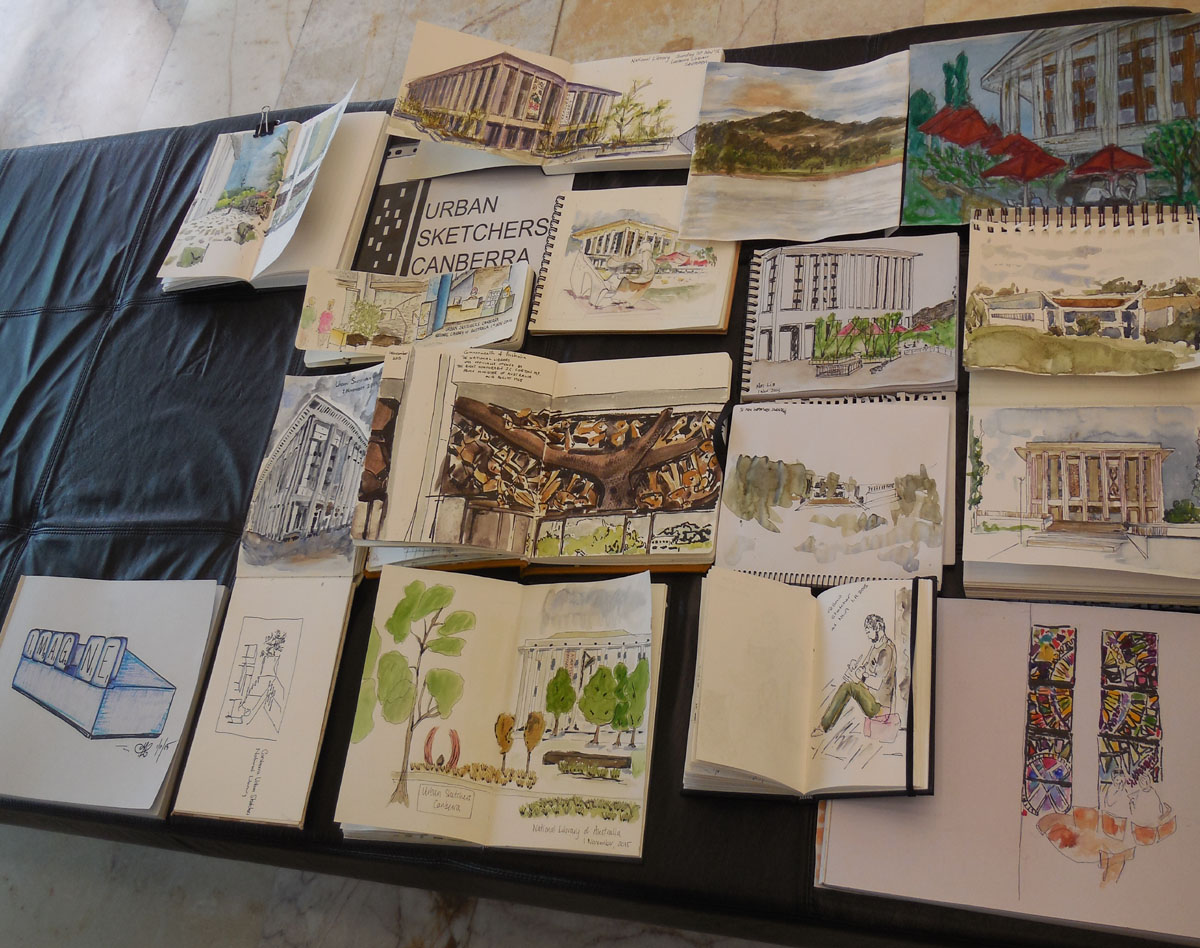
As is traditional we met up at the end of our two hours of sketching to compare our efforts. As always the  subjects and approaches were quite varied.

Some of our final works on the day

Some of our final works on the day

Discussions of the day’s work continued over coffee and lunch in the Library’s cafe. Some of us also looked at the exhibition of work of William Strutt currently on display in the Library. Strutt’s ability as a draftsman really stood out and we were in awe of his fine pencil sketches.

Studies of two male figures and a woman's head, William Strutt, c. 1860, pencil (PIC R3339 LOC1132/F), collection of the National Library of Australia

Studies of two male figures and a woman’s head, William Strutt, c. 1860, pencil (PIC R3339 LOC1132/F), collection of the National Library of Australia

The next meeting of Urban Sketchers Canberra will be on 5 December, at the Australian National Botanic Gardens. You can find details of events and more pictures on the group’s Facebook page, or contact us directly at urbansketcherscanberra@gmail.com

Drawing the exhibition – Masterpieces from the Hermitage

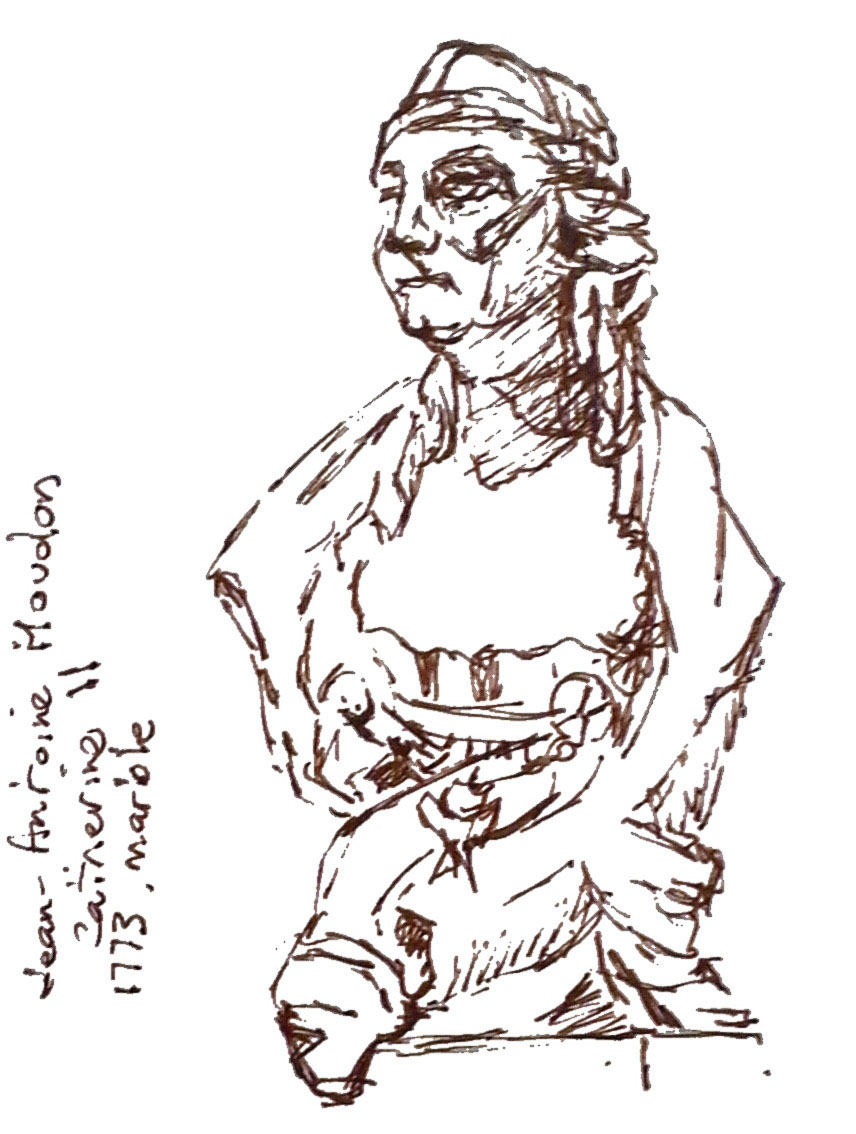
It’s getting close to the end of the latest Winter Masterpieces show at the National Gallery of Victoria, Masterpieces from the Hermitage, so four of us decided to hop on a plane and head to Melbourne to spend a day with some of Catherine the Great’s collection, now housed at the Hermitage in St Petersburg. Catherine certainly collected a lot of art and other things in her time and lets face it, she had a lot of walls she could fill. So this exhibition is only a small sample of what she owned.
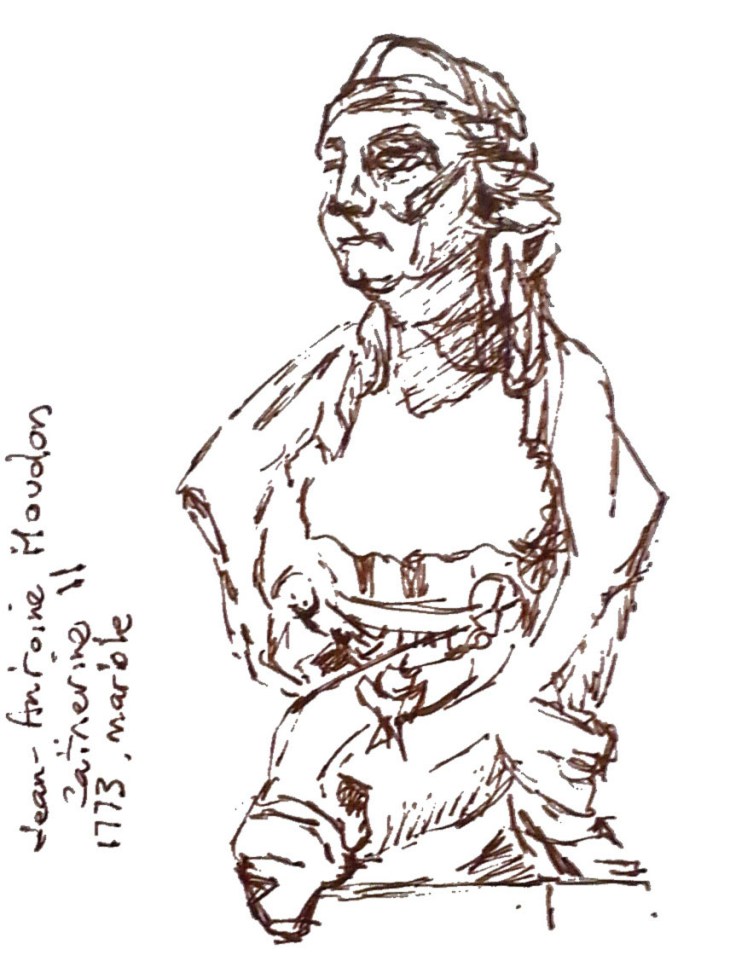
Catherine II (the Great), by Jean-Antoine Houdon, 1773 marble, pen and ink

Catherine II (the Great), by Jean-Antoine Houdon, 1773, marble, my sketch in pen and ink

I’m always interested in what will catch my attention at this type of exhibition and here it was resoundingly the Flemish works and particularly those of Sir Anthony van Dyck. Per usual I chose to draw a number of works in the exhibition. In a situation when you are exposed to so many works of high quality it gives you some space to just sit and ‘be’ with a work, at least somewhat longer than the nominal art gallery average of 10 seconds per painting.

However in my hurry to refill my pens prior to leaving for Melbourne, I accidentally filled them with ink that does not really work with my Lamy,  so apologies in advance for some scratchy pen work.

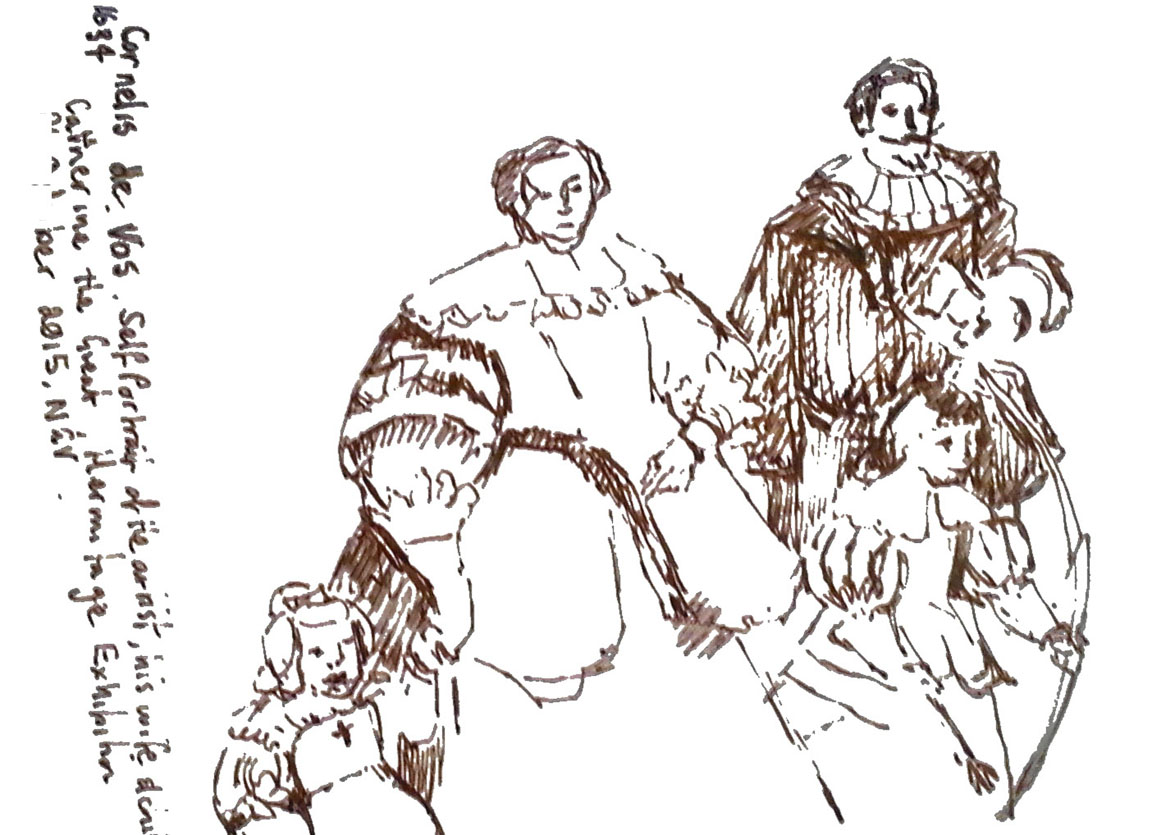
The first work to catch my attention was a family grouping by Cornelis de Vos, Self-portrait of the artist with his wife Suzanne Cock and their children.
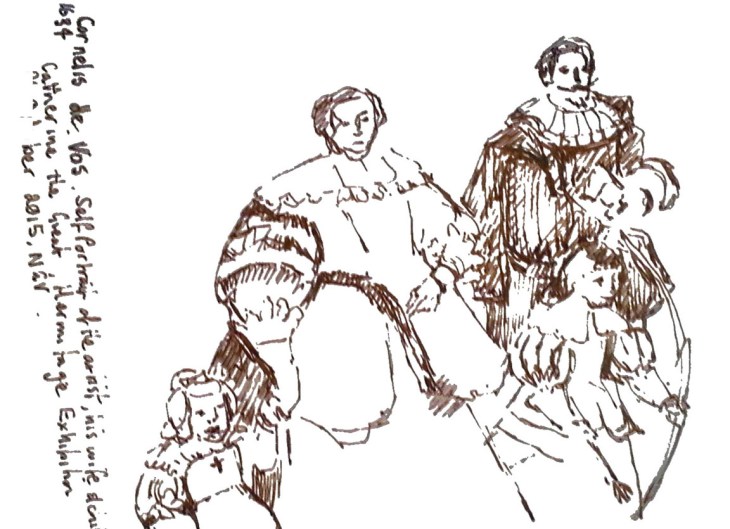
Self-portrait of the artist with his wife Suzanne Cock and their children, c1634, oil on canvas, pen and ink

Self-portrait of the artist with his wife Suzanne Cock and their children, c1634, oil on canvas, my sketch in pen and ink

My study doesn’t capture the older children of the family, just the two youngest, one holding a bow and arrow and the youngest on leading reins. In the original the parent’s clothes form large dark masses against which their faces and those of their children are naturally highlighted. From the quality and amount of lace, fine silk and jewellery being worn by the family you get the distinct impression that the art business was good for de Vos. I found his depiction of his young children particularly charming.

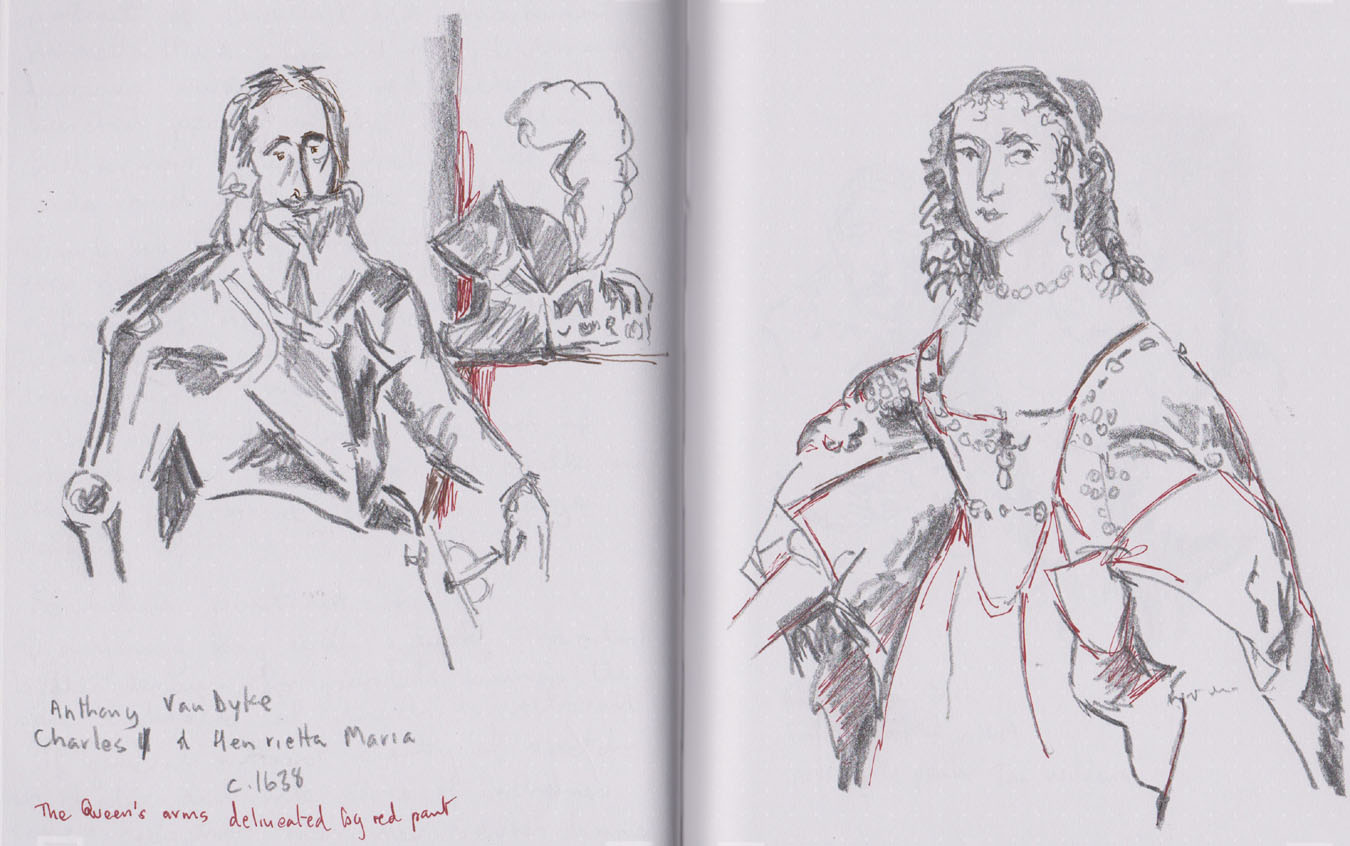
A large leap up the social ladder from the wealthy merchants that de Vos painted are Sir Anthony van Dyck’s paired portraits of Charles I of England and his Queen Henrietta-Maria. At over 2 metres in height they dominated the room they were hung in. The refinement of their faces, the lustre of the armour, silk and pearls made them hard to look away from, as was no doubt intended.
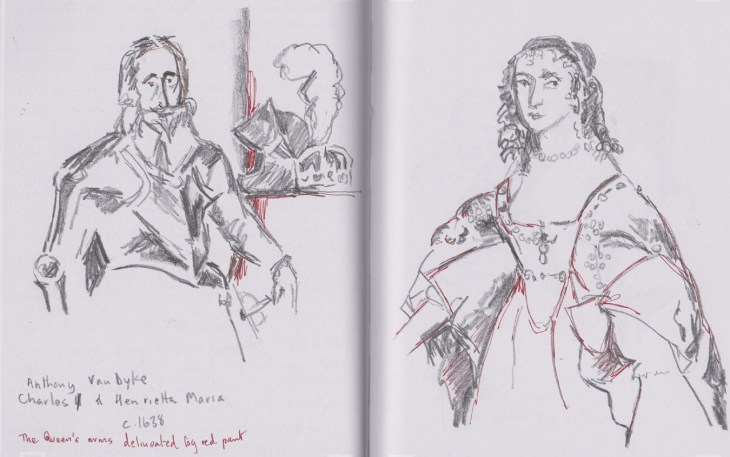
Study of King Charles I and Queen Henrietta-Maria, c 1638, graphite and gel pen

Study of King Charles I and Queen Henrietta-Maria, c 1638, graphite and gel pen

The flattery of van Dyck’s paintings was such that when Sophia, later Electoress of Hanover, first met Queen Henrietta Maria, in exile in Holland in 1641, she wrote: “Van Dyck’s handsome portraits had given me so fine an idea of the beauty of all English ladies, that I was surprised to find that the Queen, who looked so fine in painting, was a small woman raised up on her chair, with long skinny arms and teeth like defence works projecting from her mouth…”

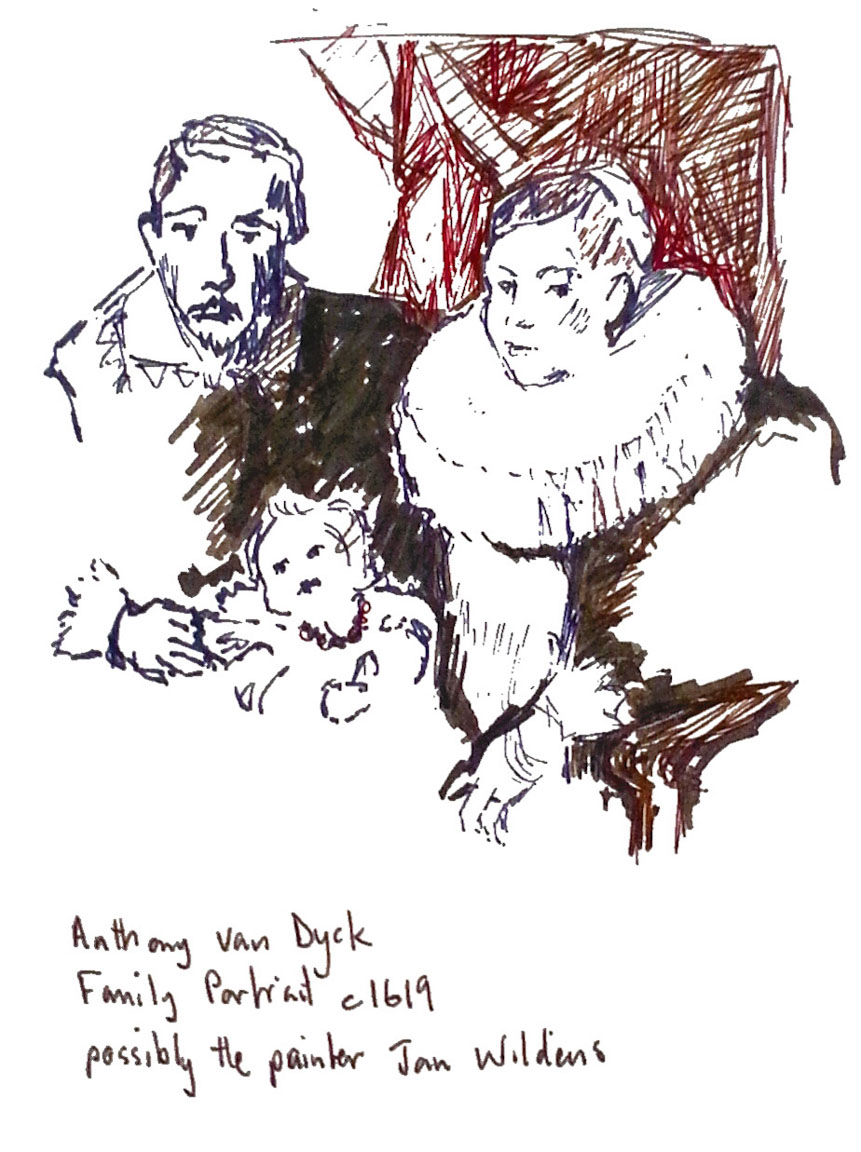
Perhaps truer to life was a smaller portrait that van Dyck made in 1619, the year after he was admitted to the Guild of St Luke as a free master painter. The Family Portrait, is thought to be of another artist, possibly Jan Wildens (in an interesting link, Wilden’s half sister, Suzanne Cock was the wife of Cornelis de Vos). His attractive young wife sits next to him while their young child, sits in his/her father’s lap looking upwards.
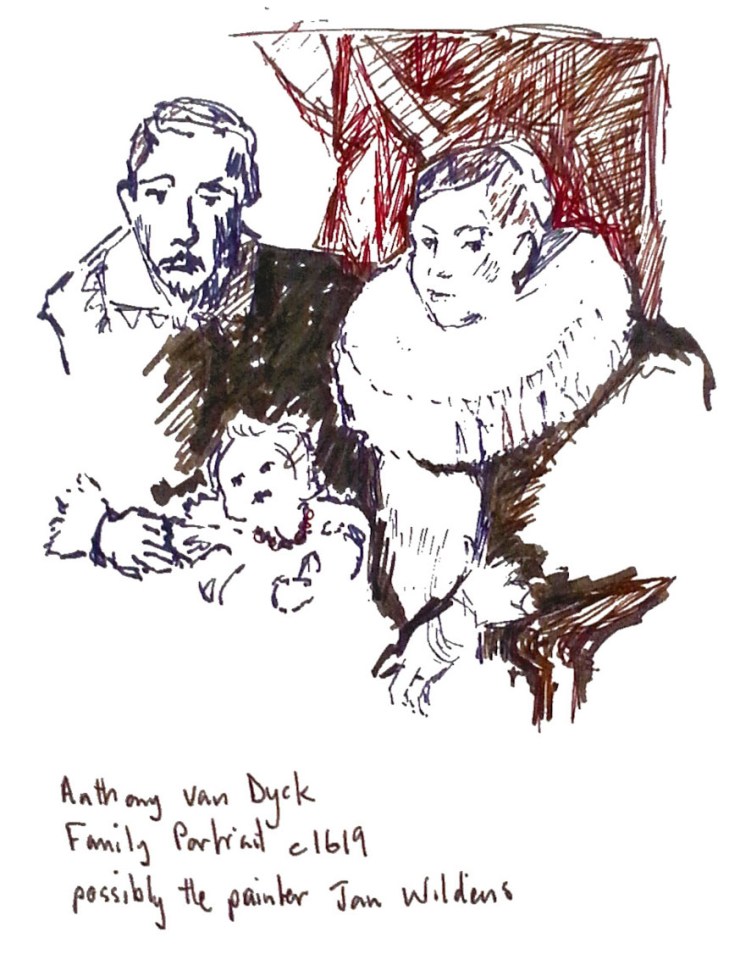
Study of Family Portrait, by Anthony van Dyck, pen and ink, brush pen and gel pen

Study of Family Portrait, by Anthony van Dyck, pen and ink, brush pen and gel pen

As you can see from the above study by this time I was resorting to every pen I could find in my bag just to complete the study. I’d spent most of the day in the exhibition, with a break for lunch and I was pretty exhausted. I staggered out of the gallery to have a restorative cup of coffee and lemon curd tart. Since checking up on the details for this post I have realised that there were any number of works I would have liked to go back and study in greater detail and some I managed to miss altogether.

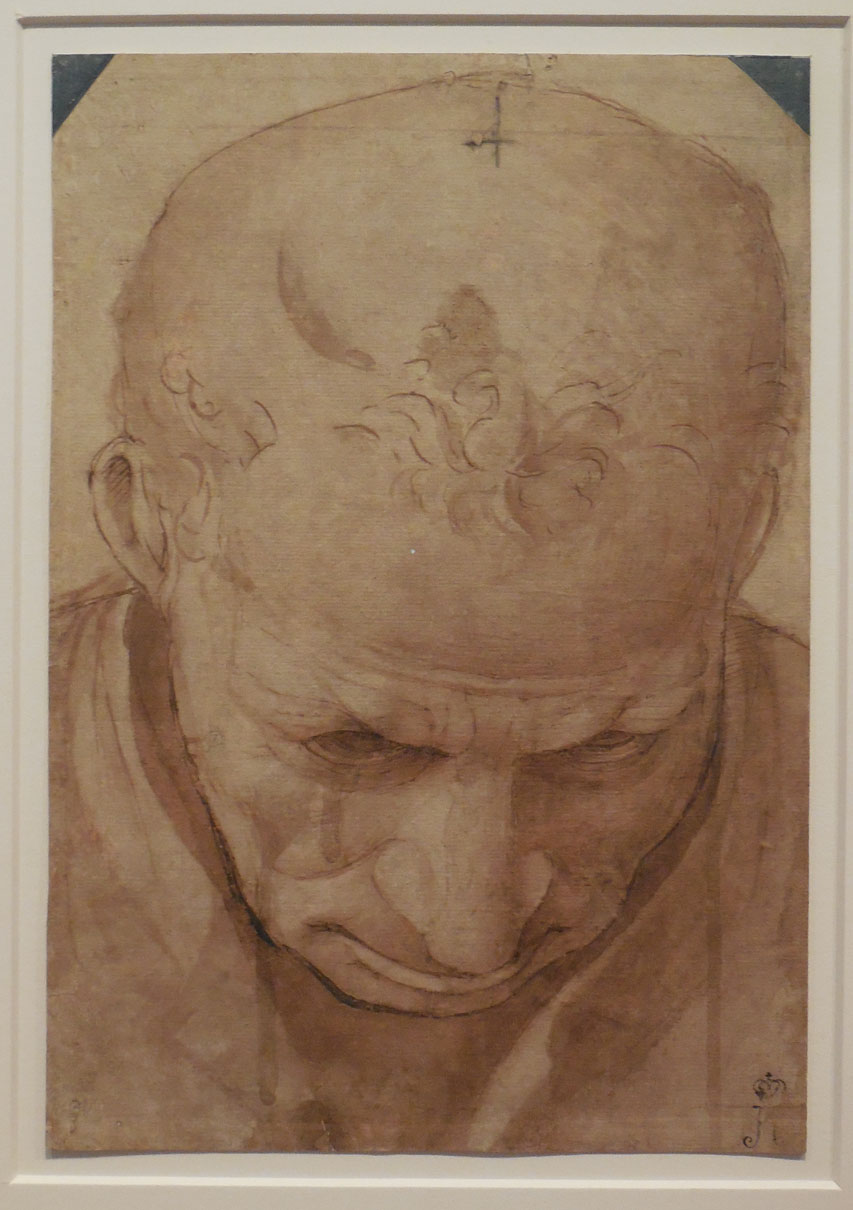
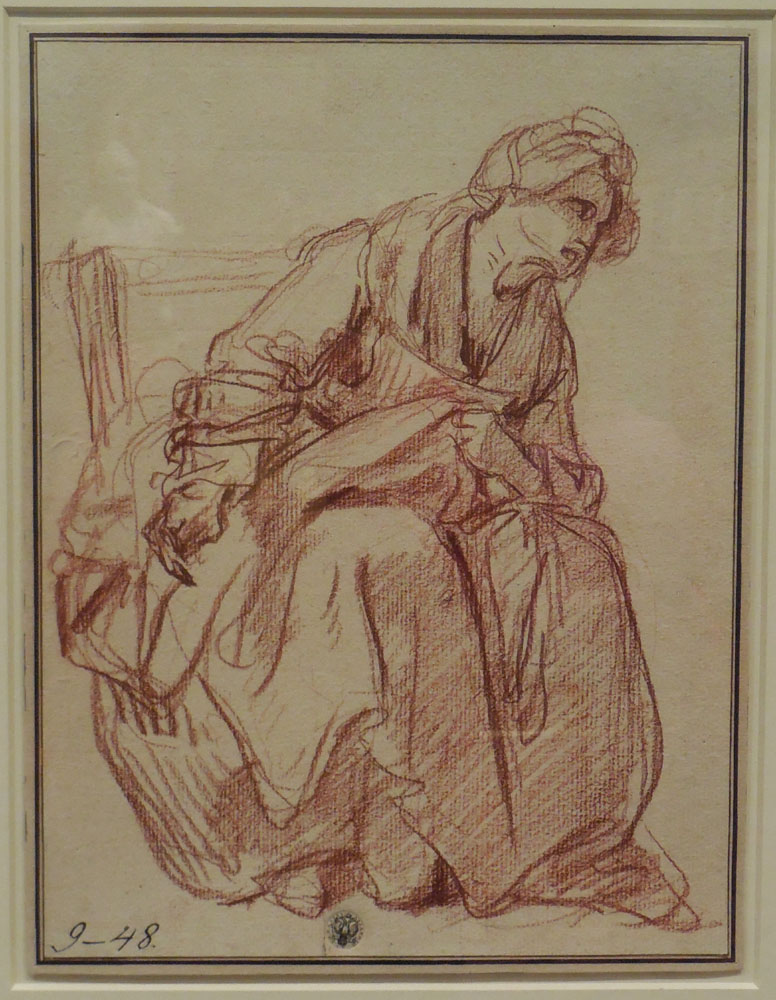
Here are two of the many amazing sketches that also caught my eye on the day.
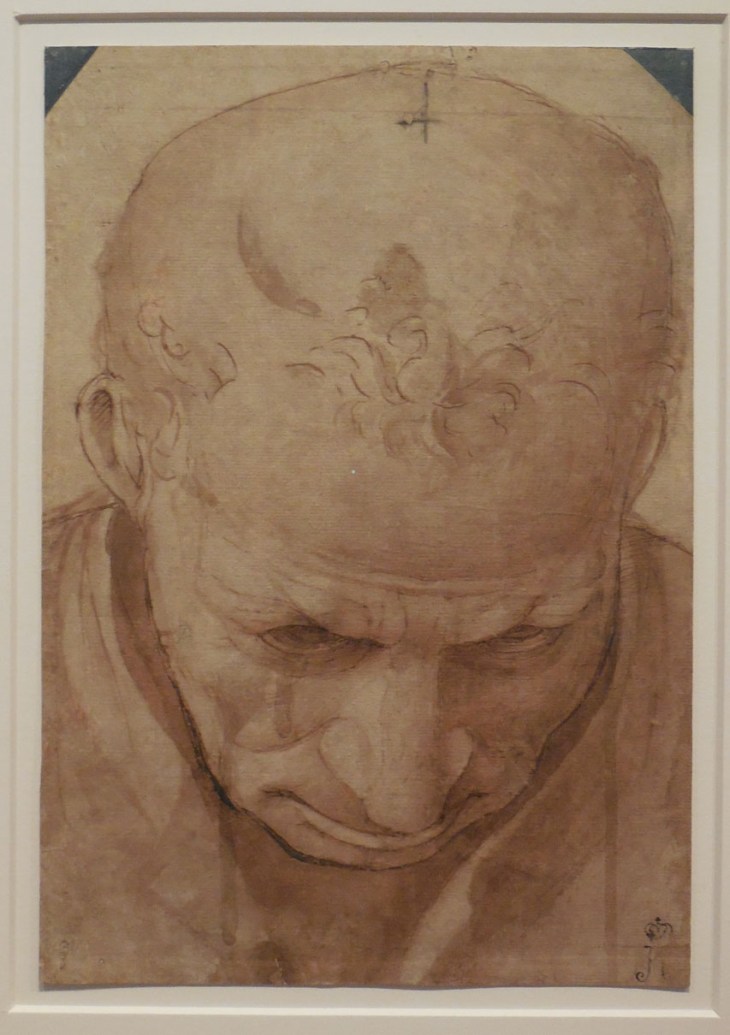
Luca Signorelli, c1480, study of the head of an elderly man, pen and brown ink and wash, State hermitage Museum, St Petersburg

Luca Signorelli, c1480, study of the head of an elderly man, pen and brown ink and wash, State Hermitage Museum, St Petersburg
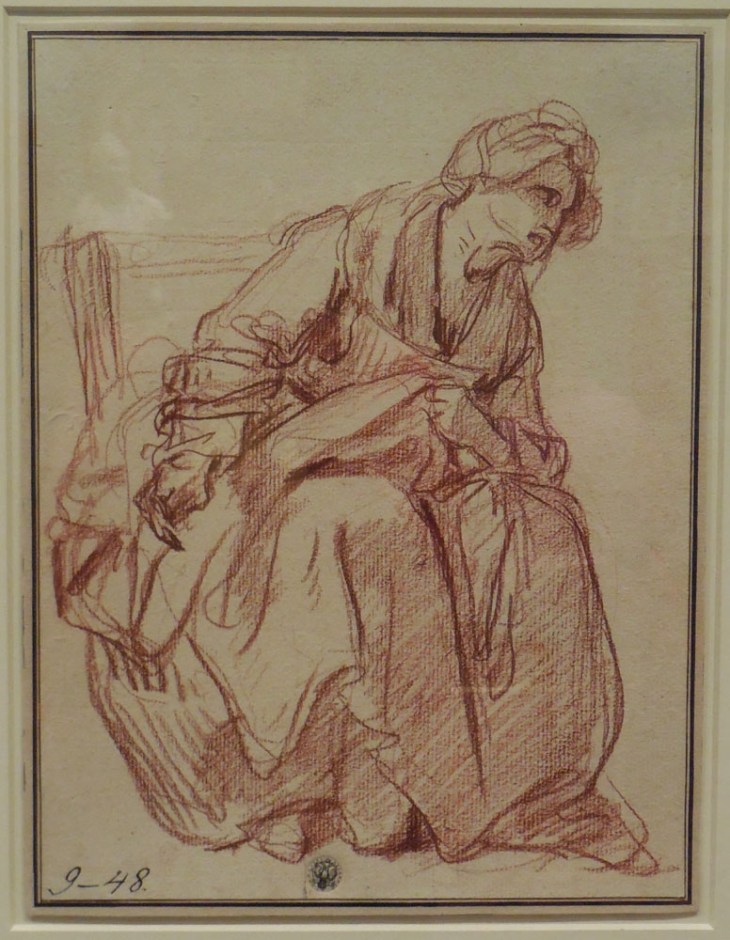
 

Jean-Baptiste Greuze, 1760's, Study of a seated woman (the paralytic's wife), red chalk State hermitage Museum, St Petersburg

Jean-Baptiste Greuze, 1760’s, Study of a seated woman (the paralytic’s wife), red chalk State Hermitage Museum, St Petersburg

The Historic Hunter

Several weeks ago I was in the Hunter Valley which has many towns dating back to the 19th century. (A very short time period compared to the thousands of years of Aboriginal ownership of the land). In the larger centres the original facades of the 19th century buildings are visible rising above the ground floor of contemporary shops.

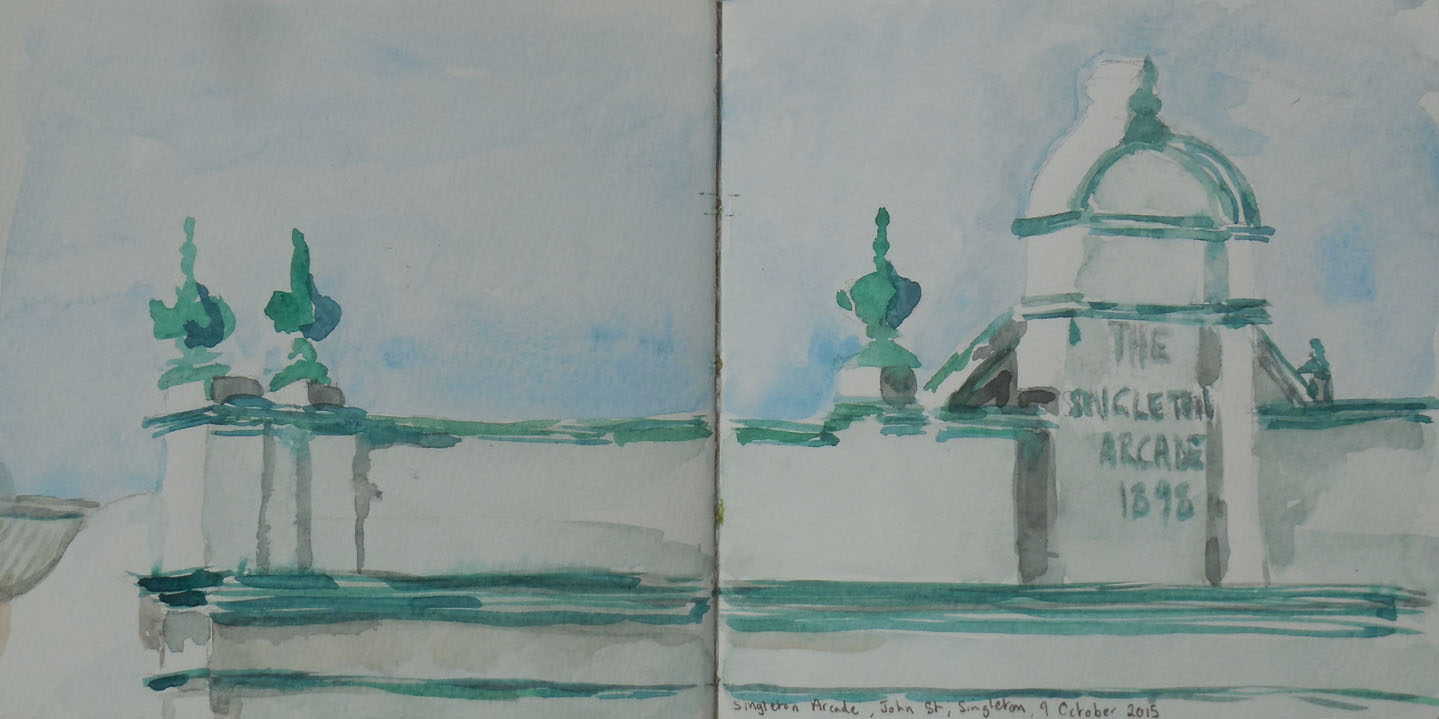
Here are two such facades. The first is in Singleton, located on John St, built in 1898.

The facade of the Singleton Arcade, watercolour, 9 October 2015

The facade of the Singleton Arcade, watercolour, 9 October 2015

When I moved around to the front of the building I could see this interesting chimney, to the rear of the facade.

Chimney detail, the Singleton Arcade, pen and ink, 9 October 2015

Chimney detail, the Singleton Arcade, pen and ink, 9 October 2015

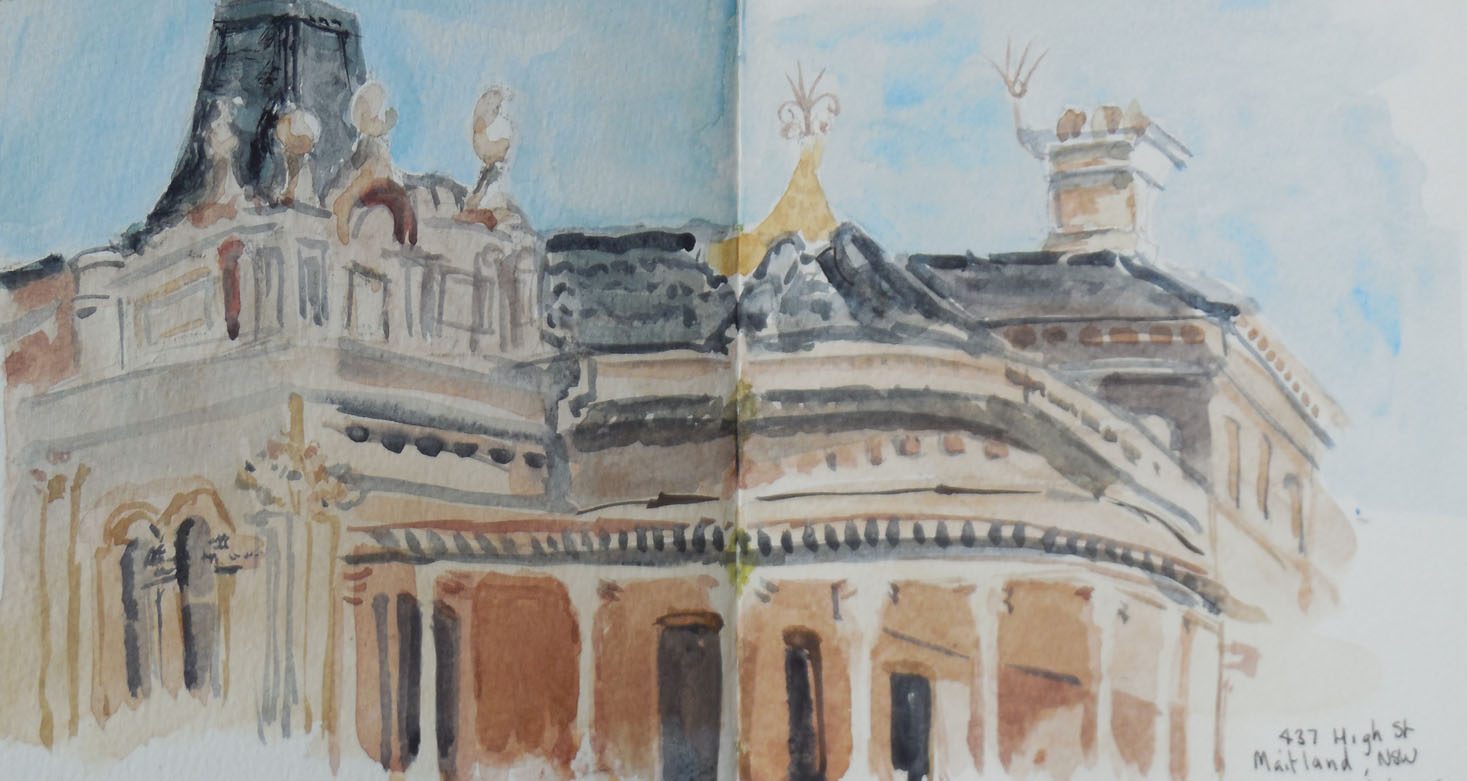
Several days later I visited Maitland. The long main street here is also full of interesting buildings. 437 High St is now the home to up-market boutiques and gift shops. I was surprised to find out that it was even older than the Singleton Arcade. This building, originally built for the Australasian Bank (through subsequent transmogrifications becoming the ANZ Bank), was completed in 1869 and opened the following year. Its French styling and rounded ist floor balcony  takes advantage of it’s corner location. This is a real stand-out among the other nearby buildings.

The first floor of 437 High St, Maitland, watercolour, 12 October 2015

The first floor of 437 High St, Maitland, watercolour, 12 October 2015

Canberra Nara Candle Festival

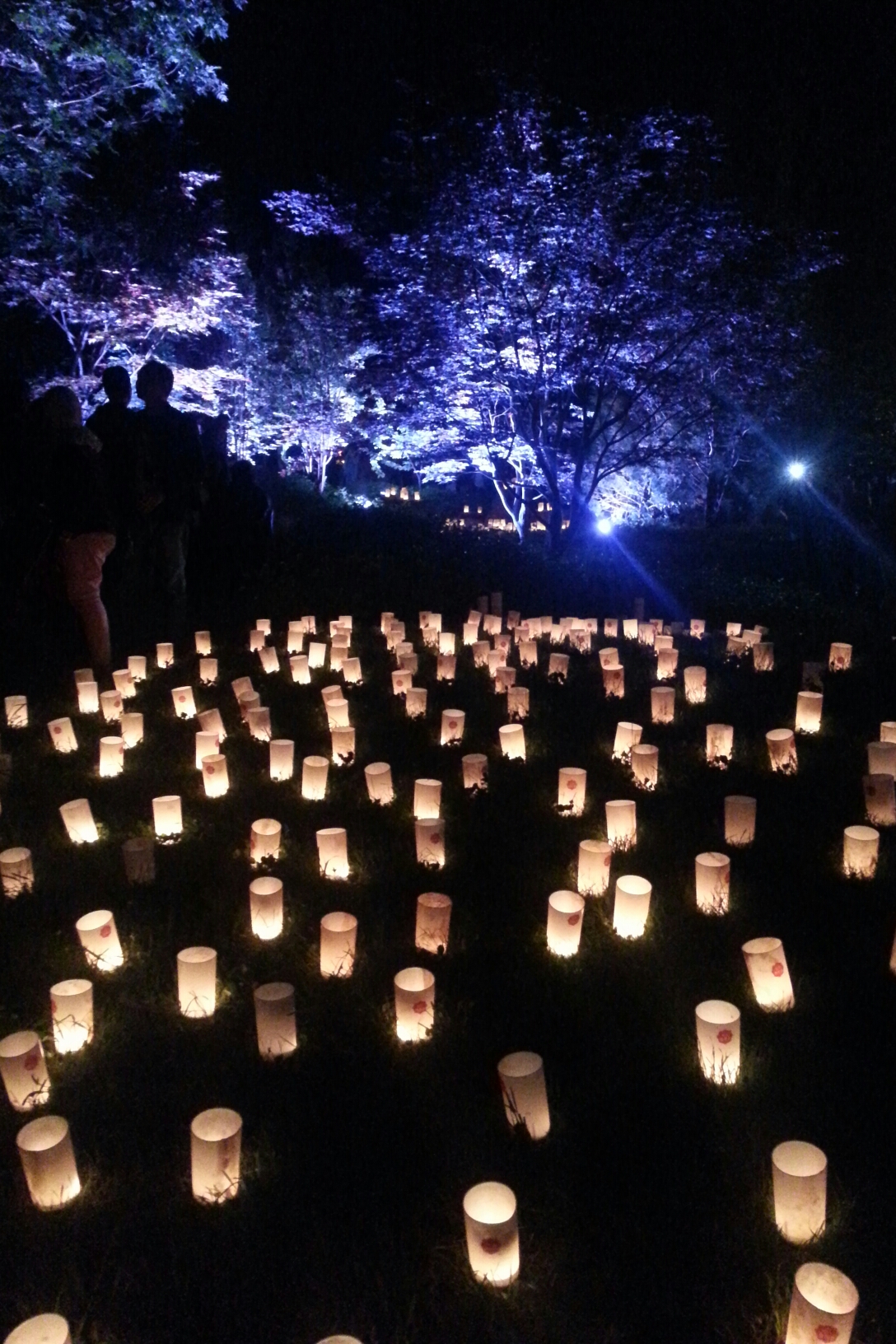
Today was the13th annual Candle Festival day, held in conjunction with our sister-city Nara in Japan. We got there a bit early because we were working on the Australia Japan Society food stall, raising money for the orphans of the Tohoku earthquake and tsunami.
This is the quick sketch I made in my Leuchtturm 1917 Whitelines link book with pen and ink.

image

In the end we were so busy that our three hours working flew by. Although some of my toes went numb from standing for so long. After we sold out of food there was just time to look at the ‘stream’ of candles in the Japanese garden.
image